
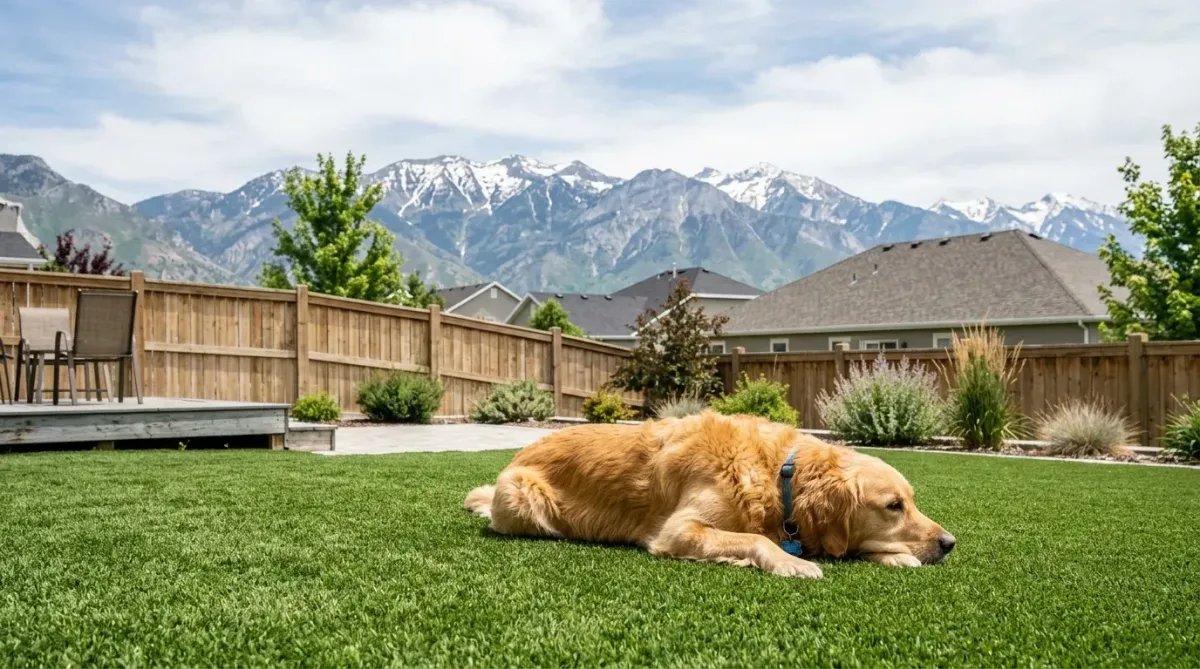
Is Artificial Turf Good for Dogs? A Utah Owner's Guide
If you own a dog in Utah, you know what a real lawn looks like by August: bare trails along the fence line, yellow patches where the dog goes, and a mud pit by the back door every time the sprinklers run or the snow melts. Artificial turf fixes all three, which is why dog owners are one of the biggest groups we install for.
It is not automatically the right answer, though, and turf built for a dog is not the same product as turf built to look nice. The difference is mostly underground. Here is what holds up, what genuinely does not, and what to ask about before you sign anything.
The short answer: yes, if the base is built for it
For most dogs, turf beats grass. No mud, nothing to dig up and kill, no weed spray to walk through, and no dirt trail along the fence. It stays green through a Wasatch Front July when a real lawn has gone brown.
What decides whether you love it or regret it is the system under the green blades:
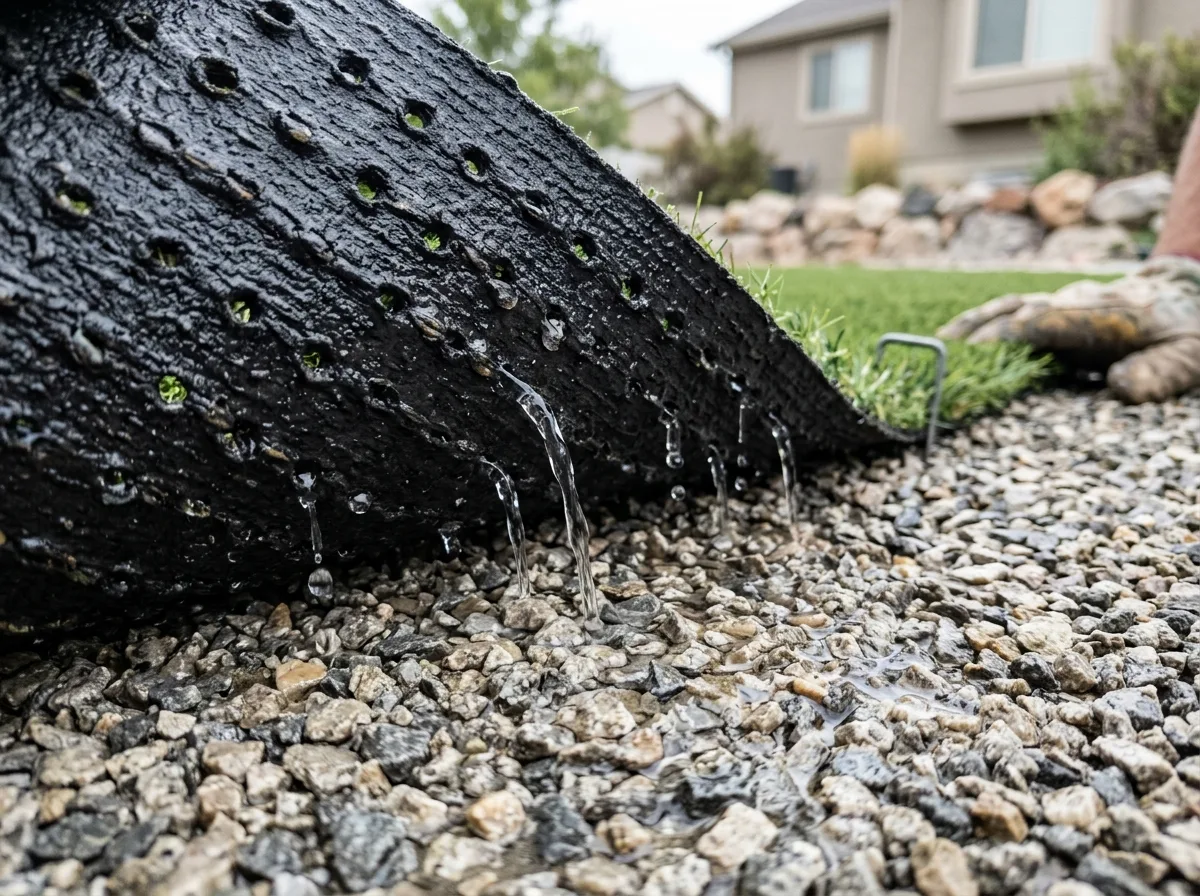
- Fully perforated backing. Pet-grade turf drains across the whole backing, not through a few holes. Liquid has to leave the surface immediately.
- An open aggregate base. A compacted crushed-rock base is what carries urine and rinse water away. Utah's heavy clay drains slowly, so the base does that work, not the ground.
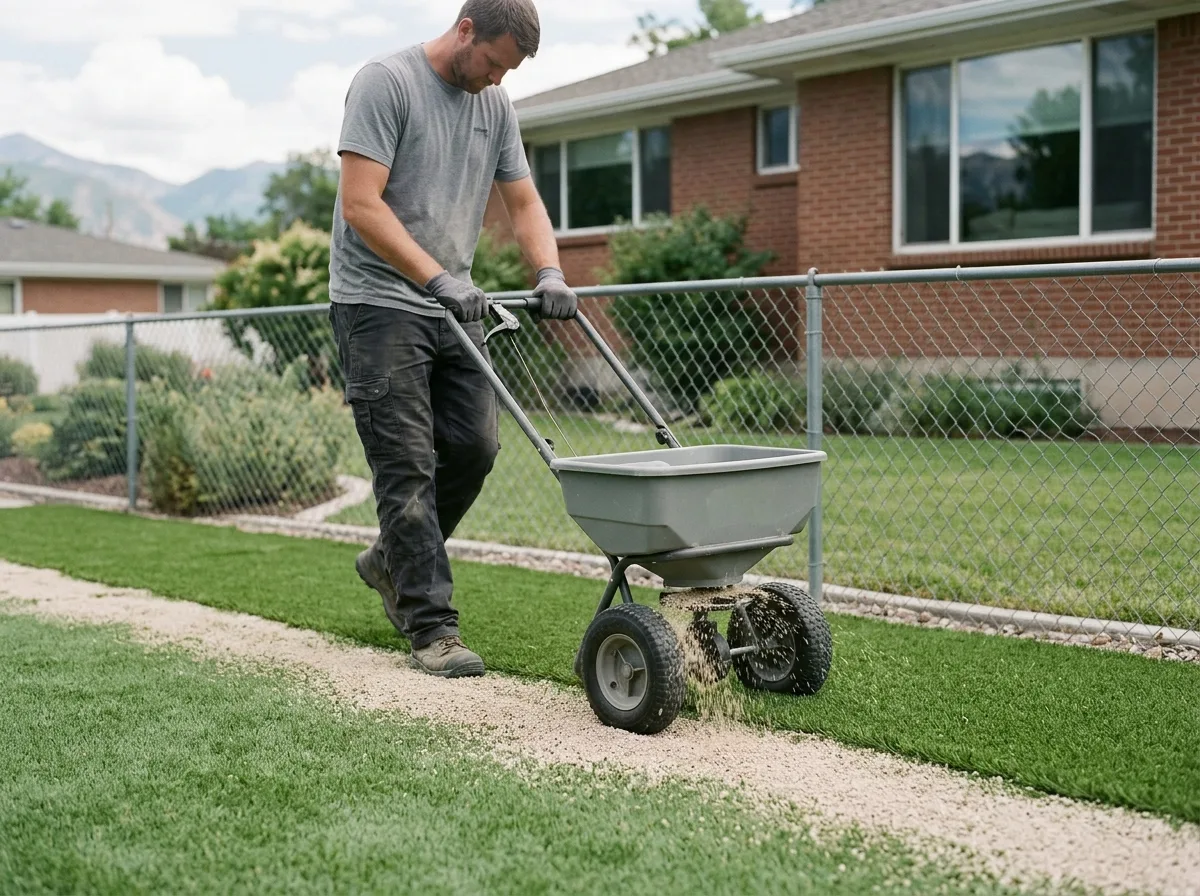
- The right infill. Plain silica sand is fine for a display lawn. For a dog, an antimicrobial infill that captures ammonia is the difference between a yard that smells like nothing and one you notice in August.
- Secured edges and seams. Nearly every turf failure involving a dog starts at an edge that was not fastened properly.
The odor question, and the honest answer
Turf does not absorb urine the way soil does. On a correctly built lawn it passes through the backing and infill into the rock below, and solids get picked up as they would on grass. Our dry climate helps more than people expect: low humidity dries the surface fast.
Smell comes from a bad build or no upkeep. If the base was fine material that compacted tight, or the infill is old crumb rubber that holds residue, liquid sits in the top layer and the first hot week of July will tell you about it. A pet-focused artificial turf installation uses an open base and an antimicrobial infill to prevent exactly that.
Upkeep is light: rinse the areas your dog uses weekly in summer, less in the cooler months, plus an enzyme cleaner on the heavy spots monthly if you have a big dog.
Will a dog dig through it or tear it up?
Through the middle of a properly installed lawn, no. The turf is fastened down, the seams are joined, and there is compacted rock underneath. Nails do not puncture good pet-grade turf, and a dog sprinting the same line daily wears it far more slowly than that line wears grass into dirt.
Edges are the honest weak point. A determined digger will find a spot where the turf was not anchored, get a claw under it and lift, which is an installation issue rather than a product one. That is also why fiber quality and base work decide how long artificial turf lasts in our climate.
Summer heat is the real drawback
This is the one thing turf does worse than grass, and no honest installer should skip it. Synthetic fibers absorb heat, and mid-afternoon July sun at Salt Lake Valley elevation is strong. On an exposed south-facing yard, the surface can get warm enough that a dog picks the patio instead.
Most owners stop thinking about it after the first summer. A pass with the hose drops the surface temperature within seconds, lighter infill runs cooler than dark, and shade helps. Most dogs are out mornings and evenings anyway, when the surface is comfortable.
Winter, snow and road salt
Winter is where turf quietly wins. Snow melts through a drained turf lawn and disappears, so there is no thaw-out mud season in March, which is usually the biggest reason dog owners here call us. Shovel with a plastic blade and the fibers are unaffected.
De-icer and road salt tracked in on paws does not harm synthetic fibers the way it burns the edge of a real lawn, and freeze-thaw is a non-event as long as the base drains. That is why we over-build the base on the dog yards we install across Sandy, Draper and the south end of the valley. One caution: skip rinsing entirely from November to March and the first warm thaw can bring back odor that was frozen in place.
What pet-ready turf costs in Utah
As general market context and not a quote, professionally installed artificial turf in Utah tends to run roughly $8 to $15 per square foot all in. A pet build usually sits in the upper half of that range, because it adds a deeper drainage layer, fully perforated pet-grade turf, and better infill than a decorative lawn needs.
A dedicated dog run of 200 to 400 square feet is a far smaller project than a full backyard and a common way to start. Our breakdown of artificial turf cost in Utah has the detail on what moves the number on a specific yard.
How Installify builds a turf lawn for dogs
We build dog yards differently from show lawns, and it is all in the part you never see. We excavate and compact a clean crushed-rock base rather than laying turf over graded clay, because our soil holds water and the base has to be what drains. We use fully perforated pet-grade turf, glue and staple the seams, fasten the entire perimeter so there is no edge to lift, and use an ammonia-capturing antimicrobial infill instead of plain sand.
We pull any permits the job needs, work within your HOA's rules, and get most projects scheduled within two weeks. Every install is backed by our lifetime materials warranty and 2-year installation warranty, so if a seam or edge ever lets go, it is our problem.
Get a Real Number for Your Dog's Yard
Every yard is different, and the only way to know your real cost is to have someone walk it and measure. Call (385) 402-8427 or get a free quote and we'll beat your best written estimate by $100 or more, guaranteed, or you get a $50 Amazon gift card.
Frequently asked questions
Is artificial turf safe for dogs?
Yes. Pet-grade turf is non-toxic, and it removes the fertilizer and weed spray a real lawn needs, which a dog otherwise walks through and licks off its paws. The issues that do come up are surface heat in mid-summer and hygiene on a poorly drained lawn.
Does dog urine make artificial turf smell?
Not on a correctly built lawn. Urine passes through the perforated backing into an open crushed-rock base rather than sitting in the fibers, and Utah's dry air dries the surface fast. Smell shows up when the base compacts tight, the infill holds residue, or nobody rinses it.
Can dogs dig through artificial turf?
Not through the middle of it. A dog can lift an edge that was not fastened properly, which is why perimeter fastening matters more on a dog yard than on any other turf job.
Does artificial turf get too hot for dog paws in Utah?
It can on a July afternoon in full sun, and it is the one thing turf genuinely does worse than grass. A quick rinse cools it within seconds, and lighter infill and shade both help.
What is the best infill for a dog yard?
An antimicrobial infill that captures ammonia, rather than plain silica sand or old crumb rubber. It costs a little more per square foot and is the single upgrade that most affects whether a dog yard smells fine in August.
How do you clean up after a dog on artificial turf?
Pick up solids the same as you would on grass, rinse the areas your dog uses weekly through the summer, and run an enzyme cleaner over the heavy spots monthly if you have a large dog or more than one.


