
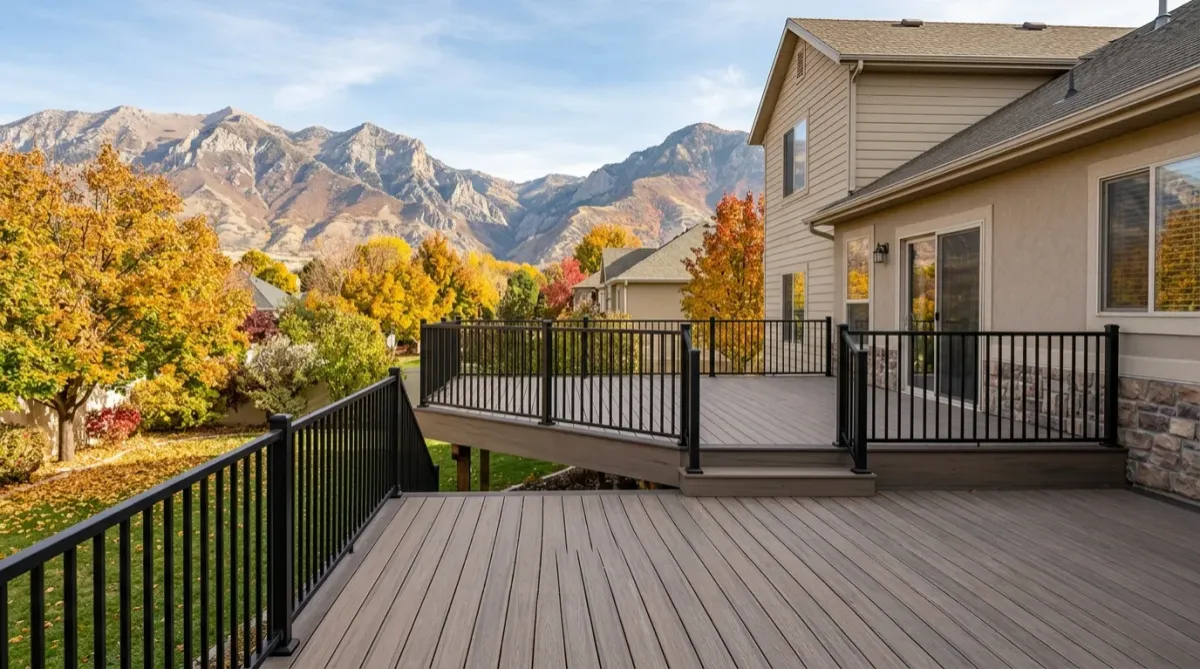
Is Fall the Best Time to Build a Deck in Utah?
What is the best time to build a deck in Utah?
Most Utah homeowners start thinking about a deck on the first warm weekend in April. By then it is already late. Every other family on the street had the same idea, contractors are booking weeks out, and the deck you wanted for Memorial Day ends up finished somewhere around the Fourth of July.
For most yards along the Wasatch Front, the best time to build a deck is early to mid fall, with late winter as a strong second choice for getting on the calendar. This guide walks through what each season actually does to a deck build across Salt Lake, Utah and Davis counties, and when it really is smarter to wait.
Why fall is the sweet spot for a Utah deck
Fall gives a deck build the conditions it likes best. Days are dry and mild, the ground is still workable, and the heat that makes summer framing slow and miserable is gone. Concrete footings cure well in mild temperatures, without the fast surface drying of a hot July afternoon or the cold-weather precautions a January pour needs.
There is a scheduling reason too. Deck contractors across the Wasatch Front are usually most crowded in spring and early summer, when everyone wants their deck built at once. Homeowners do start shopping again in September, but a project booked then typically starts sooner than one booked in April, and the crew is not rushing to the next yard.
And the payoff lands at the right moment. A deck finished in October is ready the first warm weekend of spring, with no waiting list, no torn-up yard in May, and a full season of use ahead of it.
What each season does to a deck build
Every season works here with the right crew. What changes is how the footings go in, how the materials behave, and how long you wait to start.
- Spring: Workable ground and pleasant weather, but the busiest booking season of the year. Wet spells and snowmelt can also leave yards muddy, which slows excavation and footing work.
- Summer: Long days and dry ground, but intense high-altitude sun. July afternoons in the Salt Lake and Utah valleys regularly run in the 90s, composite boards get hot to handle and expand, and a deck started in July often is not finished until most of the summer is gone.
- Fall: Mild, dry and less crowded. Good conditions for footings, comfortable for framing, and finished in time for next season. This is the window we point most homeowners toward.
- Winter: Possible on clear stretches between storms, with cold-weather care on every footing. Frozen ground and snow cover slow the work, but winter is an excellent time to design, price and get permits moving.
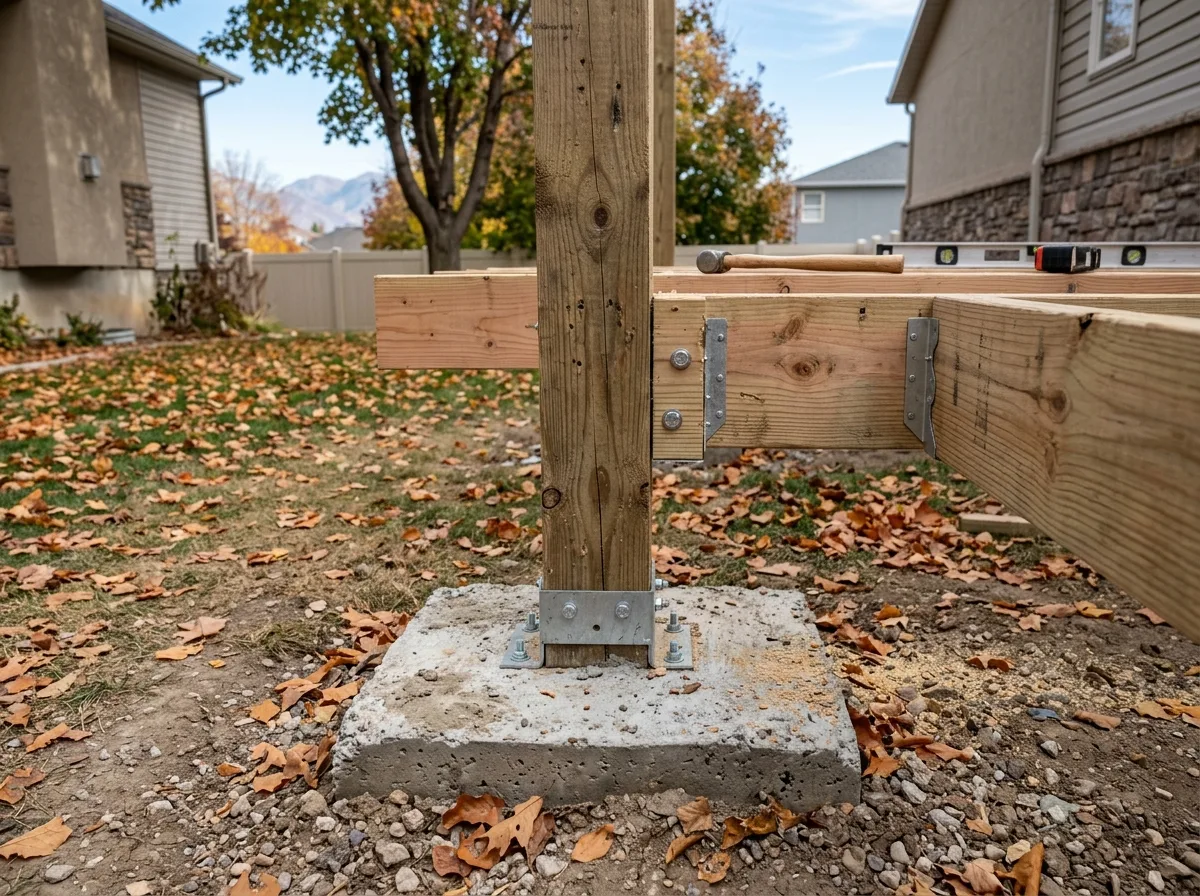
Footings and frost: why timing matters underground
The part of a deck you never see does the most work. Utah's freeze-thaw cycles heave footings that are not set below the frost line, which is why cheap decks tilt, sag or pull away from the house after a few winters. Proper frost-depth footings are not optional here in any season.
Fall makes them easier to get right. The soil digs cleanly, and concrete poured on a mild autumn day gains strength steadily, needing at most a blanket on a cold night rather than the full cold-weather routine of a January pour. In the rocky, clay-heavy soil common around Sandy and up on the benches, digging is slow in every season, and fall at least takes frozen ground off the list of problems. The window is not endless, though: by November, shaded and north-facing yards on the east bench can hold frost for weeks while a sunny lot down the street is still workable.
Winter footings can be done well, but they take warm water, insulating blankets and patience. If a contractor bidding your deck in January cannot tell you what they do differently in the cold, keep looking.
How cooler weather affects wood and composite decking
Material choice changes the timing question a little. Both of the main options install well in fall, for slightly different reasons.
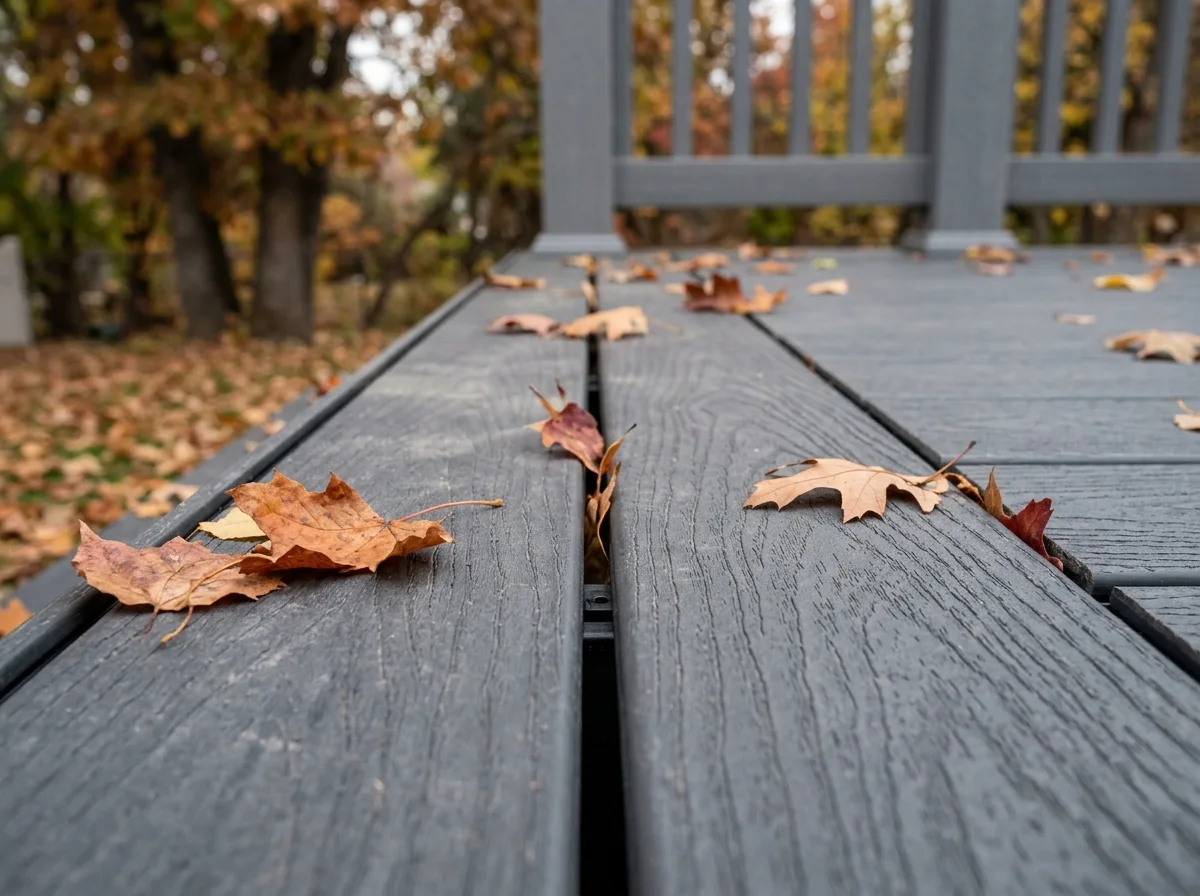
- Composite and Trex: Boards expand in heat and contract in cold, so manufacturers set gapping rules based on the temperature at install. Mild fall days make those gaps easier to get right than a scorching summer afternoon.
- Pressure-treated wood: New treated lumber often needs time to dry before it takes stain well. A fall build can sit through the winter and be stained on a dry spring day, so the finish goes on when the wood is ready for it.
- Cedar: Cedar handles the season well, but like any wood finish, stain and sealer wait for dry days above about 50°F.
Permits and HOA approval take the same time in any season
Most Utah cities require a permit for an attached or elevated deck, and many HOAs want design approval before anything is built. Rules vary by city, so confirm the details locally before you commit to a design.
That paperwork takes the time it takes no matter the month. Starting it in fall or winter means it is done when you want to build, instead of starting the clock in April behind everyone else. If you are still setting a budget while approvals move, our guide to what a new deck costs in Utah breaks down size, material and labor.
When it is smarter to wait
Fall is the best default, not a rule. A few situations call for a different plan:
- The yard needs regrading or drainage work first. That is usually spring work, and doing it in the wrong order wastes money.
- You are tying the deck into a bigger project. If a patio, turf or a fence is going in at the same time, it can make sense to schedule everything together.
- A long, hard freeze has already set in. Building anyway means fighting frozen ground and protecting every footing, when a few weeks of patience costs nothing.
Plan your fall deck with Installify
If you want a deck ready for next spring, now is the time to start. Installify builds custom decks in wood, cedar and composite across Salt Lake, Utah and Davis counties. We are licensed and insured, back every deck with a lifetime materials warranty and a 2-year installation warranty, and most projects start in two weeks or less.
Get a free quote or call (385) 402-8427, and we will beat your best written estimate by $100 or more, or we send you a $50 Amazon gift card.
Frequently asked questions
What month is best to build a deck in Utah?
September and October are usually the best months. The weather is mild and dry, the ground digs well, contractors are less booked than in spring, and the deck is ready for the next warm season.
Can you build a deck in winter in Utah?
Yes, on clear stretches between storms and with cold-weather care on every concrete footing. Frozen ground and snow slow the work, so many homeowners use winter to design, price and get permits moving instead.
Do I need a permit to build a deck in Utah?
Most Utah cities require a permit for attached or elevated decks, and many HOAs require design approval too. Rules vary by city, so check with yours before the design is final.
Is it cheaper to build a deck in the fall?
Price depends on size, height, material and the yard rather than the month, so we would not promise a seasonal discount. The real advantage of fall is a faster start and a deck ready before the spring rush.
How long does it take to build a deck?
It depends on the size, height and design, plus permit timing. Most of our deck projects start within two weeks of booking.


