
Should You Seal a Concrete Driveway in Utah?
Concrete looks permanent, which is why most homeowners never think about sealing a driveway until the surface starts flaking. Along the Wasatch Front, sealing is worth doing, and it matters more here than in most of the country. The reason is not the cold on its own. It is the salt.
Every winter, plows lay de-icer across our streets, and every car that pulls up your driveway carries a film of it onto the slab. Add the freeze-thaw swings we get from November through March, where a 45-degree afternoon becomes a 20-degree night, and you have the exact combination that lifts the top layer off unsealed concrete. Here is when sealing earns its money, when it does not, and what it costs here in Sandy.
Do you need to seal a concrete driveway in Utah?
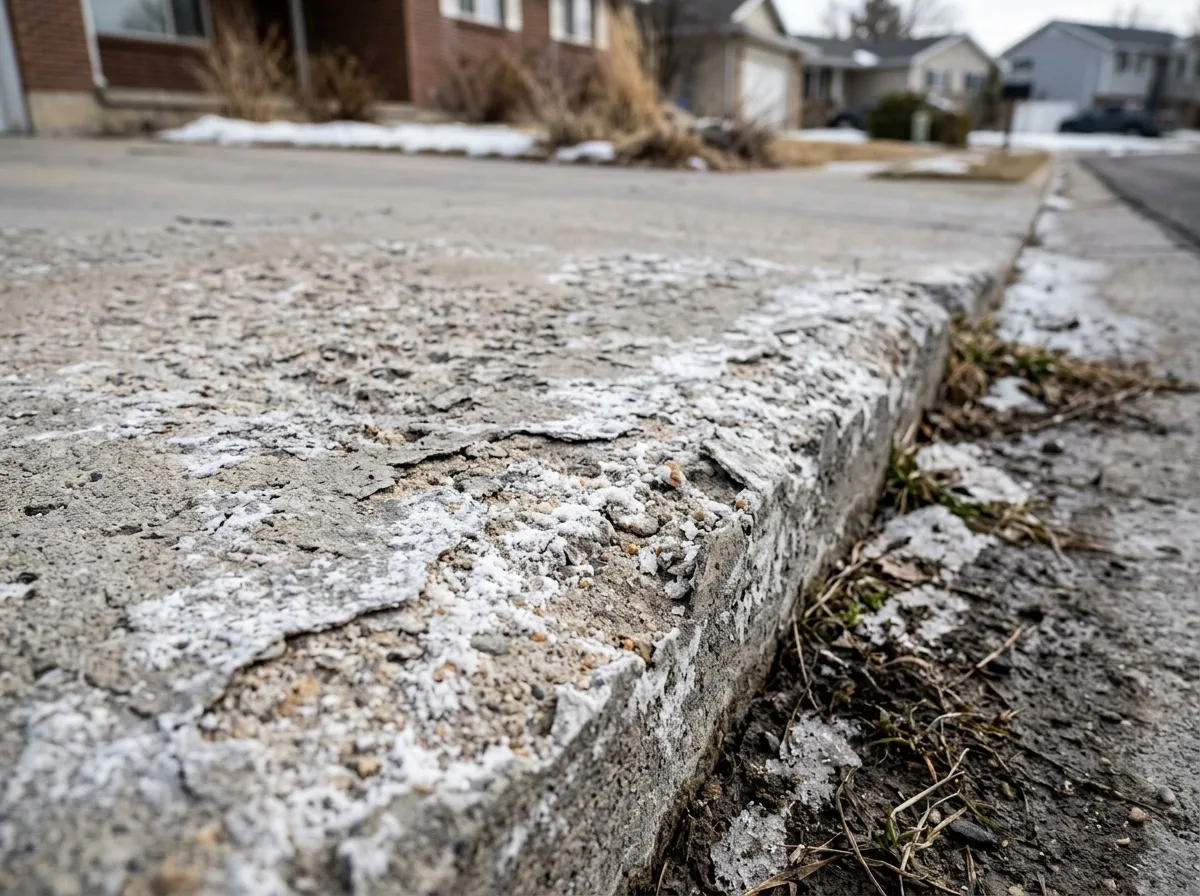
For most Wasatch Front driveways, yes. Concrete is porous, and it drinks water the way a hard sponge does. When that water freezes inside the top few millimeters it expands, and after enough cycles the surface starts shedding in thin flakes. That is scaling, and it is the most common way a Utah driveway turns ugly long before it turns structurally bad.
De-icing salt makes it worse two ways. It holds extra moisture in the surface, and it lets water refreeze more times in a single winter day than it otherwise would. A sealer is a barrier that keeps most of that water and salt out of the pores in the first place.
What a sealer actually protects against
A good penetrating or acrylic sealer buys you four things, all of them about the surface rather than the structure:
- Salt and de-icer scaling. The flaking that shows up first along the apron, where tires drip meltwater onto the slab.
- Freeze-thaw spalling. Water that cannot get into the concrete cannot freeze inside it and pop the surface off.
- Stains. Oil drips, rust rings from patio furniture, and leaf tannins sit on top of a sealed slab instead of soaking in.
- High-altitude UV fade. Our elevation means harsher sun, and that hits stamped or colored concrete hardest, where the pigment is what you paid for.
What sealing will not do
This is where sealing gets oversold. A sealer is a coat on the surface. It is not structural, and it will not rescue a slab poured on a poor base. Cracks caused by our clay soils shifting underneath keep moving whether the top is sealed or not, and no coating glues a crack back together.
There are two other honest drawbacks. A film-forming acrylic can be slick when wet, so ask for a slip-resistant additive on a sloped driveway. And a sealer rolled over a damp slab, or one that never cured properly, traps moisture underneath and peels off in white patches inside a season. If your driveway is cracking rather than flaking, you are looking at a repair or replacement decision instead, and it is worth reading how concrete and paver driveways compare first.
When to seal, and how often to reseal
Timing is most of the job in Utah. A new pour has to cure before anything goes on it, typically 28 days, and longer if it went down in cold weather. Sealing a green slab traps the moisture still working its way out of the concrete.
After that, plan on resealing every two to three years for a driveway that takes winter traffic and road salt, and every three to five for a covered patio. Early fall is the window to aim for: the slab is dry, daytime temperatures are still above 50 degrees, and the coat goes on before the first plow runs. Sealing on a hot July afternoon is the other common mistake, because the product flashes off too fast on a baking slab and leaves an uneven finish.
What driveway sealing costs in Utah
As general market context and not a quote, professional concrete sealing along the Wasatch Front generally runs somewhere in the range of $0.50 to $1.50 per square foot, depending on the product, the condition of the slab, and how much prep it needs. A standard two-car driveway in Sandy or Draper, roughly 600 square feet, therefore lands in the low hundreds rather than the thousands.
DIY materials cost less, and on a clean, sound slab a careful homeowner can get a good result. What you pay a crew for is the preparation: degreasing, washing, letting it dry all the way through, and picking a product that suits the finish you already have. Nearly every failed sealer job we get called out to look at is a prep failure, not a product failure.
How Installify builds a driveway that survives Utah winters
Sealing protects a good slab. It cannot save a bad one, so durability starts long before anyone opens a bucket of sealer. We excavate and compact a proper aggregate base rather than pouring straight onto native clay, we use an air-entrained mix, which builds microscopic air pockets into the concrete so freezing water has room to expand, and we cut control joints so the slab cracks where we chose rather than where it feels like.
We pull any permits the job needs, work within your HOA's rules, and get most projects scheduled within two weeks. Every install is backed by our lifetime materials warranty and 2-year installation warranty. If you are weighing a repair against a fresh pour, our concrete patio and driveway work covers both, along with stamped and decorative finishes.
Get a Real Number for Your Driveway
Every slab is different, and the only way to know whether yours needs sealing, resurfacing, or replacing is to have someone stand on it and look. Call (385) 402-8427 or get a free quote and we'll beat your best written estimate by $100 or more, guaranteed, or you get a $50 Amazon gift card.
Frequently asked questions
Should I seal a brand new concrete driveway in Utah?
Yes, but not straight away. Give a new pour at least 28 days to cure, and longer if it went down in cold weather. Sealing too early traps moisture still leaving the slab, and the coat can cloud or peel.
How often should a concrete driveway be resealed in Utah?
Every two to three years for a driveway that gets winter traffic and road salt, and every three to five for a covered or low-traffic slab. Early fall is the best window, before the first de-icing runs.
Will sealing stop my driveway from cracking?
No. Sealing protects the surface from water, salt, and stains. Cracks come from movement in the clay soil underneath, and no coating holds a slab together. That is a repair or replacement question.
Does de-icing salt really damage concrete?
Yes, and it is the single biggest reason Wasatch Front driveways scale. Salt holds extra moisture in the surface and increases how many freeze-thaw cycles the top layer sees in one winter day.
Can I seal a concrete driveway myself?
On a clean, sound slab, yes. The result comes down almost entirely to prep: degrease it, wash it, let it dry fully, and seal on a dry day above 50 degrees.


