
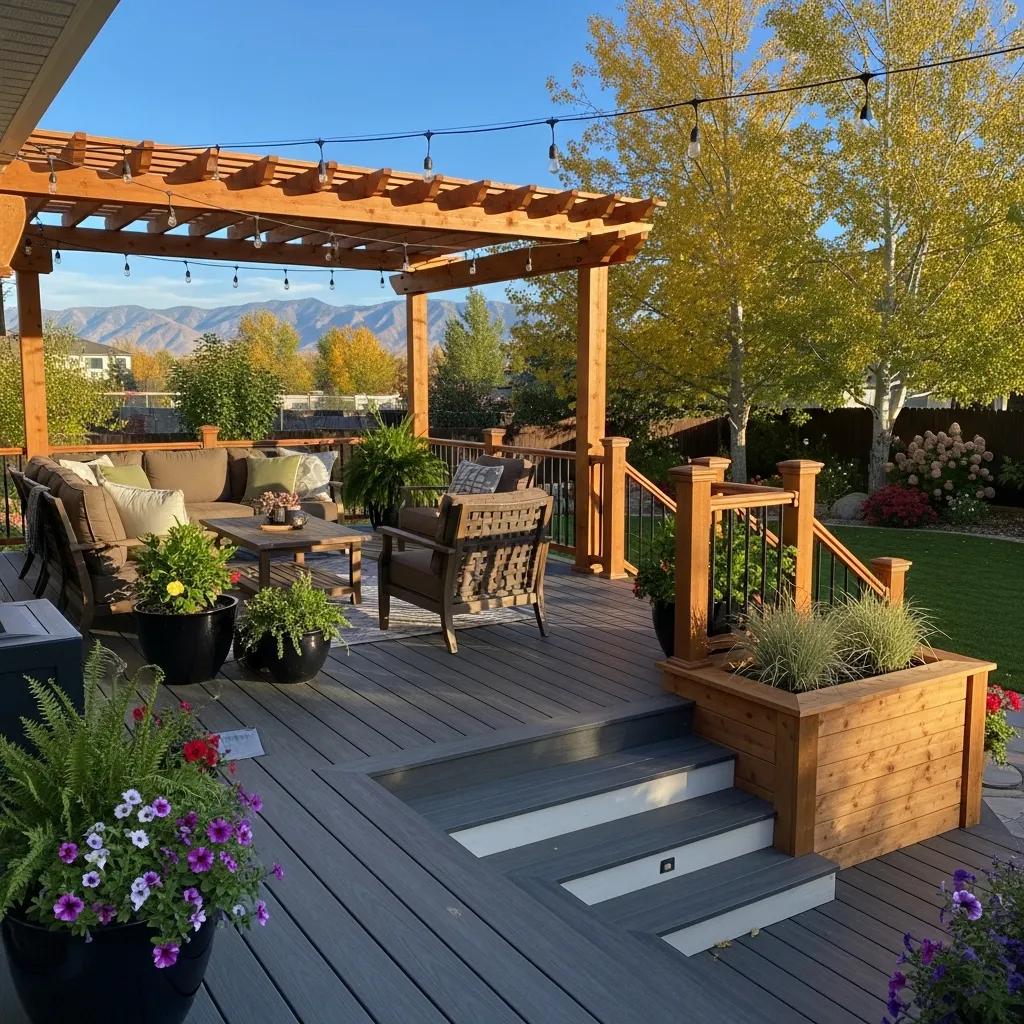
Custom Deck Installation in Sandy, Utah: What to Expect
A deck is the most direct way to turn a Sandy backyard into a place you actually use. It is also one of the easier projects to get wrong, because the choices that decide how long a deck lasts are made before the first board goes down: the material, the footings, the way it attaches to the house and whether the city has signed off on it.
This guide walks through custom deck installation in Sandy, Utah, the way a homeowner meets it: what to decide first, which materials hold up here, what the permit question looks like, what decks cost across Utah as a market, and what the build involves once a crew arrives.
Start with how you will use the deck
Custom means the deck is designed around your yard and your habits rather than pulled from a standard plan. Before materials or price, settle three things.
- Where it sits. A flat surface off the back door is a different build from a second-story deck over a walkout basement, and Sandy has plenty of both. Lots near Bell Canyon, Pepperwood and Dimple Dell often slope, which is where a multi-level deck earns its cost by turning ground you cannot use into space you can.
- What goes on it. A grill and a table for six need less room than an outdoor sofa, a fire table and a clear path to the stairs. Mark the furniture out on the lawn before settling on a size.
- Sun and view. A west-facing deck takes the full afternoon sun in July. An east-facing one looks at the Wasatch and is in shade by dinner. That affects comfort, and it affects which decking you choose.
Deck materials that hold up in Sandy's climate
Sandy is hard on decks. The city sits above 4,400 feet, so the sun is stronger than a product brochure assumes, the air is dry, and winter runs the boards through freeze and thaw again and again. Wood left alone here dries out, greys and splinters quickly. Every custom deck we build starts with the material, and that choice is mostly about how much upkeep you are willing to do.
- Composite, including Trex and TimberTech. For most homeowners this is the better long-term call. It handles freeze-thaw, dry air and UV without splintering or warping, and upkeep is a sweep and a rinse a couple of times a year. A properly built composite deck lasts 25 to 50 years.
- PVC. A similar lifespan and similarly low upkeep, with no wood fiber in the board at all.
- Treated lumber. The lowest price up front. It needs staining and sealing every couple of years to hold up, and with that care it lasts roughly 15 to 25 years.
- Cedar. The warmest look of the group, with the same maintenance commitment as any other wood.

Composite or wood: the honest trade
Wood costs less on the day it is built and more every year after. Composite is the reverse. One caveat on composite is worth knowing before you choose a colour: darker boards get hot in direct summer sun, which matters on a west-facing deck where people walk barefoot. If you are torn between the two most common choices, our comparison of composite and cedar decking in Utah goes through them point by point.
What a custom deck costs in Utah
A deck is priced on its size, its height off the ground, the decking and the railing, so any figure given before someone has seen your yard is a range and not a quote. As general Utah market context for 2026, and not Installify pricing, installed decks tend to fall in these ranges:
- Pressure-treated wood: roughly $22 to $42 per square foot installed.
- Cedar or redwood: roughly $30 to $55 per square foot installed.
- Composite: roughly $40 to $70 per square foot installed.
What moves the price
Across whole projects, most Utah homeowners land somewhere between $8,000 and $28,000. A small ground-level wood deck sits near the bottom of that range and a large elevated composite deck with premium railing near the top. Height moves the number more than people expect, because a second-story deck needs taller footings, more framing and code-compliant railing. Our guide to deck costs in Utah breaks the ranges down by deck size.
For your own yard you get a detailed written quote within 24 to 48 hours, and our Best Price Guarantee applies to it: bring us your best written estimate and we will beat it by $100 or more, or send you a $50 Amazon gift card.
Do you need a permit for a deck in Sandy?
In most cases, yes. Across Utah a permit is generally required for a deck that is attached to the house or stands more than 30 inches off the ground, which covers most decks worth building. The details are set by the city, so the answer for your address comes from Sandy City rather than from a rule of thumb.
We pull the permit wherever one is required, so you do not deal with the city yourself. Many Sandy neighborhoods also have an HOA whose design committee wants to see the plan first. Check its rules before you settle on a railing style or a colour. It is far easier to change a drawing than a finished deck.
How the build goes
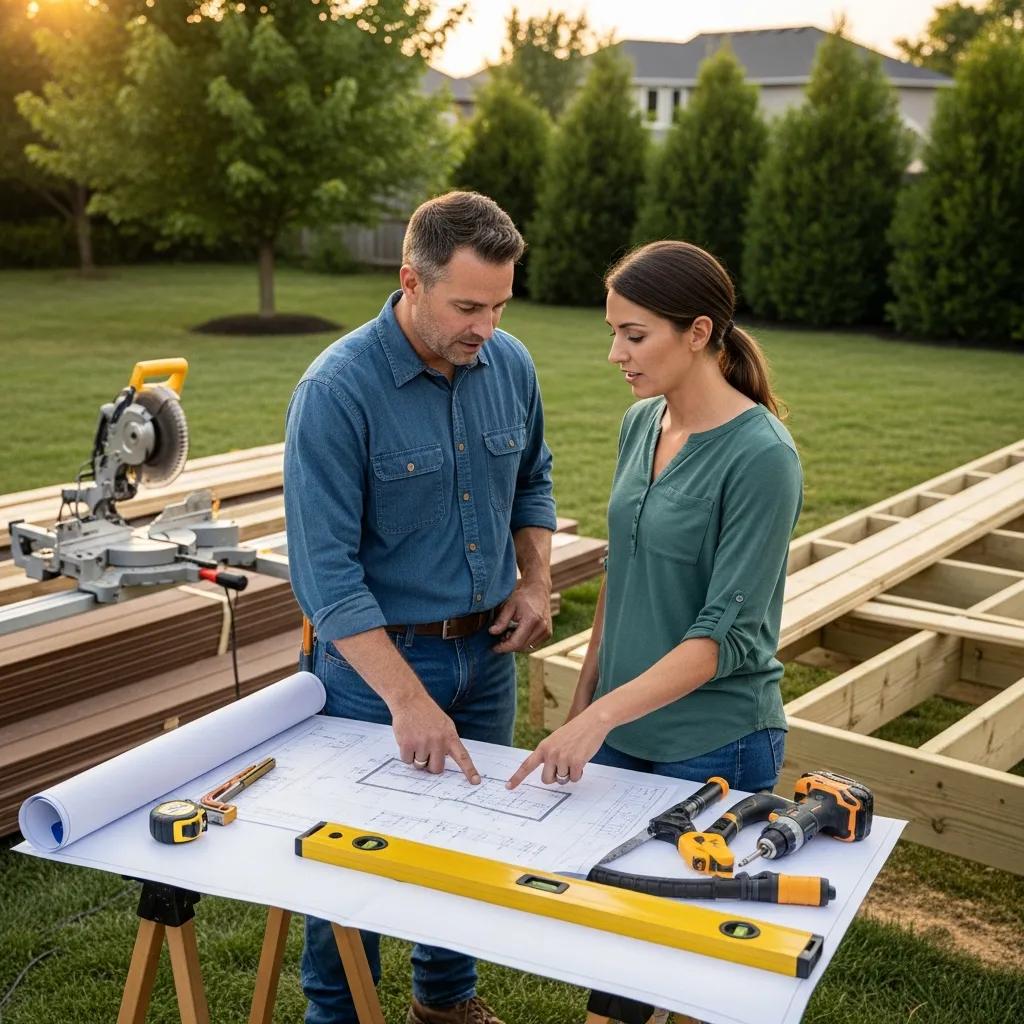
Once the design and the permit are settled, a deck goes up in a predictable order:
- Footings. Holes are dug and concrete footings poured to carry the frame. In Sandy's rocky, clay-heavy soil, with winter frost moving the ground, this is the step that decides whether the deck stays level.
- Ledger and framing. The ledger board fastens the deck to the house, and posts, beams and joists form the frame. This is the structure of the deck, which is why it is built to code and inspected wherever a permit applies.
- Decking. Boards are laid with the gaps the manufacturer calls for, so they can move as the temperature swings.
- Railings and stairs. We install cable, aluminum, composite, wood and glass railing systems.
How long it takes
Most decks take one to three weeks from the start of construction, depending on size, material and complexity. Permitted multi-level builds take longer. Most of our projects are scheduled and started within two weeks, and you get a realistic timeline with the quote.
Get a quote for your Sandy deck
Installify is based in Sandy, licensed and insured, and every deck we build carries a lifetime materials warranty and a 2-year installation warranty. To talk through your yard, call (385) 402-8427 or ask for a free quote, and we will give you an exact price for the deck you have in mind.
Frequently asked questions
How long does custom deck installation take?
Most decks take one to three weeks from the start of construction, depending on size, material and complexity. Permitted multi-level builds take longer. You get a realistic timeline with your quote.
Do I need a permit to build a deck in Sandy, Utah?
In most cases, yes, especially for a deck attached to the house or more than 30 inches off the ground. Sandy City sets the exact requirements for your address. We pull the permit wherever one is required.
Is composite or wood decking better in Utah?
For most homeowners composite is the better long-term choice, because it handles freeze-thaw, dry air and UV without splintering, warping or regular staining. Wood costs less up front but needs staining and sealing every couple of years.
How long will a deck last in Utah?
A properly built composite deck lasts 25 to 50 years with very little maintenance, and PVC is similar. Treated wood lasts roughly 15 to 25 years when it is maintained regularly.
Can you build a deck on a sloped yard?
Yes. We build multi-level and hillside decks, including the footings and framing needed to make them safe and code-compliant. A slope is often the best reason to build a deck.
What warranty comes with an Installify deck?
Every deck carries a lifetime materials warranty and a 2-year installation warranty.


