
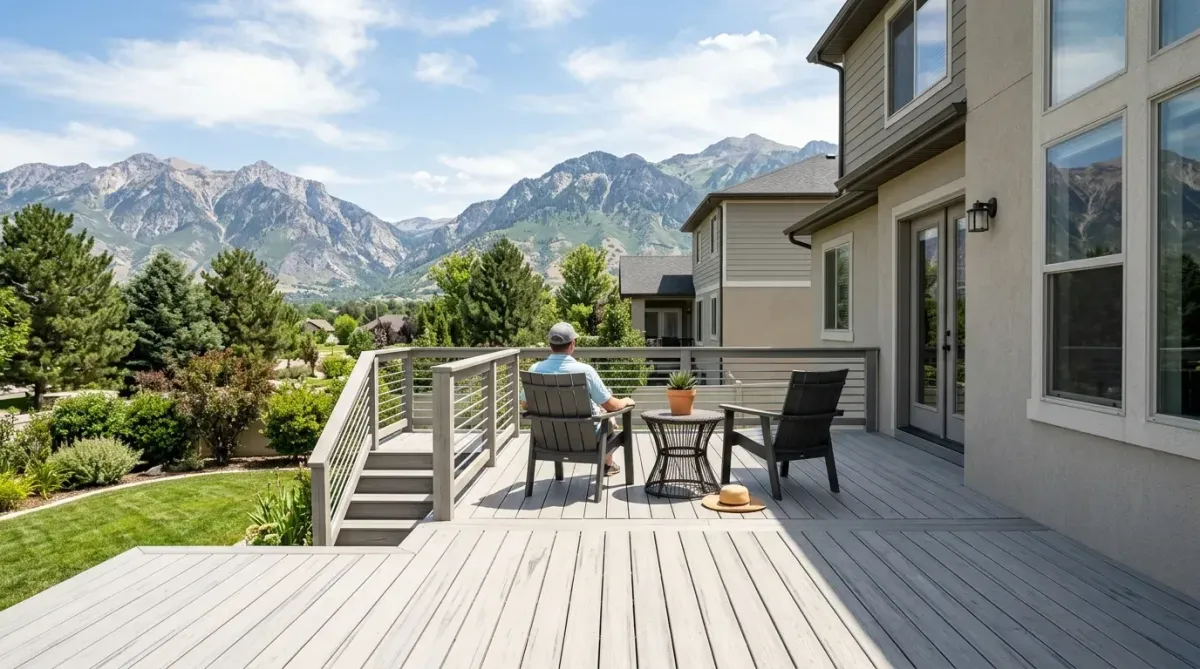
Does Composite Decking Get Too Hot in Utah?
Composite decking is sold on the promise that it never needs staining, and that part is true. The question homeowners along the Wasatch Front actually ask standing in the backyard is a different one: will I be able to walk on it barefoot in July? It is a fair question, and the honest answer is yes, composite decking gets hot in direct sun, and here it gets hotter than the temperature on your phone suggests.
That is not a reason to rule it out. It is a reason to choose the board color and the layout with our sun in mind, which is a decision you make once, before anything is built. Here is what actually drives deck surface temperature, what color changes, what it does not change, and how we plan around it here in Sandy.
So how hot does composite decking get?
Any solid surface in full sun runs well above the air temperature around it, and decking is no exception. The figure usually quoted for dark composite boards in direct afternoon sun is somewhere around 30 to 40 degrees above the ambient air. On a 95-degree July afternoon in Sandy or Draper, that puts a dark deck well past the point most people will cross barefoot.
Two things move that number more than anything else. The first is color: light grey, tan and driftwood boards absorb far less heat than espresso, walnut and black. The second is shade, and it matters more than any product feature on any spec sheet. The same board in dappled shade under a pergola is comfortable while the sunlit half of the same deck is not.
Why Utah sun is harder on a deck than the forecast suggests
Sandy sits at roughly 4,500 feet, and the whole valley is high, dry and clear. Three things follow from that, and all three land on your deck boards.
- Thin air at altitude. More of the sun's energy reaches the ground here than at sea level, so a 90-degree day in Utah heats a board harder than a 90-degree day somewhere near the coast.
- Dry air and cloudless skies. July and August give us long runs of clear afternoons with no humidity haze to take the edge off the sun.
- West-facing yards on the bench. Plenty of homes in Sandy, Draper and South Jordan look west out over the valley, which puts the deck in direct sun at exactly the hottest hour of the day.
- Cool nights, which cut the other way. Our overnight temperatures fall hard, so a deck that is punishing at five in the afternoon is genuinely pleasant by eight. Utah gives some of it back.
What board color and material actually change
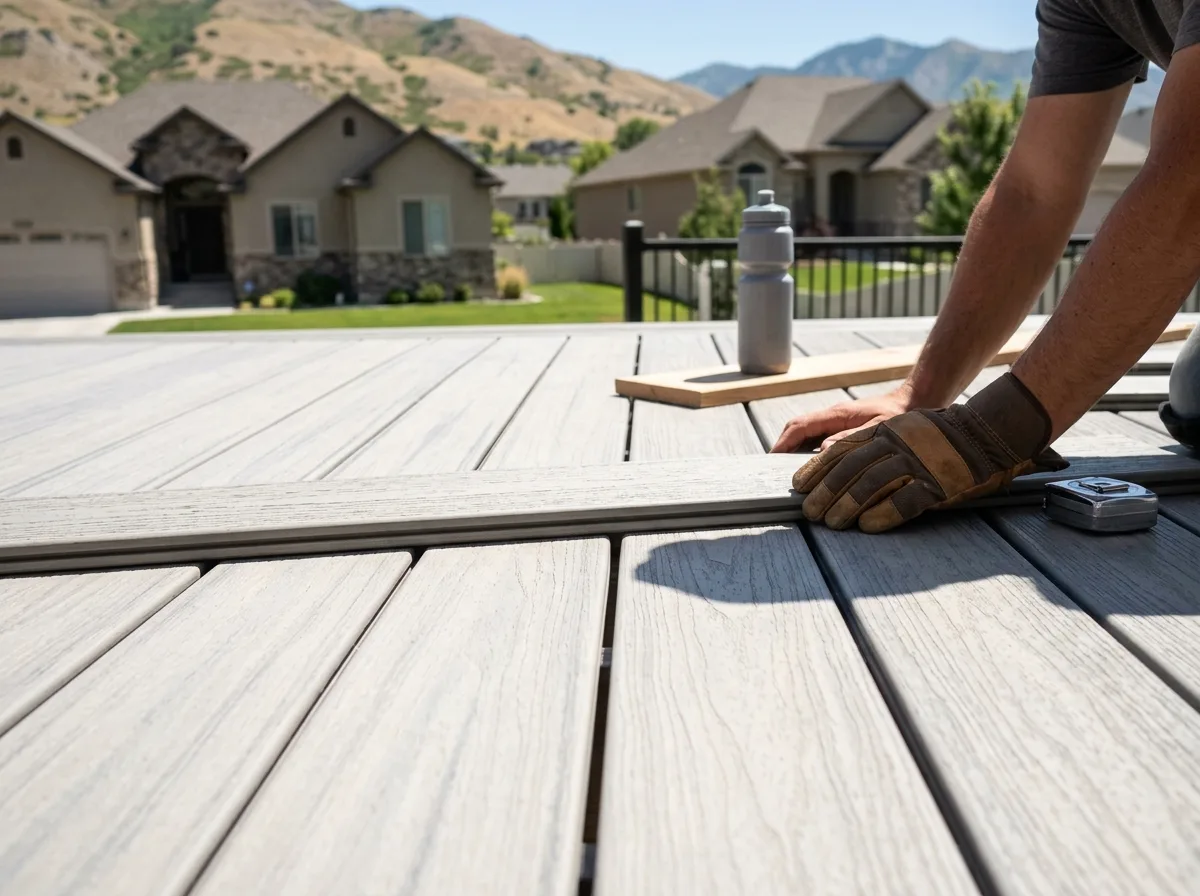
Color is the biggest lever you have, and it costs nothing at the point of choosing. A light board runs noticeably cooler than a dark one in the same spot on the same afternoon, and that gap is the difference between a deck the family uses after lunch and one that only comes alive after dinner.
Material matters as well, though less than most sales copy implies. PVC boards and lighter capped composite generally run cooler than dense dark composite. Natural cedar runs cooler again, which is an honest point in favor of wood if barefoot summer use is the priority, and the full trade-off between the two is laid out in our comparison of composite and cedar decking in Utah.
What composite will not do
No decking board is cool in direct Utah sun. Not composite, not PVC, not wood, and not the products marketed as cool-touch. Those are cooler than the alternative in the same color, which is a real improvement worth paying for, but nothing on the market defeats a cloudless afternoon at 4,500 feet, and any company that tells you otherwise is selling.
Two more honest limits. Hosing the deck down works, and it works for about ten minutes before the boards are back where they started. And heat does not damage a quality composite board, but it does make it expand, which is why gapping and fastener spacing are not fussy details. A deck built tight in April is the one that buckles in July.
How to keep a deck comfortable through a Utah July
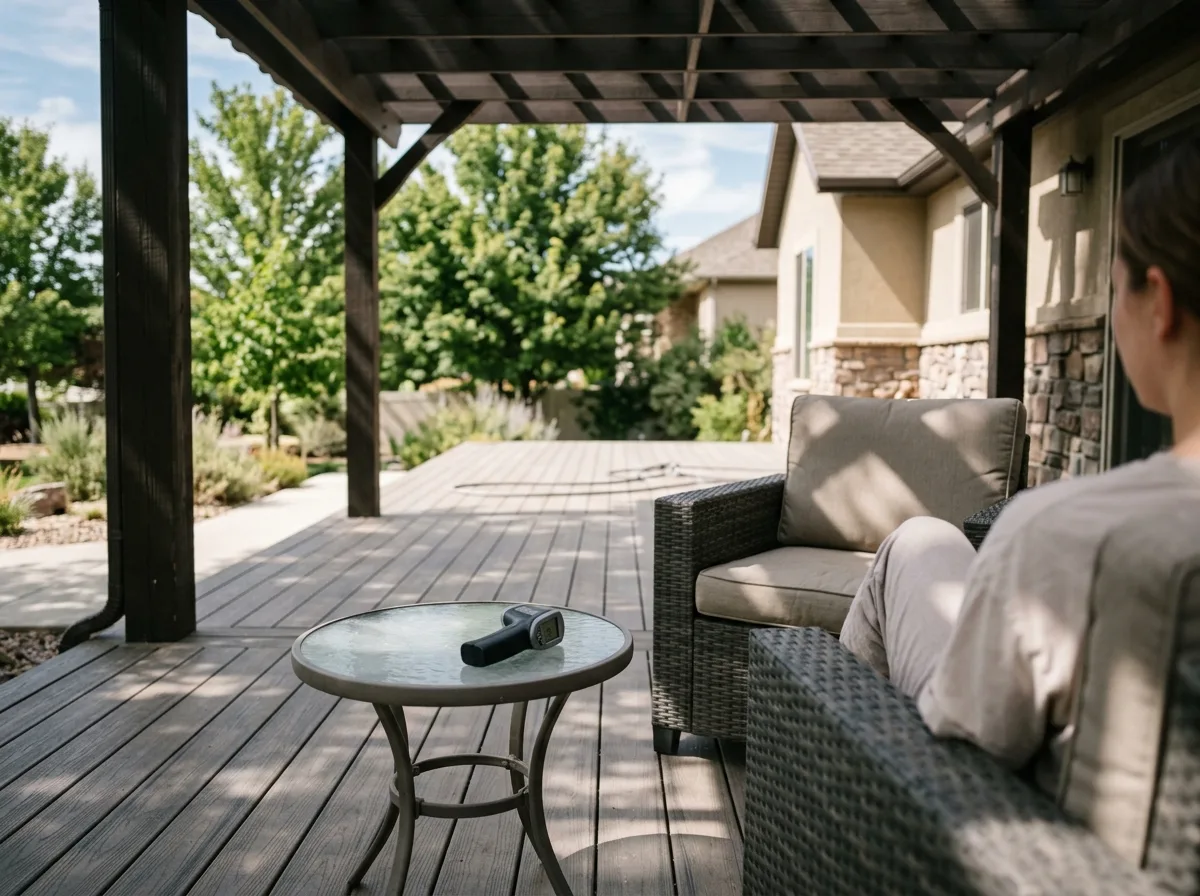
Shade is the fix, and it is worth planning at the same time as the deck rather than bolting something on two summers later. A pergola, a solid patio cover, a shade sail, or a mature tree on the west side of the yard does more for surface temperature than any board upgrade you can buy.
The rest is small and cheap. Light-colored boards, an outdoor rug along the main walking path, furniture placed where the afternoon shadow actually falls, and accepting that the west-facing half of a Utah deck belongs to the evening. Most families end up using the deck in the morning and after six anyway, which is when the valley is at its best.
How Installify builds decks for Utah sun
We plan for heat at the design stage instead of leaving you to discover it in July. That means walking the yard to see where the afternoon sun actually lands, recommending board colors that suit a west-facing deck rather than whatever looks best under showroom lighting, and setting board gaps and fastener spacing for the expansion our summer swings cause.
We also build the shade in rather than around it, designing pergolas, patio covers and covered sections together with the deck instead of adding them later. We pull any permits the job needs, work within your HOA's rules, and get most projects scheduled within two weeks. Our custom deck building across the Wasatch Front is backed by a lifetime materials warranty and a 2-year installation warranty.
Get a Real Number for Your Deck
Every yard faces the sun differently, and the right board for a shaded north-facing deck is the wrong one for a west-facing bench lot. Call (385) 402-8427 or get a free quote and we'll beat your best written estimate by $100 or more, guaranteed, or you get a $50 Amazon gift card.
Frequently asked questions
Does composite decking get too hot to walk on in Utah?
In direct afternoon sun, dark composite can get too hot for bare feet, and Utah's altitude makes that worse than the air temperature suggests. Light-colored boards and any real shade bring it back to comfortable.
Which decking material stays coolest?
In the same color, PVC and lighter capped composite generally run cooler than dense dark composite, and natural cedar runs cooler again. Color matters more than material though: a light composite board beats a dark wood one.
Does hosing down a composite deck cool it off?
Yes, briefly. Water drops the surface temperature straight away and the boards warm back up within about ten minutes in full sun. It is a fix for a moment, not for an afternoon.
Will Utah heat damage composite decking?
No. Quality composite handles our summer temperatures without warping or fading. What heat does is make the boards expand, which is why correct gapping and fastener spacing at install matter so much here.
What deck color is best for a hot Utah backyard?
Light greys, tans and driftwood tones. They absorb less heat than espresso, walnut and black, and the difference is easy to feel barefoot on a July afternoon.
Is a pergola enough to make a hot deck usable?
Usually, for the area it covers. Shade is the single biggest lever on deck surface temperature, bigger than any board upgrade, and it also protects your furniture from high-altitude UV.


