
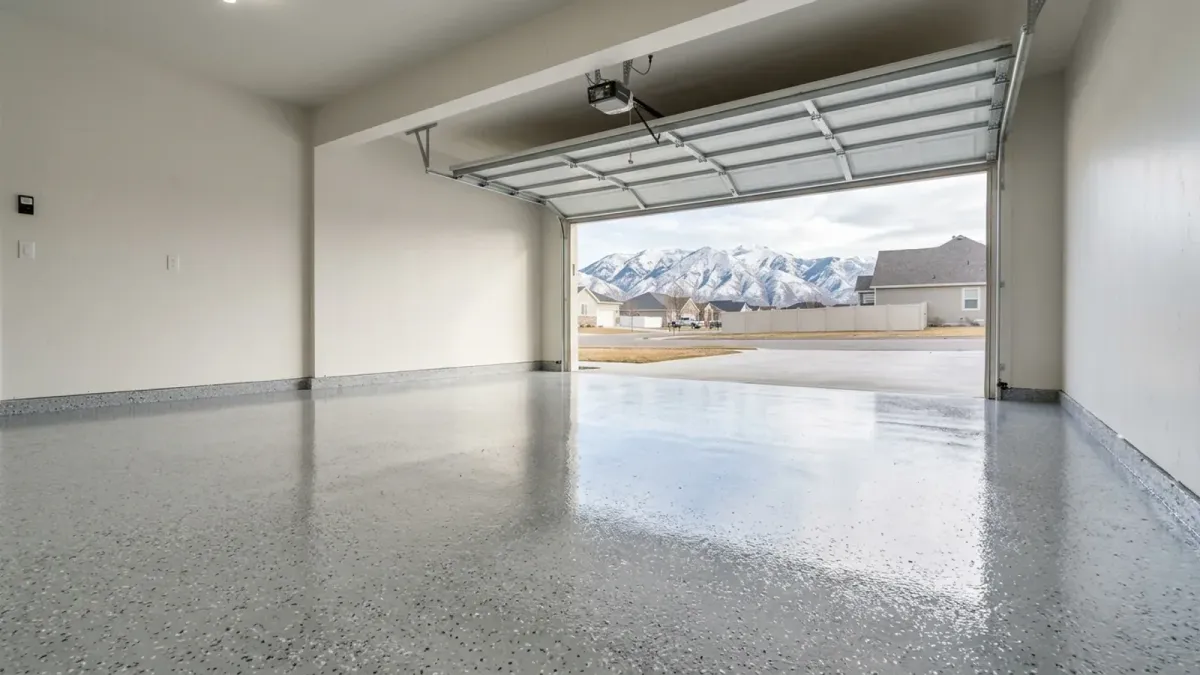
Epoxy Garage Floor Cost in Utah: Is It Worth It?
If you park in a Sandy garage through a full Wasatch Front winter, you already know what road salt, snowmelt, and freeze-thaw cycles do to bare concrete. Slush drips off your tires, salt sits in the pores, water freezes and expands overnight, and by spring you've got surface pitting, dusting, and stains that never fully scrub out. An epoxy floor coating is one of the few upgrades built to shrug all of that off, but the first question every homeowner asks is a fair one: what does it actually cost here, and is it worth it?
Below are honest 2026 market ranges for Utah, what drives the price up or down, and how epoxy holds up to our specific climate. Prices below are typical market context, not a quote, for an exact, guaranteed number on your garage, it takes about a minute to Get a Free Quote.
What an epoxy garage floor costs in Utah (2026)
Across Utah and nationally, professionally installed epoxy garage floor coatings typically run $3 to $12 per square foot, depending on the system and how much prep your slab needs. In real garage terms:
What moves you within that range is mostly the slab, not the paint. Older homes in Sandy and Draper often have concrete that's been dusting or spalling for years, which means grinding, crack repair, and moisture testing before a single coat goes down. Better systems, full flake broadcast, thicker mil builds, or a polyaspartic topcoat, sit at the higher end but last dramatically longer. A thin one-coat job is cheap for a reason.
- Single-car garage (roughly 250 sq ft): most Utah homeowners spend about $1,000 to $3,000.
- Two-car garage (about 400 sq ft / 20x20): roughly $1,500 to $5,000.
- Three-car garage (600+ sq ft): commonly $3,000 to $7,500+.
Is professional epoxy worth it vs. a DIY kit?
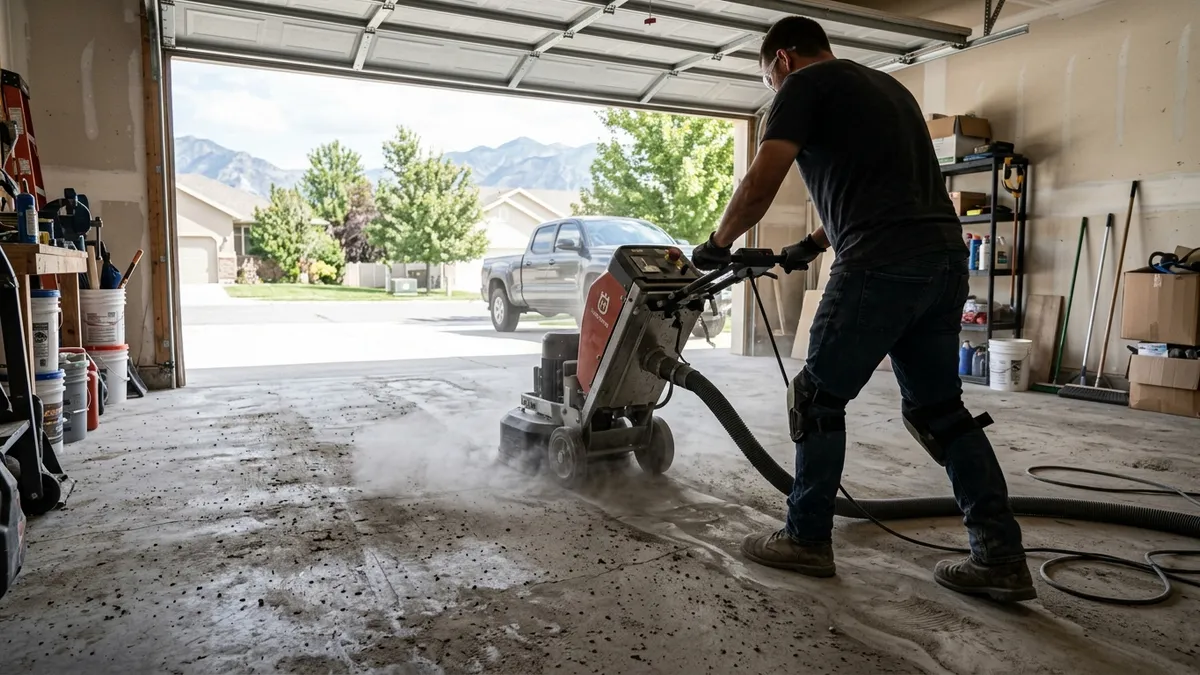
A big-box DIY epoxy kit runs about $100 to $300 and looks tempting next to a pro install. The gap in price is real, and so is the gap in results. The failure point is almost never the product; it's the prep. DIY kits skip diamond grinding and proper moisture testing, and along the Wasatch Front our slabs push moisture vapor up from the ground constantly. Coat over that and the epoxy peels in sheets within a year or two.
A professional epoxy garage floor coating includes mechanical grinding, crack and joint repair, moisture mitigation, and a controlled cure, the parts that decide whether your floor lasts 3 years or 20. For homeowners dealing with salt and freeze-thaw, that prep is the whole ballgame. Installify is licensed and insured, backs materials with a lifetime warranty, and covers installation for 2 years, coverage a $150 kit simply can't match.
What's the downside of epoxy on concrete?
Being straight with you: epoxy isn't flawless. The honest tradeoffs:
None of these are dealbreakers. They're just reasons to hire someone who preps and coats correctly rather than rolling the dice on a weekend kit.
- It can peel if prep is skipped, again, moisture and poor grinding are the usual culprits.
- Pure epoxy can yellow under heavy UV. In a garage that mostly matters near a sun-blasted open door, which is why many Utah installs finish with a UV-stable topcoat.
- It cures slowly in cold weather, so late-fall and winter installs need temperature control.
- A high-gloss finish gets slick when wet, a flake or anti-slip additive fixes that, and you'll want it given how much slush comes off your tires here.
Epoxy vs. polyaspartic: which is better for Utah?
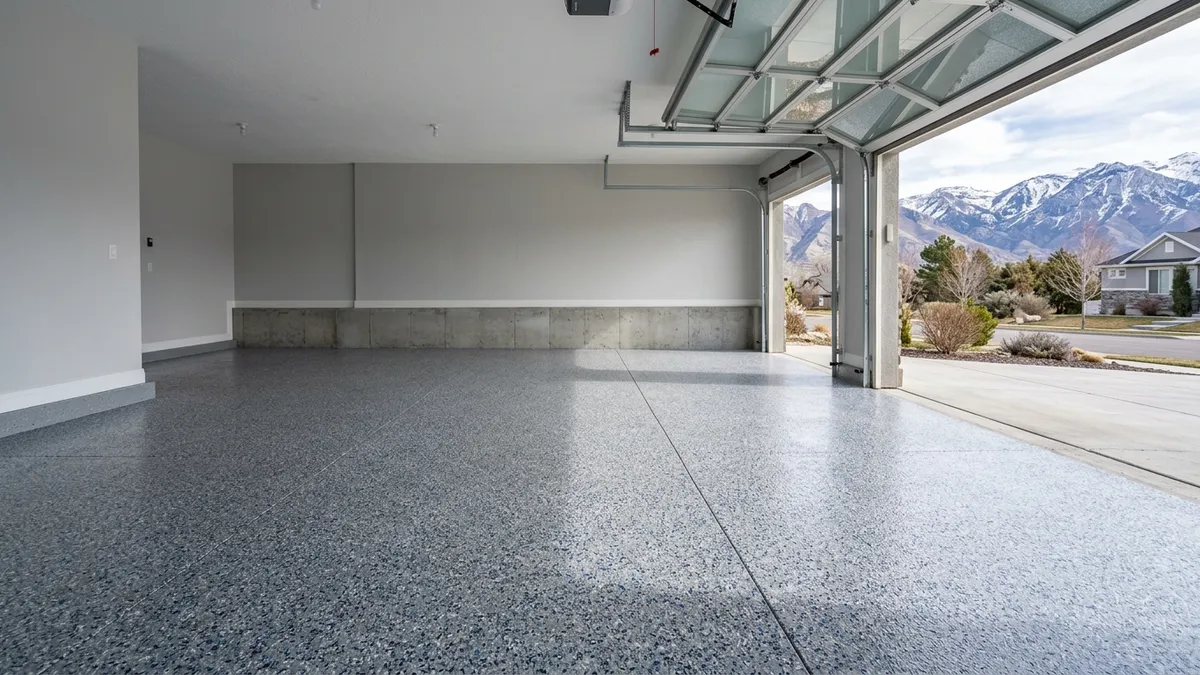
This is the question that actually matters along the Wasatch Front. Polyaspartic coatings cure faster (often same-day), tolerate cold-weather installs better, and resist UV yellowing and road-salt corrosion more strongly than standard epoxy. Epoxy is thicker, builds a harder base layer, and costs less up front.
The best answer for most Utah garages isn't either/or, it's a hybrid system: an epoxy base coat for build and adhesion, finished with a polyaspartic topcoat for UV stability, salt resistance, and a tougher wear surface. You pay a bit more than plain epoxy, but for a floor that eats freeze-thaw, hard-water spotting, and salt all winter, it's the system that lasts.
Ready for a number you can count on? Installify is licensed and insured, starts most jobs in 2 weeks or less, and backs the work with a lifetime materials warranty and a 2-year installation warranty. Call (385) 402-8427 or get a free quote today.
Frequently asked questions
How much does it cost to epoxy a 2-car (20x20) garage floor in Utah?
Most Utah homeowners spend roughly $1,500 to $5,000 for a professionally installed two-car (about 400 sq ft) epoxy floor in 2026. The spread depends on slab condition, crack repair, and whether you add a flake or polyaspartic topcoat. That's market context, for an exact, guaranteed price on your garage, Get a Free Quote.
Is professional epoxy worth it vs. DIY?
For most Utah garages, yes. DIY kits ($100 to $300) skip grinding and moisture testing, and our high water tables and freeze-thaw cycles cause those floors to peel fast. A pro install costs more but includes the prep that decides whether the floor lasts 3 years or 20, plus a lifetime materials warranty and 2-year installation warranty.
What is the downside of epoxy on concrete?
It can peel if the slab isn't ground and moisture-tested, pure epoxy can yellow under UV, it cures slowly in the cold, and a glossy finish is slick when wet. A proper prep, a UV-stable topcoat, and an anti-slip flake additive solve all four.
Epoxy vs. polyaspartic, which is better for Utah?
Polyaspartic wins on UV resistance, salt resistance, and cold-weather cure time; epoxy wins on cost and base build. For the Wasatch Front, a hybrid epoxy base with a polyaspartic topcoat is usually the smartest, longest-lasting choice.
How long does an epoxy floor last?
A properly prepped, professionally installed epoxy floor commonly lasts 10 to 20 years, and a polyaspartic topcoat can push the wear surface further. Skipped prep is what shortens that lifespan, which is exactly what professional installation prevents.


