
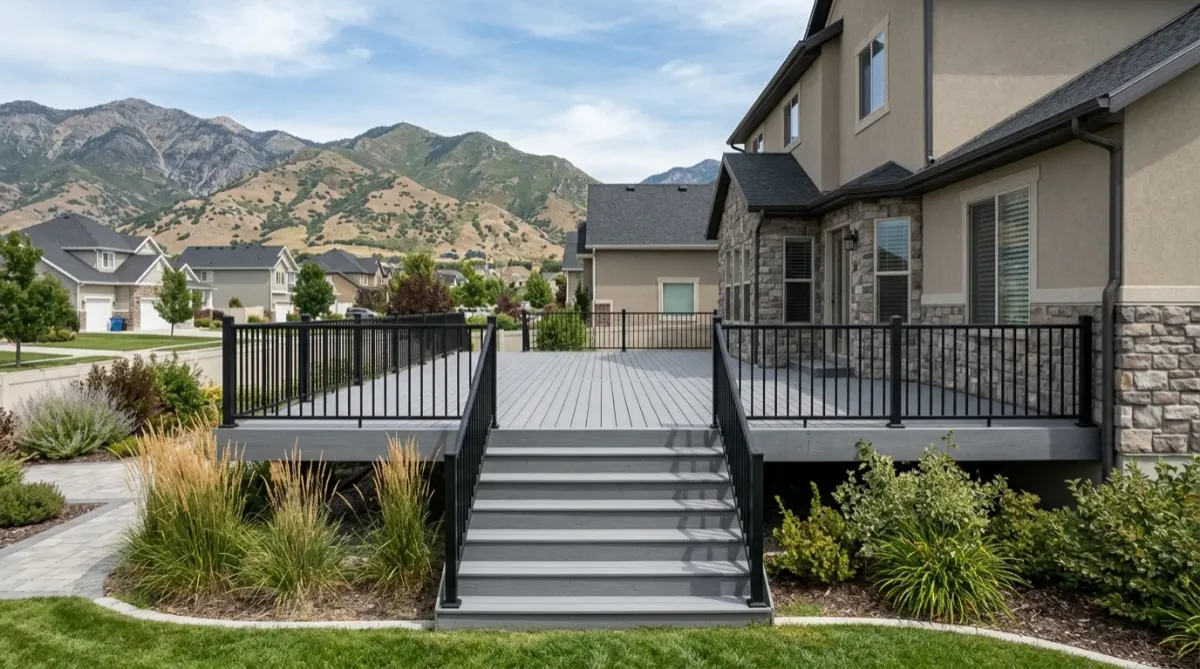
How to Choose a Deck Builder in Sandy, Utah: 8 Questions to Ask
Choosing the right deck builder in Sandy
Search for a deck builder in Sandy, Utah and you get a page of directories, star ratings and "top 10" lists. None of them tell you the thing that actually matters: whether the deck will still be level, solid and attached to the house after ten Utah winters.
Almost every deck looks good on the day the crew leaves. The difference between a good builder and a bad one shows up later, in footings that heave, ledger boards that pull away from the house and boards that warp in the high-altitude sun. This guide gives Sandy homeowners eight questions to ask before signing, and what a good answer sounds like.
1. Are you licensed and insured in Utah?
Start here, because everything else depends on it. Utah licenses contractors through the Division of Professional Licensing (DOPL), and you can look up any contractor's license on DOPL's public search before you sign. Ask for proof of liability insurance too, and confirm it is current.
An unlicensed builder may be cheaper, but if a worker is hurt on your property or the deck fails an inspection, you carry the risk. A builder who hesitates to show either document has answered the question for you.
2. Who pulls the permit?
In most cases a deck in Utah needs a permit, especially one attached to the house or standing more than 30 inches off the ground. Sandy City sets the details for your address, so the answer comes from the city, not a rule of thumb.
A good builder pulls the permit themselves and builds to pass inspection. Be wary of anyone who suggests skipping it to save time. An unpermitted deck can surface when you sell the house, and the fix is rarely cheap.
3. How deep do your footings go, and why?
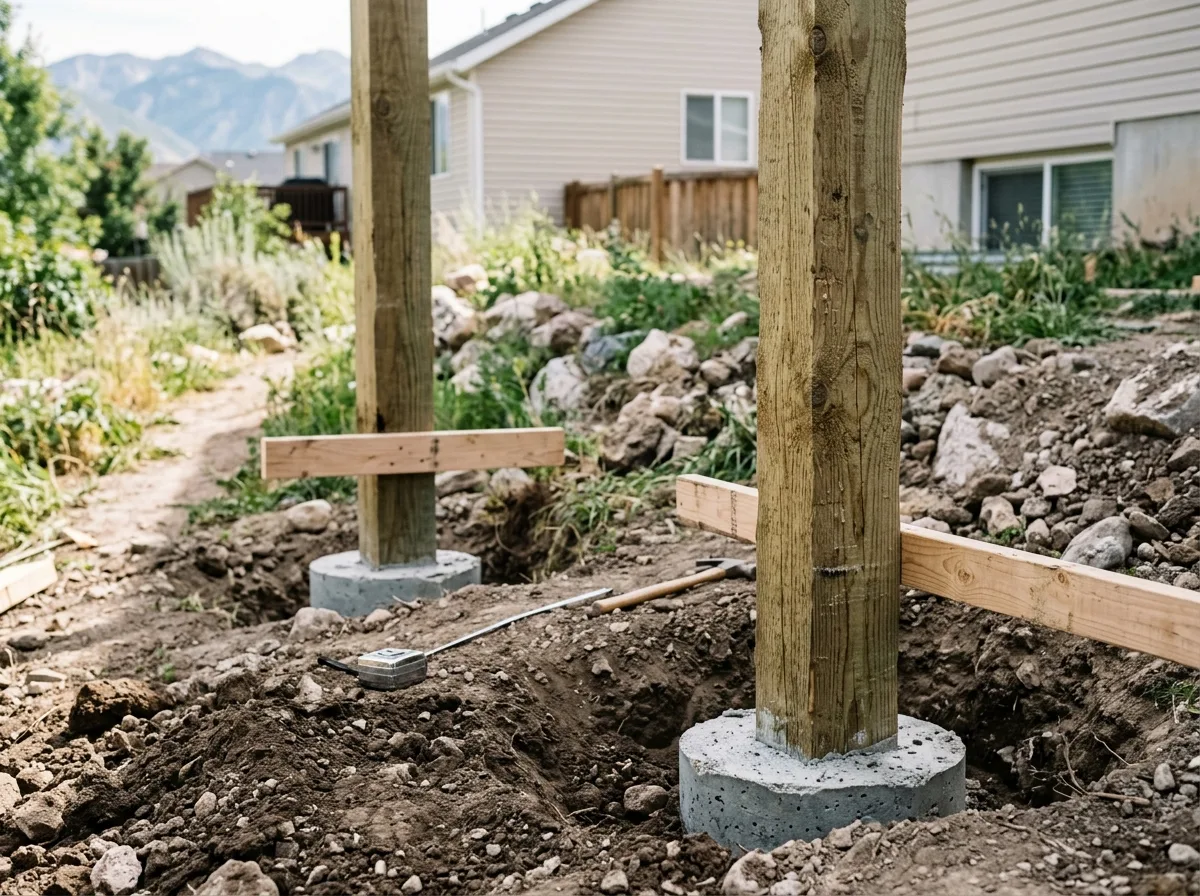
This is the question that separates builders fastest. Utah's freeze-thaw cycles push up any footing that is not set below the frost line, which is why cheaply built decks tilt, sag or pull away from the house after a few winters.
Listen for a clear answer about frost depth, concrete footings sized for the load and how they handle the rocky, clay-heavy soil common on the east bench. A vague answer about posts set in "a bit of concrete" is a red flag.
4. Do you design for Sandy's snow load?
Sandy sits higher than much of the valley floor, and neighborhoods toward Bell Canyon, Dimple Dell and the foothills see heavier snow. A deck carries that weight all winter, on top of furniture and people.
Ask whether joists, beams and footings are sized for the actual local snow load or copied from a generic span chart. Our Sandy service page covers the neighborhoods we work in, from Hidden Valley and Pepperwood to Granite and White City. A builder who works locally should know which lots need extra structure, and a steep foothill lot often needs engineered footings and some retaining work quoted up front so there are no change orders halfway through.
5. How do you attach the deck to the house?
Most attached decks hang off a ledger board bolted to the house. Done right, it carries half the deck's load and keeps water out of your walls. Done wrong, it is one of the most common reasons a deck fails.
Ask how the ledger is fastened, how it is flashed against water and whether the framing below meets code. These parts disappear under the decking, so you are trusting the builder to get them right.
6. Which materials do you recommend for Utah, and why?
Sandy is above 4,400 feet. The sun is strong, the air is dry, and winter runs boards through freeze and thaw again and again. Untreated wood greys and splinters fast here.
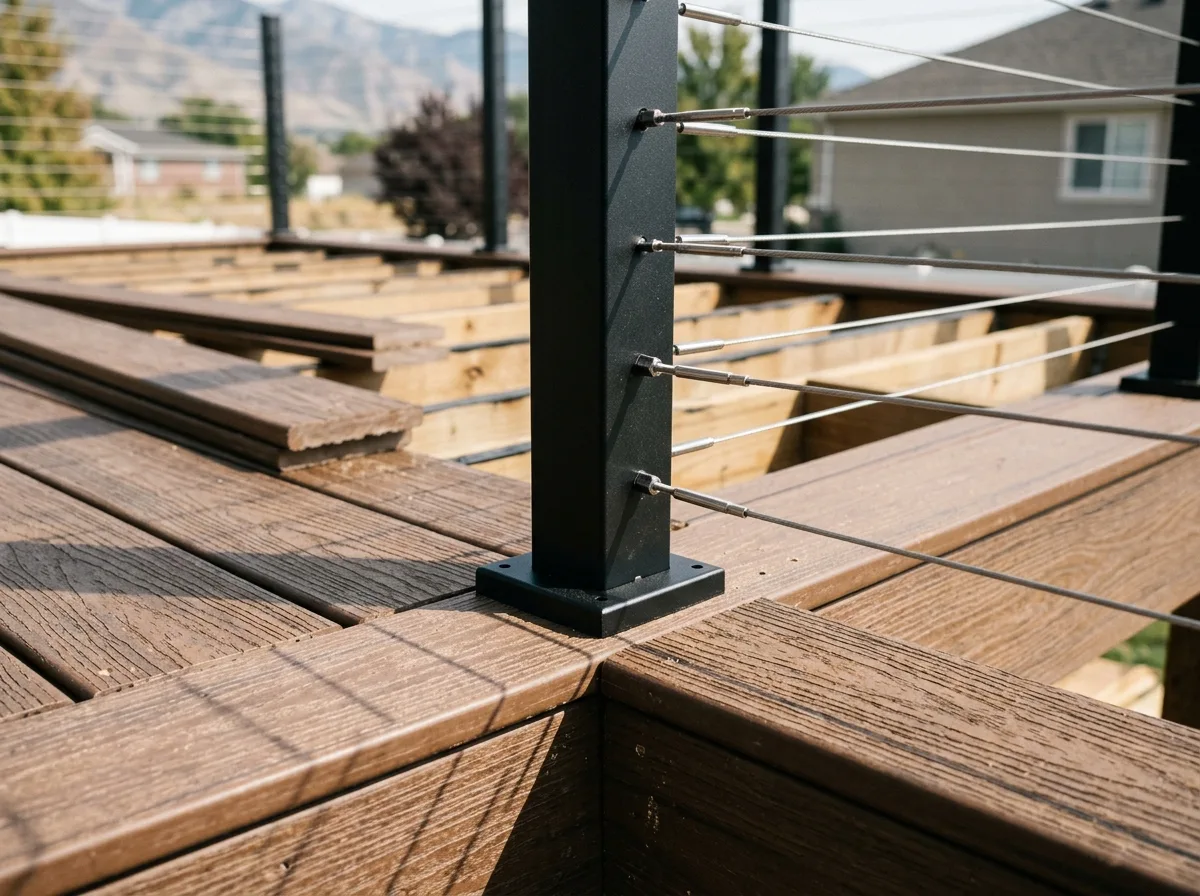
A good builder explains the trade-offs instead of pushing one product. Composite such as Trex or TimberTech, and PVC, cost more up front but need only a sweep and a rinse a couple of times a year. Treated lumber and cedar cost less on day one but need staining and sealing every couple of years. Ask about railing options too, whether cable, aluminum, composite, wood or glass, because railings change both the look and the price. Our custom deck installation page lists the materials and railing systems we build with.
7. What exactly is in the written quote?
Compare quotes line by line, not by the total at the bottom. A complete quote names the decking and railing products, the footing and framing work, the stairs, the permit and cleanup. A low number that leaves out the permit or the railing is not actually low.
Size, height and materials move a deck's price more than anything else, so two quotes for different decks are not comparable. Before you collect bids, our guide to what a new deck costs in Utah shows the typical ranges by material, so you can tell a fair number from one that is missing something.
8. What warranty do you give, and when can you start?
Ask for the warranty in writing and check that it covers both parts of the job: the materials and the installation. Manufacturer coverage on the boards is common. A builder who also backs their own workmanship is telling you they expect the deck to hold up.
Then ask about timing. Most decks take one to three weeks to build once work starts, with multi-level and permitted builds at the longer end. What varies most is the wait to start, which can stretch for weeks in the spring rush. Get a realistic start date in writing.
How Installify answers these questions
Installify is a licensed and insured deck builder based in Sandy, at 8741 S Harrison St. We pull permits wherever they are required and size every deck for the local snow load. Each deck is backed by a lifetime materials warranty and a 2-year installation warranty.
Most projects are scheduled and started within 2 weeks. After we walk your lot, you get a detailed written quote within 24 hours. Our Best Price Guarantee applies to it: bring us your best written estimate and we will beat it by $100 or more, or send you a $50 Amazon gift card.
Ready to compare? Call (385) 402-8427 or get a free quote, and we will walk your yard and give you straight answers to all eight questions.
Frequently asked questions
How do I check if a deck builder is licensed in Utah?
Utah licenses contractors through the Division of Professional Licensing (DOPL). Search the contractor's name or license number on DOPL's public license lookup and confirm the license is active before you sign anything.
Do I need a permit to build a deck in Sandy, Utah?
In most cases, yes, especially for a deck attached to the house or more than 30 inches off the ground. Sandy City sets the exact rules for your address. Installify pulls the permit for you wherever one is required.
How long does it take to build a deck in Sandy?
Most decks take one to three weeks once construction starts, depending on size, material and complexity. Permitted multi-level builds take longer. Installify starts most projects within 2 weeks of the quote being accepted, weather permitting.
Is composite or wood better for a deck in Sandy?
For most homeowners, composite holds up better to Utah's freeze-thaw cycles, dry air and strong sun, with almost no upkeep. Wood costs less up front but needs staining and sealing every couple of years.
How many deck quotes should I get?
Two or three written quotes for the same size, height and materials is usually enough to see a fair price. Compare them line by line, including the permit, footings, railing and cleanup.


