
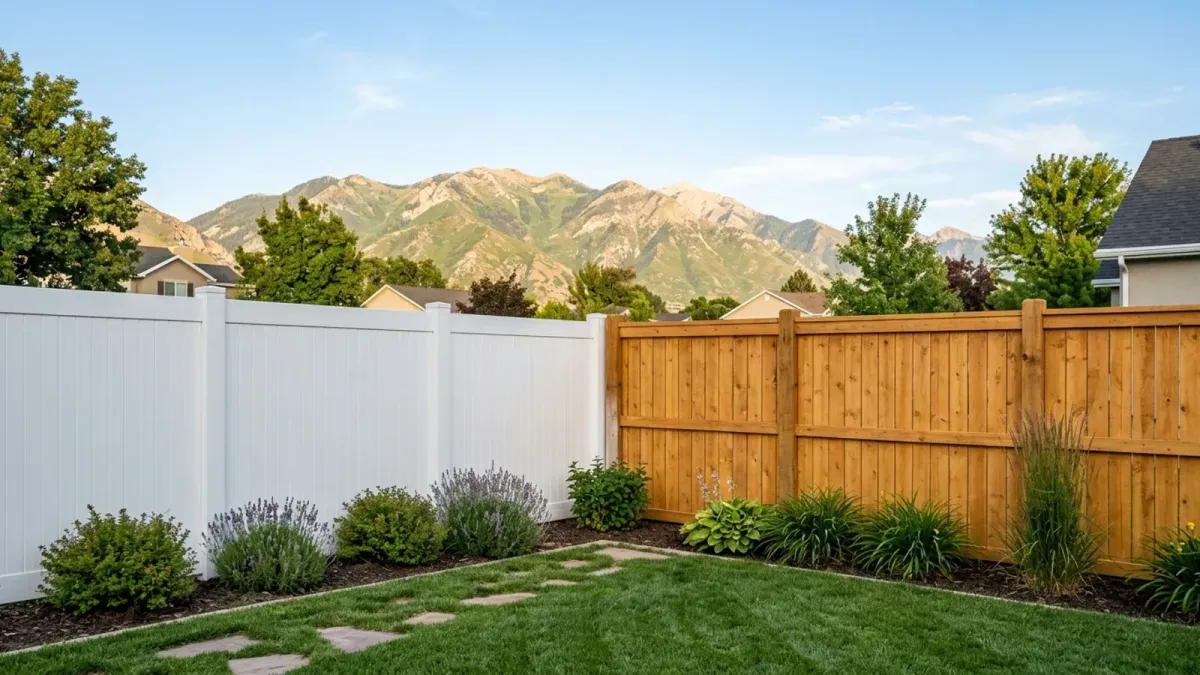
Vinyl vs. Wood Fence in Sandy, Utah: Which One Actually Lasts?
If you are pricing out a new fence in Sandy, the choice usually comes down to vinyl or wood. Both look great the day they go in. The real question is how they hold up two, ten, and twenty winters later, and that answer is very different once you factor in Wasatch Front weather.
Sandy sits high enough that fences take a beating most homeowners underestimate: heavy snow load off the Cottonwood canyons, hard freeze-thaw swings that split and heave, intense high-altitude UV that fades and dries out materials faster than sea level, and dry summer heat. Add in hard, mineral-heavy water and rocky, clay-heavy soil, and the "cheaper" option on paper is not always the one that lasts. Here is how the two really compare.
How long each fence actually lasts in Utah
This is where vinyl and wood separate the most.
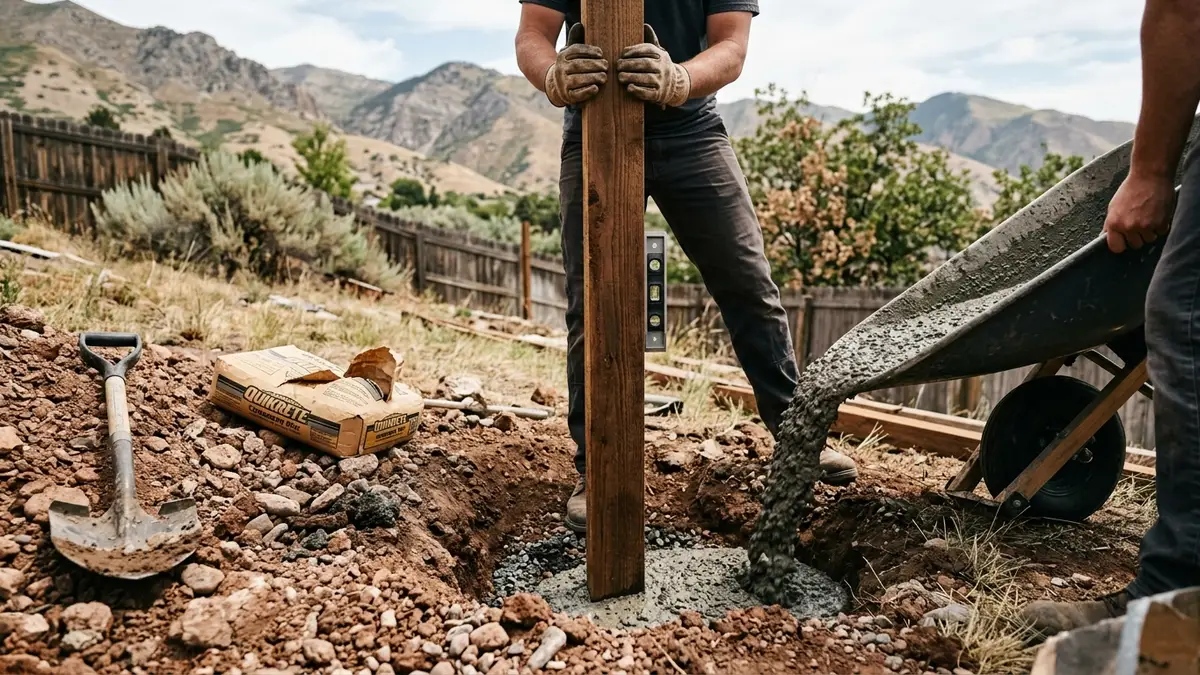
The single biggest factor for wood is the post. We set fence posts in mixed concrete, which keeps them plumb through frost heave and clay movement far better than posts tamped into dirt, a real difference in soil like ours.
- Vinyl: A quality vinyl fence typically lasts 25 to 30-plus years with almost no maintenance. It does not rot, warp, or feed on moisture, and modern vinyl is UV-stabilized to resist the fading our high-altitude sun causes. It flexes in wind and sheds snow rather than soaking it up.
- Wood: A well-built cedar or treated pine fence usually lasts 12 to 20 years in Utah, but only if you stay on top of it. Our freeze-thaw cycles work moisture into the grain, boards cup and gray from UV, and posts are the first to fail where they meet the soil. Skip maintenance and that lifespan drops fast.
Maintenance: what you sign up for
Wood is the more hands-on fence. To hit its full lifespan in Utah you should plan to reseal or restain every two to three years, because our dry heat and UV pull the oils out and leave boards thirsty and gray. You will also chase the occasional warped board, popped nail, or split picket.
Vinyl is close to hands-off. Our hard water can leave mineral spots and dust film, but that rinses off, a hose or a mild soap-and-water pass a couple of times a year keeps it bright. If you want the full routine, see our guide on keeping a vinyl fence clean. No sanding, no staining, no sealing, ever.
Weather: snow, wind, and UV
For Sandy specifically, this is the deciding section for a lot of homeowners.
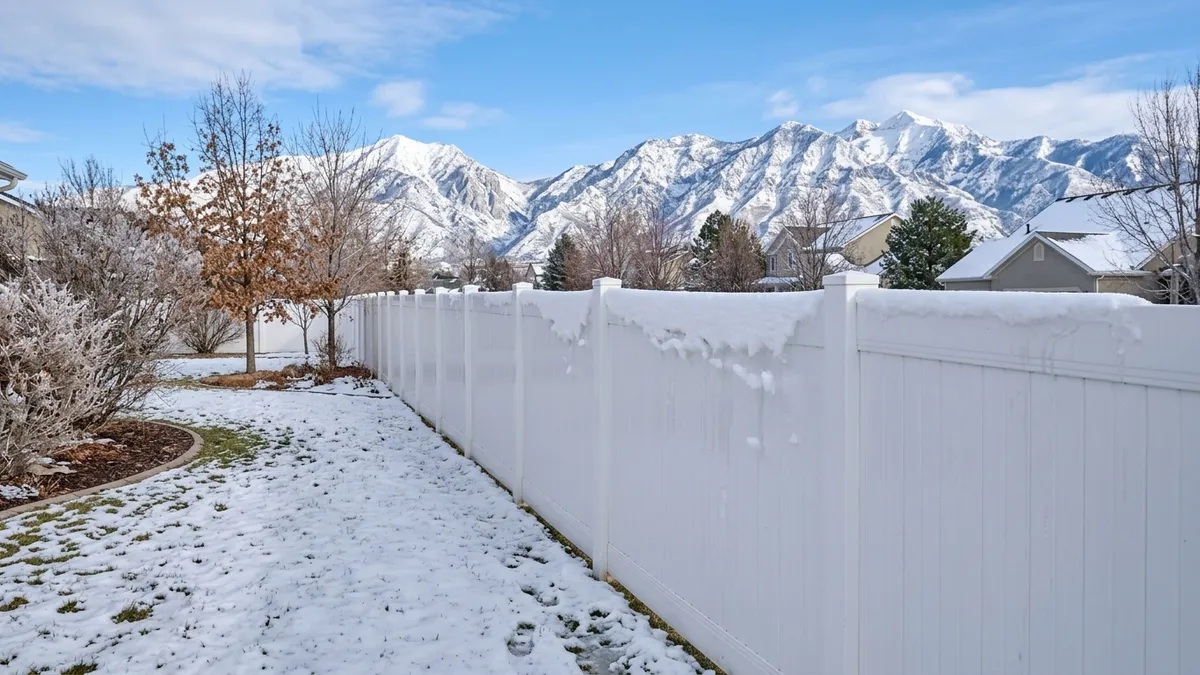
- Snow load: Vinyl sheds and flexes; wet spring snow tends to slide off. Wood absorbs moisture along the bottom rail, which speeds up rot over the years.
- Wind: Both do fine when installed right with concrete-set posts. Vinyl's slight flex actually helps in gusty benches; wood relies entirely on solid posts and fasteners.
- UV: This is vinyl's home turf. Our thin, high-altitude air means stronger UV, and UV-stabilized vinyl holds its color for decades. Unsealed wood fades to gray in just a few Utah summers.
Cost: what Utah homeowners really pay
Straight up: wood usually costs less to install, and vinyl usually costs less to own.
As general market context, most Utah homeowners spend roughly $25 to $45 per linear foot for a standard wood privacy fence and roughly $35 to $60 per linear foot for vinyl, depending on height, style, terrain, and gates. Wood wins on day-one price. But add up 20 years of stain, sealer, and board repairs and vinyl often comes out even or ahead, while looking newer the whole time.
Those are typical market ranges, not a quote. For an exact, guaranteed number on your yard, the fastest path is to Get a Free Quote.
Permits, HOAs, and getting it done right
Fence rules matter here because HOAs are everywhere along the Wasatch Front. In general, most Utah cities allow up to 6 ft in rear and side yards, limit front-yard fences to around 4 ft, and enforce sight-triangle rules on corner lots, but you should confirm the specifics with your city, and many HOAs require design approval before you build. We handle the permitting so you do not have to chase it, and you can compare styles on our fencing options before you build.
Ready to Pick the Right Fence for Your Sandy Yard?
Still weighing vinyl against wood? We will walk your property, talk through the trade-offs, and hand you a firm, guaranteed number for your yard. Call (385) 402-8427 or get a free quote and we'll help you choose the fence that lasts.
Frequently asked questions
How long does a vinyl fence last vs wood in Utah?
Vinyl typically lasts 25 to 30-plus years with little upkeep, while wood usually lasts 12 to 20 years and only reaches the top of that range if you reseal it every couple of years to fight Utah's UV and freeze-thaw.
Do vinyl fences look cheap?
Older, thin vinyl did. Today's heavier-gauge vinyl comes in wood-grain and textured styles that read clean and modern, and it stays that way instead of graying like unsealed wood.
Is vinyl fencing worth the money in Utah?
For most homeowners, yes. It costs more up front but skips decades of staining and board repairs, holds its color under high-altitude UV, and shrugs off snow, so the long-run cost often lands even with or below wood.
What are the downsides of vinyl fencing?
Higher upfront cost, fewer color options than stained wood, and it is harder to repair a single panel discreetly. In extreme cold a hard direct impact can crack a panel, though quality vinyl is built to flex.
Which handles Utah snow, wind, and UV better?
Vinyl, in most cases. It sheds snow, flexes in wind, and resists UV fading, while wood absorbs moisture at the base and needs sealing to survive the same conditions.
Does Installify handle permits and HOA approval?
Yes. We pull the required permits and work within your HOA's rules so your fence passes the first time. We are licensed and insured, and most projects start in two weeks or less.


