
Artificial Turf in Winter: How It Handles Utah Snow
Artificial Turf in Winter: How It Handles Utah Snow
The first real storm of the season is when a lot of new turf owners start to wonder. The lawn disappears under a few inches of snow, overnight lows drop into the teens, and a fair question comes up: is any of this doing damage?
For a properly installed lawn, the short answer is no. Artificial turf in winter is one of the easier things to own along the Wasatch Front, with no dormant brown patch to nurse back to life in April. Winter does ask a few things of you, though, mostly about how you clear snow and what you put on the surface. Here is what cold, snow and freeze-thaw cycles actually do to turf in Salt Lake and Utah counties, and how to keep yours looking the way it did the day it went in.
Does artificial turf survive a Utah winter?
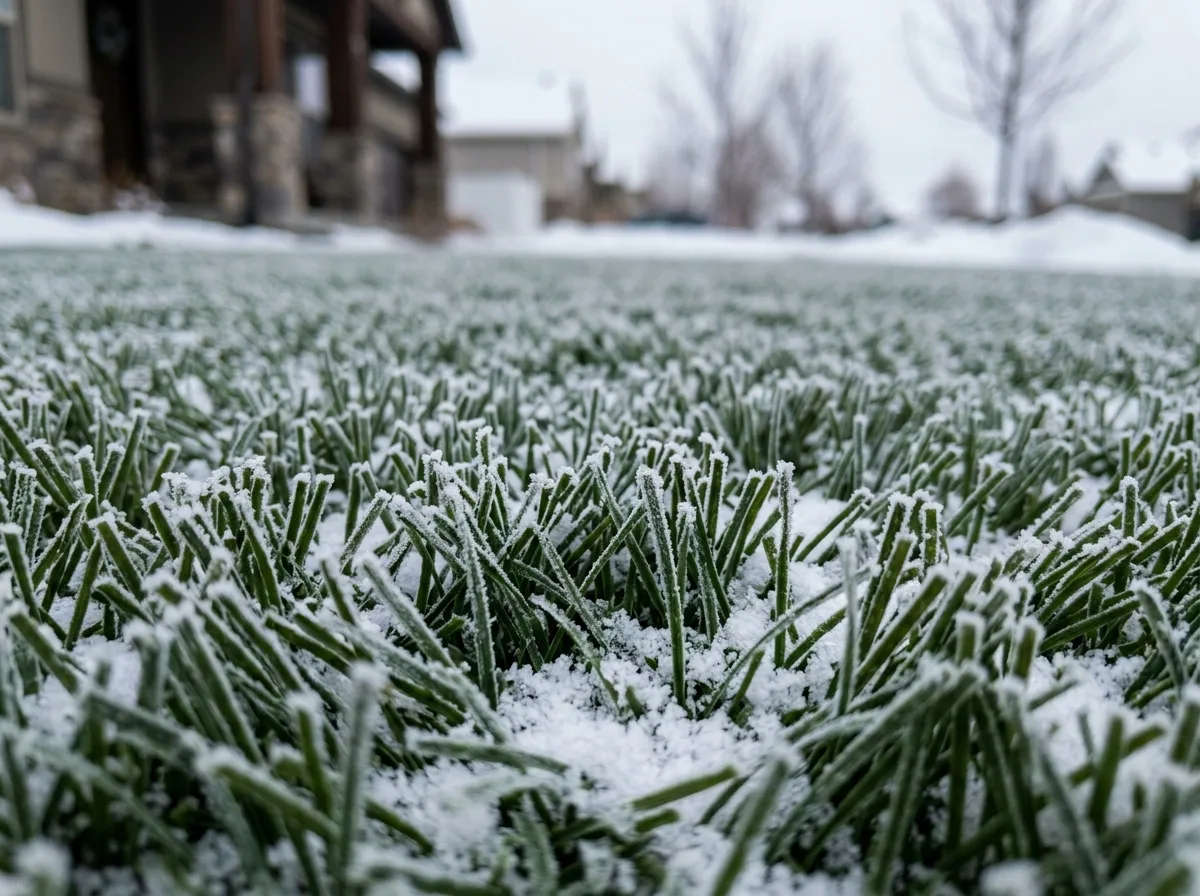
Yes. Quality synthetic turf is built from polyethylene and polypropylene fibers that stay flexible well below freezing, and the cold itself does not crack or break them. Fibers can feel stiff on a frozen morning, and a lawn may look slightly matted after heavy snow sits on it for a week, but both recover as it warms and a quick brushing stands the blades back up.
The part that decides how a lawn handles winter is not the fiber. It is the base underneath. Utah winters bring repeated freeze-thaw cycles, where snow melts in the afternoon sun and refreezes overnight. Water that cannot drain sits under the turf, freezes, expands and heaves the surface. That is where lumps, low spots and wrinkles come from, and they are an installation problem rather than a turf problem.
That is why every artificial turf installation we do goes over excavation, grading and a compacted gravel base with drainage built in. A base that drains well is a base that stays flat through January.
What happens when the snow melts
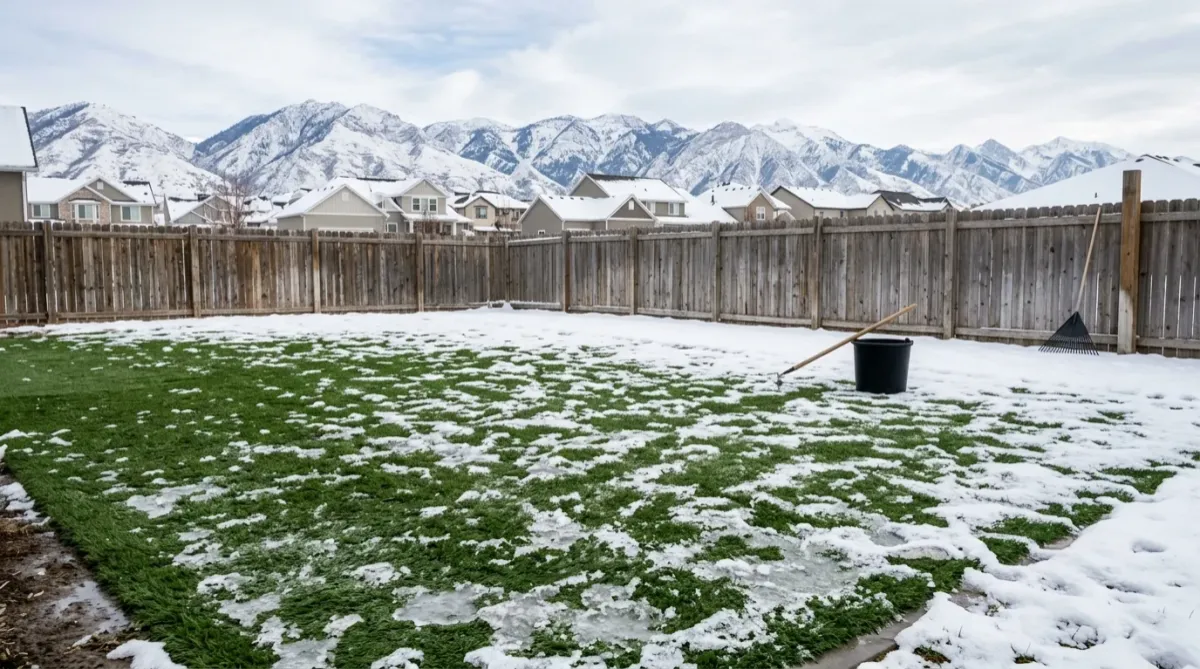
Turf backing is perforated, so meltwater passes straight through it into the gravel base and away, instead of pooling on top the way it can on a patio. On a well-built lawn you can walk out the afternoon after a storm and find it damp rather than soaked.
How fast that happens depends a lot on where your yard sits. Clear, sunny days between storms melt snow off an open lawn quickly, while a shaded, north-facing yard up on the benches in Sandy or Draper can hold snow for weeks longer than a sunny lot down the street. During a Salt Lake Valley inversion, when cold air sits trapped on the valley floor for days, snow on lower lots can linger too. None of that hurts the turf, but it is exactly why the base matters.
Drainage slows down when the base itself is frozen solid, so after a hard cold snap you may see some standing water or a thin skin of ice until the ground thaws. That is normal and temporary. What is not normal is water that sits in the same low spot after every storm. That usually points to a base that was not graded or compacted properly, and it is worth having looked at before it freezes and heaves.
Can you shovel snow off artificial turf?
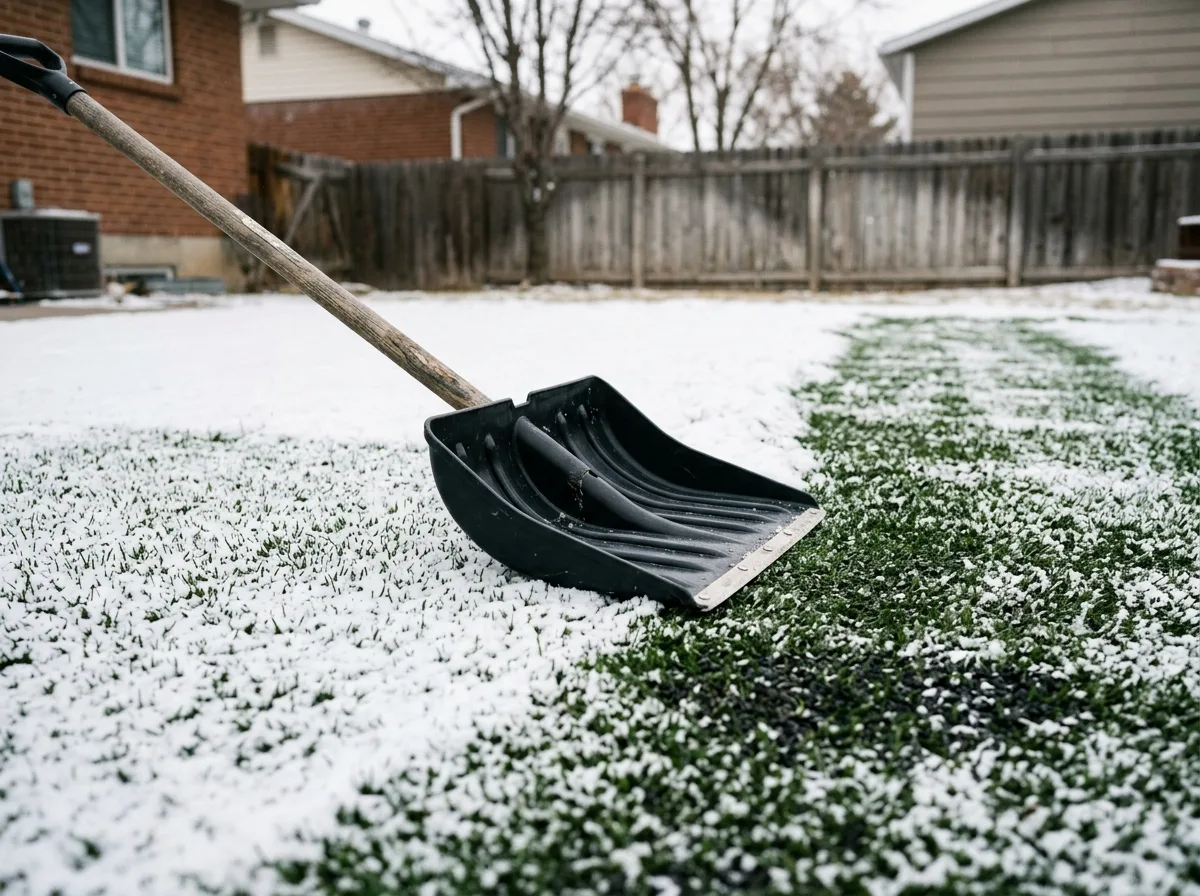
Most of the time you do not need to. Snow melts off turf on its own and drains through it. If you want the lawn usable sooner, for kids or a dog, you can clear it. Just treat it more gently than a driveway.
- Use a plastic shovel, not metal. A metal edge can snag and cut fibers or catch a seam.
- Leave the last inch. Skim the top layer and let the sun take the rest, rather than scraping down to the blades and pulling out infill.
- Push, do not chip. If there is a crust of ice, wait for it to soften instead of breaking it up with a tool.
- Keep snow blowers high. A blower set to scrape the ground can tear fibers and throw infill across the yard.
- Skip the rock salt. Salt and heavy de-icers leave residue in the infill and can be harsh on the backing. If you truly need traction, a light sprinkle of sand works and rinses out in spring.
Pets and turf in the cold
Dogs do not stop going outside in December, and turf is one of the better surfaces for them in winter. There is no mud to track in when the snow melts, and paws come back cleaner than they would off a thawing lawn.
The drainage base does its job year round, and the antimicrobial infill we use for pet yards helps with odor even when the weather is too cold to hose the lawn down. On a mild winter afternoon, a quick rinse of the dog's usual spot keeps things fresh. Our guide to artificial turf for dogs covers pet setups in more detail.
Can you install artificial turf in fall or winter?
Fall is one of the best times to install, and it is worth booking now if you want your yard finished before the ground freezes. Temperatures are comfortable for the crew, the soil digs easily, and you avoid the spring rush when everyone else decides they are done mowing.
Deep winter is different. A turf base has to be excavated, graded and compacted properly, and frozen or saturated ground does not compact the way it should. A base built on it can settle unevenly once spring arrives. So through the coldest stretch we will be straight with you about when the ground is ready, rather than rushing a lawn that has to last for years.
If you are still weighing whether turf is right for your yard, the biggest winter advantage is simple: there is nothing to reseed, aerate or nurse back to green when spring arrives.
Getting your lawn ready for spring
When the last snow melts, a few minutes of care brings a lawn back to full shape. Clear any leaves and debris, brush the fibers against the grain with a stiff synthetic-bristle broom or power brush so they stand upright, and rinse away any sand or grime left from winter.
While you are out there, walk the edges and seams. A good installation holds them tight through the freeze-thaw season, and spring is the time to spot anything that has lifted. Premium turf on a well-built base typically lasts 15 to 25 years, and our article on how long artificial turf lasts in Utah explains what shortens or stretches that range.
Get your turf in before the ground freezes
If you have been thinking about replacing your lawn, fall is the window to do it. Installify installs artificial turf across Salt Lake and Utah counties, licensed and insured, with a lifetime materials warranty and a 2-year installation warranty. Call (385) 402-8427 for a free quote, and we will beat your best written estimate by $100 or more, or we send you a $50 Amazon gift card.
Frequently asked questions
Does artificial turf freeze?
The fibers get cold and can feel stiff, but they do not crack or break. On a well-drained base there is little water left under the turf to freeze, so the surface stays flat through the winter.
Can you walk on artificial turf when it is frozen?
Yes. Normal foot traffic will not harm frozen turf. Fibers that look matted after snow stand back up once the lawn warms and you give it a quick brushing.
Should I put salt or ice melt on artificial turf?
We recommend against it. Salt and heavy de-icers leave residue in the infill and can be hard on the backing. Let the snow melt, or use a light sprinkle of sand for traction and rinse it out in spring.
Is fall a good time to install artificial turf in Utah?
Yes. The ground digs and compacts well, the weather suits the work, and your lawn is ready before winter. In the coldest weeks, frozen ground can push the start back until the base can be built properly.
Will snow damage my artificial turf?
No. Snow sitting on turf does no harm and melts through the perforated backing into the drainage base. The only real risks are metal shovels, low snow blowers and salt, all of which are easy to avoid.


