
How to Choose a Concrete Contractor in Sandy, Utah
Finding a concrete contractor in Sandy you can trust
Search for a concrete contractor in Sandy, Utah and most of the first page is directories and "top 10" lists. They tell you who has the most reviews. They do not tell you whose patio or driveway will still be flat and in one piece after ten winters of freeze and thaw.
Almost every slab looks good the day the forms come off. The difference between a good contractor and a bad one shows up two or three years later, as cracks across the middle, sunken corners and a surface that flakes away. This guide gives Sandy homeowners the questions to ask before signing, and what a good answer sounds like.
Check the license and insurance first
Utah licenses contractors through the Division of Professional Licensing (DOPL), and anyone can look up a contractor's license on DOPL's public search in a couple of minutes. Do it before you sign, and ask for proof of current liability insurance as well.
An unlicensed crew may quote lower, but if someone is hurt on your property or a city inspector rejects the work, the risk lands on you. A contractor who hesitates to show either document has already answered the question.
Ask what goes under the slab
Concrete is only as good as the ground it sits on. Sandy's soil is a mix of clay and rock that moves as it wets and dries, and lots near the foothills can mean digging through cobble and dealing with slope. Ask how the site will be excavated and graded, how deep the base material goes and how it is compacted.
Listen for specifics: the slab should be graded so water runs away from the house, and the base should be compacted before anything is poured. If a contractor knows the difference between a lot in White City and one up toward Bell Canyon, that is a good sign. Our Sandy service page lists the neighborhoods we pour in.
A vague answer such as "we just level it and pour" is the most common cause of a slab that settles unevenly.
Ask about rebar, thickness and control joints
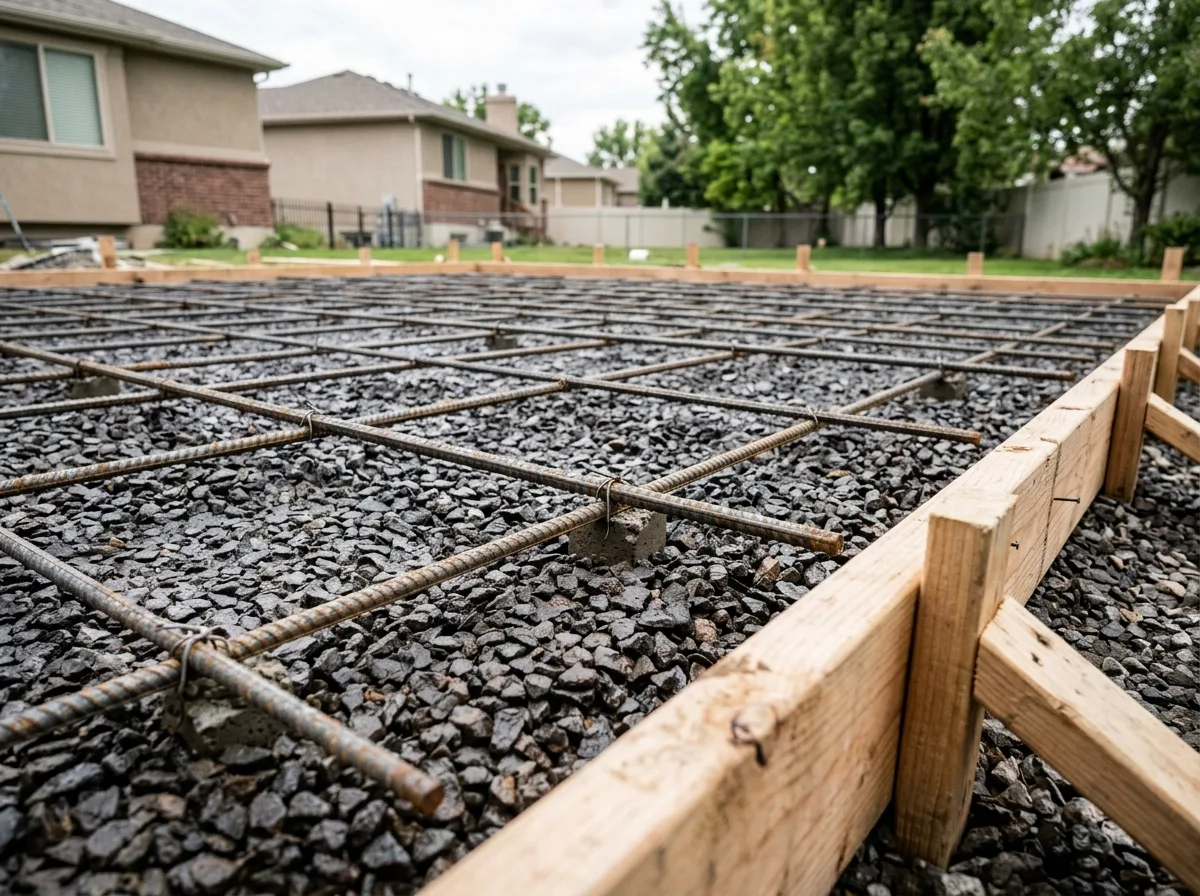
Ask three numbers: how thick, how reinforced and how far apart the joints will be. Patios are typically 4 inches thick over a compacted base. Driveways run 4 to 6 inches depending on what parks on them, because a passenger car is fine on 4 inches and a truck or RV needs 6.
Reinforcement matters just as much. On our concrete patios and driveways every slab gets rebar regardless of thickness, and control joints are cut so that when the slab moves, it cracks along a planned line instead of across the middle.
A good contractor will also tell you plainly that all concrete develops some hairline cracks. The aim is to keep them small and in the joints, not to promise a slab that never cracks at all.
Ask how they plan for freeze-thaw
Water gets into concrete, freezes, expands and pries the surface apart, over and over every winter along the Wasatch Front. Ask what the contractor does about it: the mix they order for exterior work, how the slab is sloped to shed water, and whether they recommend sealing it.
Ask about de-icing salt too. A good contractor will tell you how long to keep salt off a new driveway and which products are gentler on concrete.
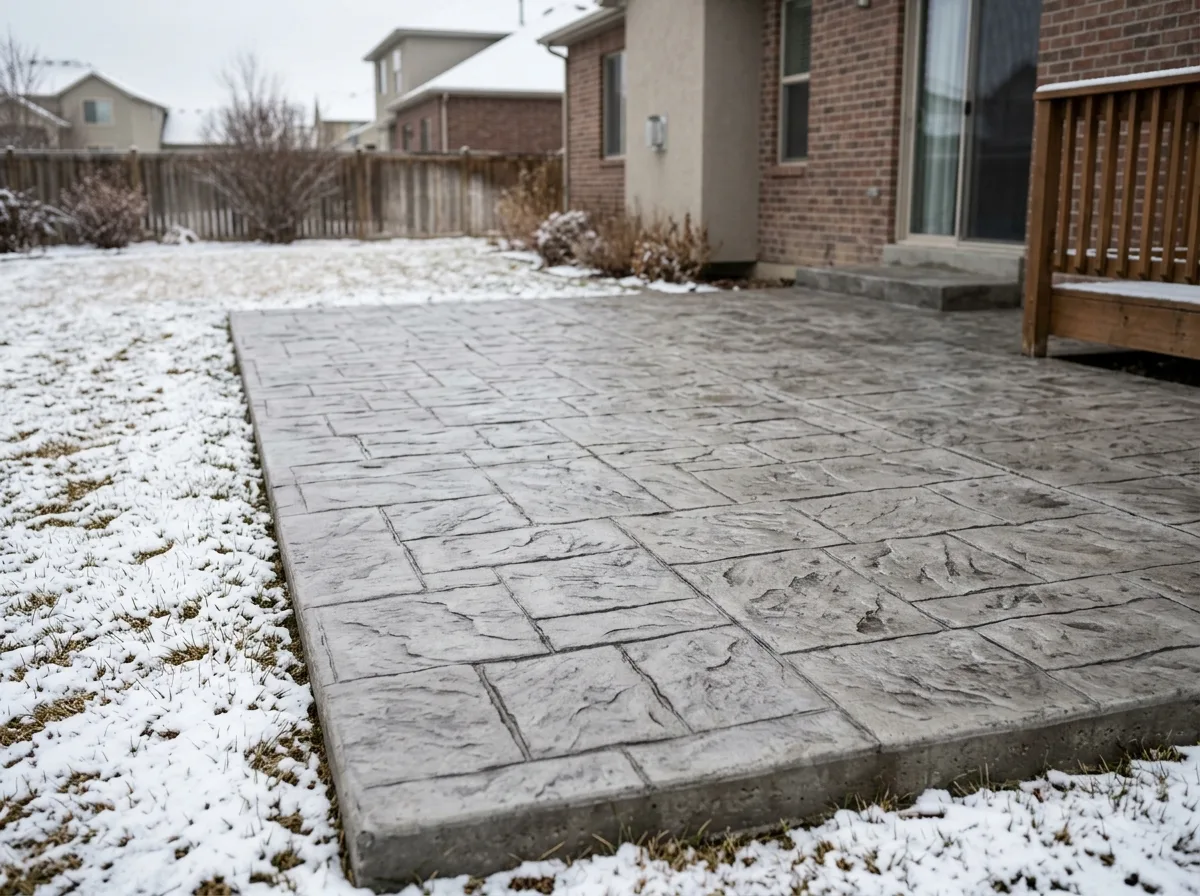
If you want a decorative finish, ask more questions, not fewer. A textured surface gives water more places to sit, so drainage and sealing matter more. Our article on how stamped concrete handles Utah freeze-thaw covers what keeps it looking good.
Ask when they will pour
Concrete does not dry; it cures through a chemical reaction that prefers moderate, steady temperatures. Late spring and early fall are the easiest windows here, and summer pours start early to keep the surface from drying too fast.
Winter pours are possible with the right precautions, such as heated water in the mix and insulated blankets while the slab cures. Ask what a contractor will do if a cold snap is forecast. The right answer is to wait, not to pour anyway and hope. Our guide to the best time to pour concrete in Utah covers each season.
Ask about the start date as well. Some contractors book months out; most of our projects are scheduled and started within two weeks.
Read the written quote line by line
A good quote spells out excavation, base, reinforcement, thickness, finish, forming, haul-off of any old slab and cleanup. A single number on a business card makes it impossible to compare two bids fairly, and it is where surprise charges come from later.
As general Utah market context, not a quote, standard poured concrete runs roughly $8 to $15 per square foot installed and stamped or colored concrete roughly $12 to $25. Access, slope, tear-out and shape move a job within those ranges.
If an existing slab is sound but worn, ask whether resurfacing would do instead of a full replacement. An honest contractor will tell you which one your concrete actually needs.
Ask about the warranty and the cleanup
Ask what is covered, for how long and in writing. Materials and workmanship are different things, and a warranty that covers only one leaves a gap. Every Installify slab carries a lifetime materials warranty and a 2-year installation warranty.
Ask what the yard will look like when the crew leaves, too. Leftover forms, washout and broken concrete are not something you should have to deal with.
Red flags worth walking away from
Any one of these is reason enough to get another bid:
- No license number, or reluctance to show insurance.
- A large cash deposit demanded before any work is scheduled.
- No mention of base prep, rebar or control joints.
- A price far below every other written bid with no explanation.
- Pressure to sign today.
Get a concrete quote in Sandy
Installify is based in Sandy and pours patios, driveways, walkways and pads across Salt Lake, Utah and Davis counties. We are licensed and insured, and our Best Price Guarantee means we will beat your best written estimate by $100 or more, or send you a $50 Amazon gift card. Call (385) 402-8427 or ask for a free quote and we will walk your site and give you an exact price.
Frequently asked questions
How do I check a concrete contractor's license in Utah?
Utah licenses contractors through the Division of Professional Licensing (DOPL). Its public license search lets you look up any contractor by name or license number before you sign.
How thick should a concrete driveway be in Sandy?
Driveways are typically 4 to 6 inches thick over a compacted base. Passenger cars are fine at 4 inches; trucks and RVs need 6. Patios are typically 4 inches.
Will a new concrete patio or driveway crack?
All concrete develops some hairline cracks as it cures and moves with the seasons. Proper base prep, rebar, correct thickness and well-placed control joints keep them small and in the joints, and prevent structural cracks.
Can concrete be poured in winter in Utah?
Yes, with precautions such as heated water in the mix and insulated blankets while the slab cures. A careful contractor will not pour when temperatures are forecast to stay below freezing for an extended stretch.
How much does concrete cost in Sandy, Utah?
As general Utah market context, standard poured concrete runs roughly $8 to $15 per square foot installed, and stamped or colored concrete roughly $12 to $25. Your price depends on size, site prep, finish and access.


