
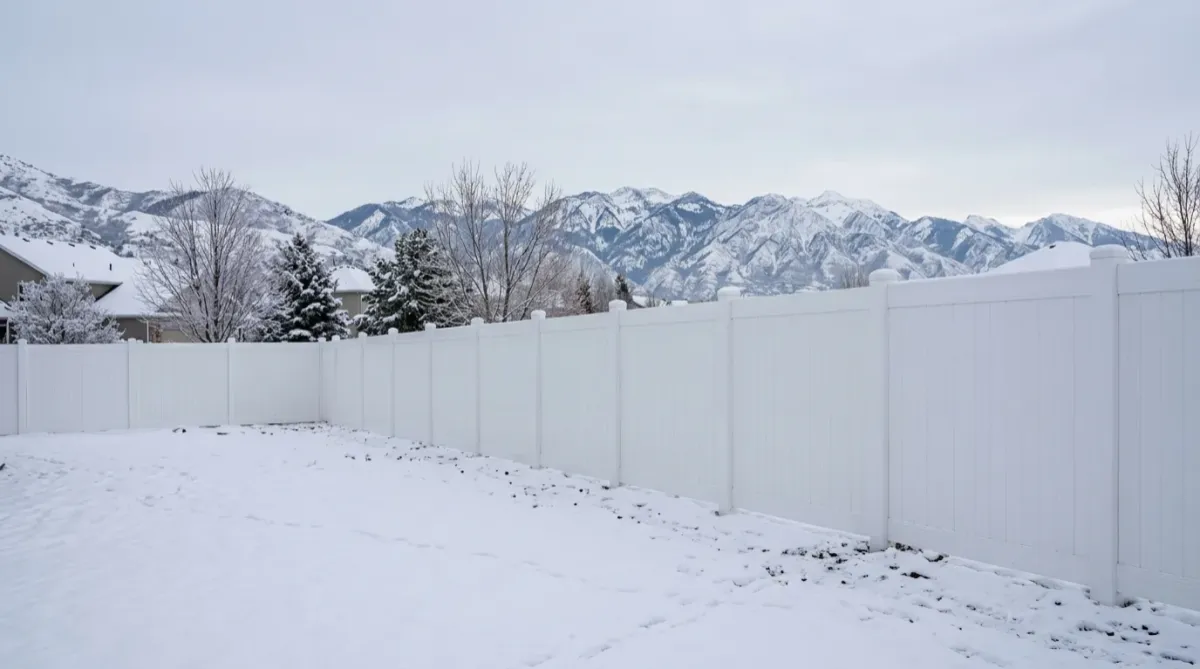
Can You Install a Fence in Winter in Utah?
Can You Install a Fence in Winter in Utah?
Most Utah homeowners assume fence season ends when the first snow falls. So they wait, call in April along with everyone else. It is a reasonable assumption, and it is mostly wrong: installing a fence in winter is ordinary work along the Wasatch Front.
Winter does change the job, though. Frozen ground, cold concrete and a snow-covered yard each affect how a fence goes in, and there are days when the right answer is to wait. Here is what a winter install involves across Salt Lake, Utah and Davis counties, and how to tell a careful one from a rushed one.
So can you install a fence in winter in Utah?
Yes. Crews build fences through Utah winters every year, and the fence you get in January is the same fence you would get in June, as long as the crew adjusts for the conditions. Our climate helps. Wasatch Front winters are cold and snowy, but they are also dry and broken up by clear, milder stretches between storms. What winter changes is not whether the job can be done, but how the ground digs, how the concrete cures, and how much of the yard the crew can actually see.
Can you dig post holes in frozen ground?
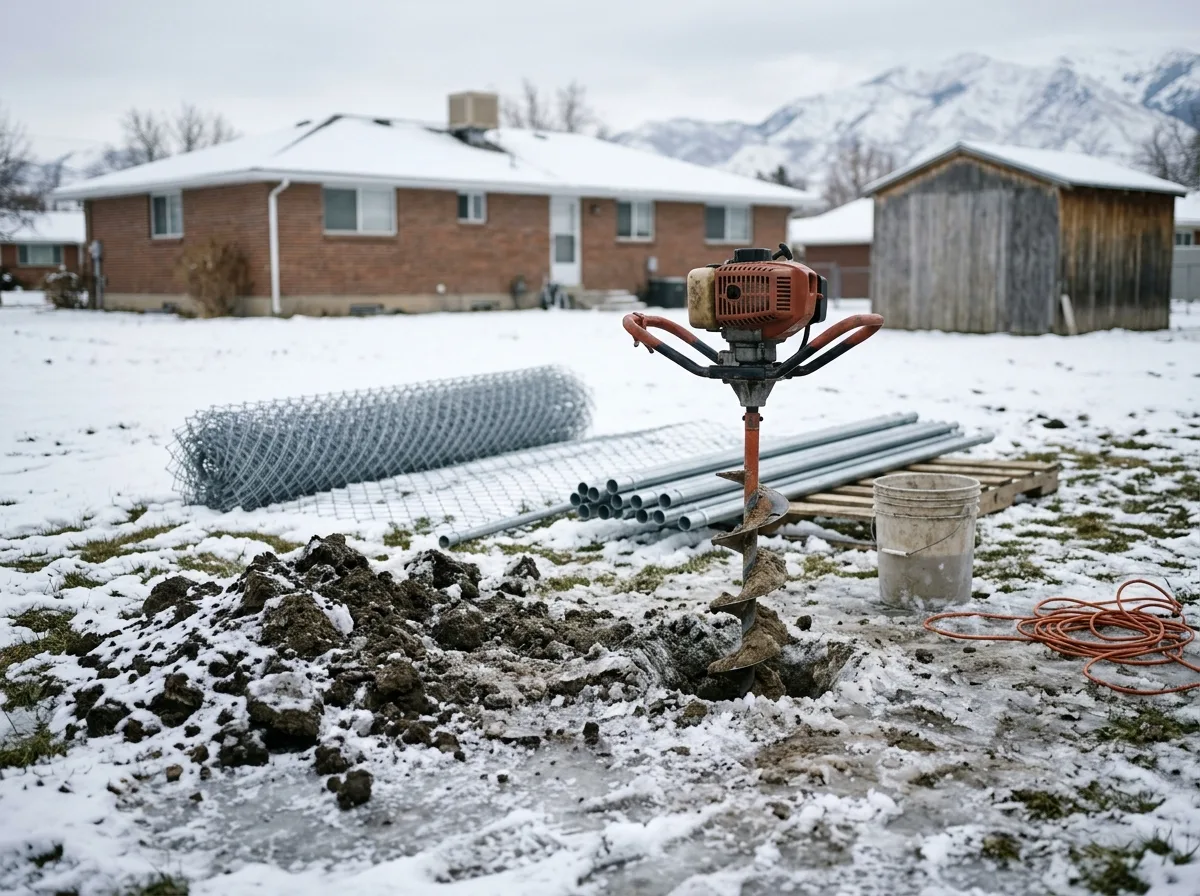
This is the question that stops most people, and frozen ground is a nuisance rather than a wall. In a typical valley winter the frozen layer is a crust near the surface, and fence posts are set well below it. A crew drills through that crust into softer soil underneath, not through a solid block.
A powered auger handles the crust on most days. Where it slows down is the rocky, clay-heavy soil we dig in around Sandy and up on the benches, which is already the hardest digging in the valley in any season. Frost adds time on top of that. On a hard day a crew thaws the surface first or brings a heavier machine, which costs labor time rather than stopping the job.
How much of a nuisance it is depends mostly on two things:
- How deep the frost has set, which follows the last cold snap far more closely than the calendar. A shaded, north-facing yard stays frozen weeks longer than a sunny lot down the street.
- Snow cover, which insulates the soil. Ground under a foot of snow is often softer than bare ground next door.
Cold-weather concrete is the part that actually matters
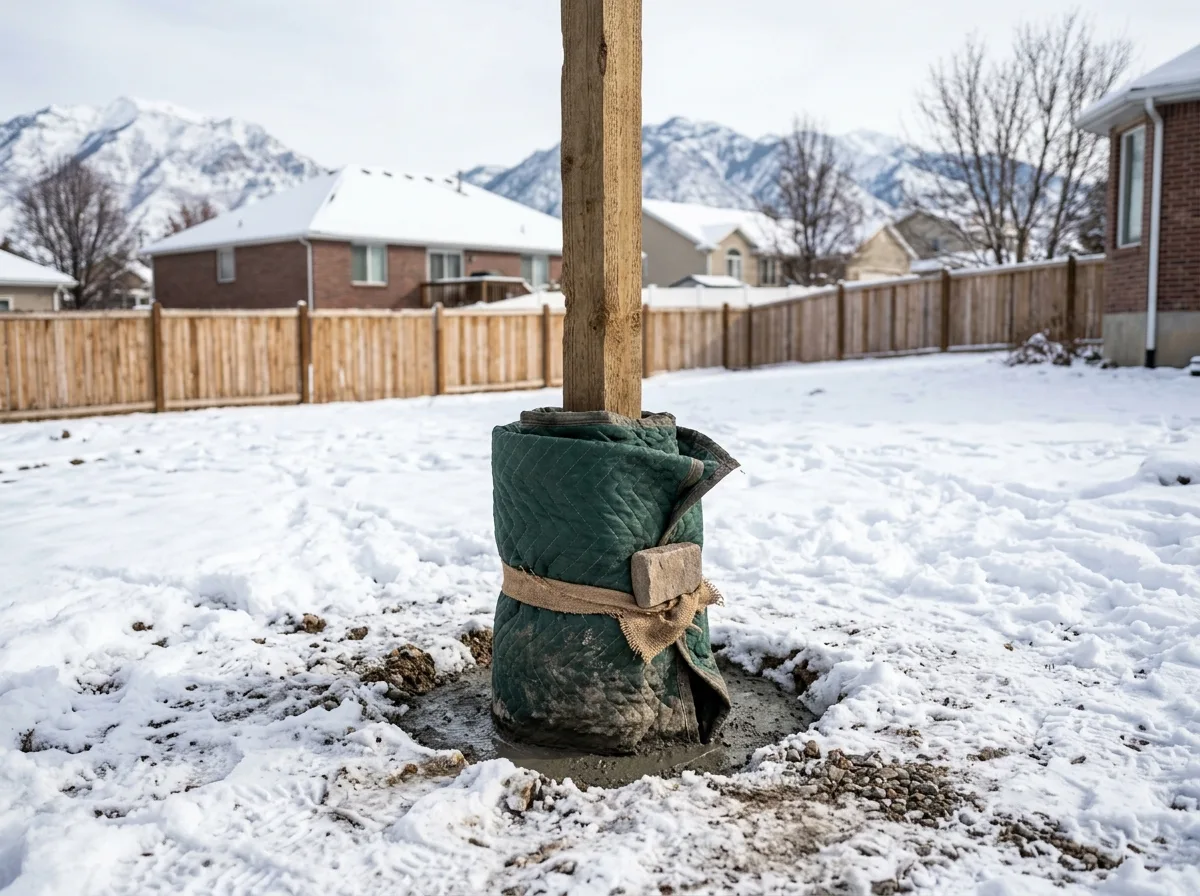
If a winter install goes wrong, this is almost always where. Concrete hardens through a chemical reaction that slows sharply in the cold, and the concrete industry treats anything around 40°F and below as cold-weather work that needs extra care. Concrete that freezes before it gains its early strength can be permanently weakened. That failure does not show up the same week. It shows up as a leaning fence line two winters later, and nobody traces it back to the install.
The fix is standard practice rather than a trade secret: warm mixing water, cold-weather admixtures, insulating blankets over fresh sets, and never pouring into a hole holding ice or standing water. We set every post in mixed concrete rather than tamping it into dirt, in every season, because that is what keeps a fence plumb through Utah's freeze-thaw cycles. In winter it matters more, not less.
So ask anyone bidding your winter job what they do differently in the cold. If the answer is nothing, that is your answer.
Which fence materials install well in the cold
We install fencing in vinyl, wood, iron, chain link, aluminum and composite, and most of it goes in fine in winter, with one caveat and one step that waits for spring.
- Vinyl, composite and Trex install well, but the panels get more brittle in the cold and need careful handling and cutting. Patience solves it; rushing cracks panels.
- Chain link and aluminum are largely unaffected. Metal does not mind the cold, and these are the easiest winter installs there are.
- Ornamental iron is fine to install, though powder-coated panels need careful handling so the finish is not chipped against frozen ground.
- Wood goes up fine, but staining and sealing wait for warmer weather, because most stain labels call for dry days above about 50°F. The fence gets built in winter and the finish comes later.
Why winter is a smart time to book
The practical case is timing. Demand for fencing drops off once the weather turns and jumps the moment it breaks, so a winter project competes with far fewer jobs for a place on the calendar. Book in February and the fence is finished before the spring rush. Wait until April and you are behind everyone who had the same idea on the same warm Saturday.
If you are still choosing a material, our comparison of vinyl and wood fencing for Utah yards covers how each holds up here over the long run.
When we will tell you to wait until spring
Winter installs are normal, but they are not unconditional. On some days, building anyway would mean handing you a worse fence:
- Active storms and deep snow. Post positions have to be measured against real property lines, not guessed at through a foot of snow.
- A hard, sustained freeze. Days that stay well below freezing make it genuinely difficult to protect fresh concrete through its first cure.
- Saturated or half-thawed ground. A yard mid-thaw can be mud sitting on frost, which is poor footing for machinery and worse for a stable post.
- Grading or drainage work that has to come first. If the yard needs regrading, that is spring work, and doing it in the wrong order wastes your money.
Permits and HOA approval do not stop for winter
One of the better reasons to start in winter has nothing to do with digging. Permits and HOA review take the time they take in any season, and winter is when those offices and boards are least backed up. Approval in January means you can build the moment conditions allow, instead of starting the clock in April behind the queue. Our guide to fence permit rules in Salt Lake County covers height limits, setbacks and corner sight lines.
None of the conditions above cancel a project; they move it by days or weeks.
Get your fence on the winter schedule
If you want your fence standing before the spring rush, winter is a better time to call than most people think. Installify builds fences across Salt Lake, Utah and Davis counties, licensed and insured, with every post set in mixed concrete, a lifetime materials warranty and a 2-year installation warranty, and most projects start within two weeks. Call (385) 402-8427 for a free quote, and we will beat your best written estimate by $100 or more, or we send you a $50 Amazon gift card.
Frequently asked questions
Can you dig fence post holes in frozen ground?
Yes. In a typical valley winter the frozen layer is a crust near the surface and posts go well below it, so an auger drills through the crust into softer soil. Rocky clay makes it slower, not impossible.
Does concrete set properly in cold weather?
It does when the crew follows cold-weather practice: warm mixing water, cold-weather admixtures, insulating blankets, and never pouring into ice or standing water. Concrete that freezes before it gains early strength can be permanently weakened.
Is it cheaper to install a fence in winter?
Price depends on the fence, the footage and the yard rather than the month, so we would not promise a seasonal discount. The real winter advantage is getting on the schedule before the spring rush.
Will a fence installed in winter shift when the ground thaws?
Not if the posts were set deep enough and in properly cured mixed concrete. Posts tamped into dirt, or set in concrete that froze early, are the ones that lean come spring.
How long does a winter fence install take?
About the same as any other season, plus some allowance for digging time and weather days. Most of our projects start within two weeks of booking.


