
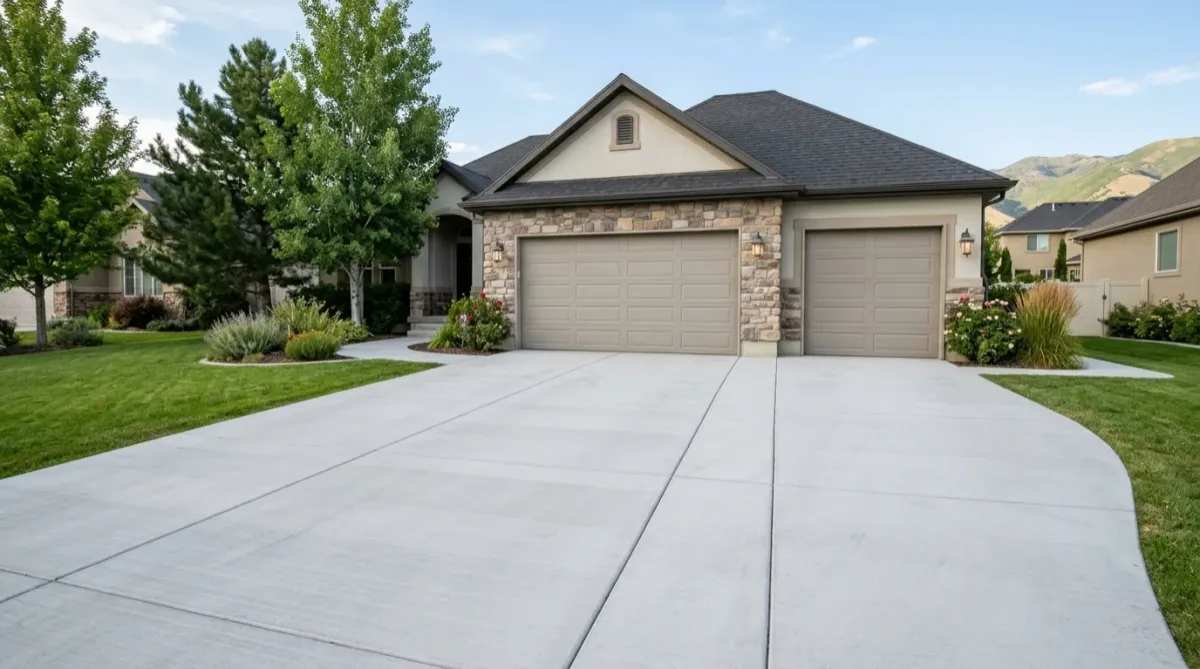
Repair or Replace a Cracked Concrete Driveway in Utah?
A cracked driveway is a question, not a verdict
Sooner or later, almost every concrete driveway along the Wasatch Front cracks. Clay soils swell and shrink, winter brings dozens of freeze-thaw swings, and plows spread salt that ends up on every slab in the neighborhood. So when a homeowner in Sandy notices a new line running across the driveway, the first question is usually whether the whole thing has to go.
Often it does not. Some cracks are cosmetic and only need to be kept sealed. Some driveways are sound underneath and can be resurfaced. And some have failed at the base, where no patch will last. Here is how to tell which one you have, and why it pays to decide before the next round of hard freezes.
Why concrete driveways crack in Utah
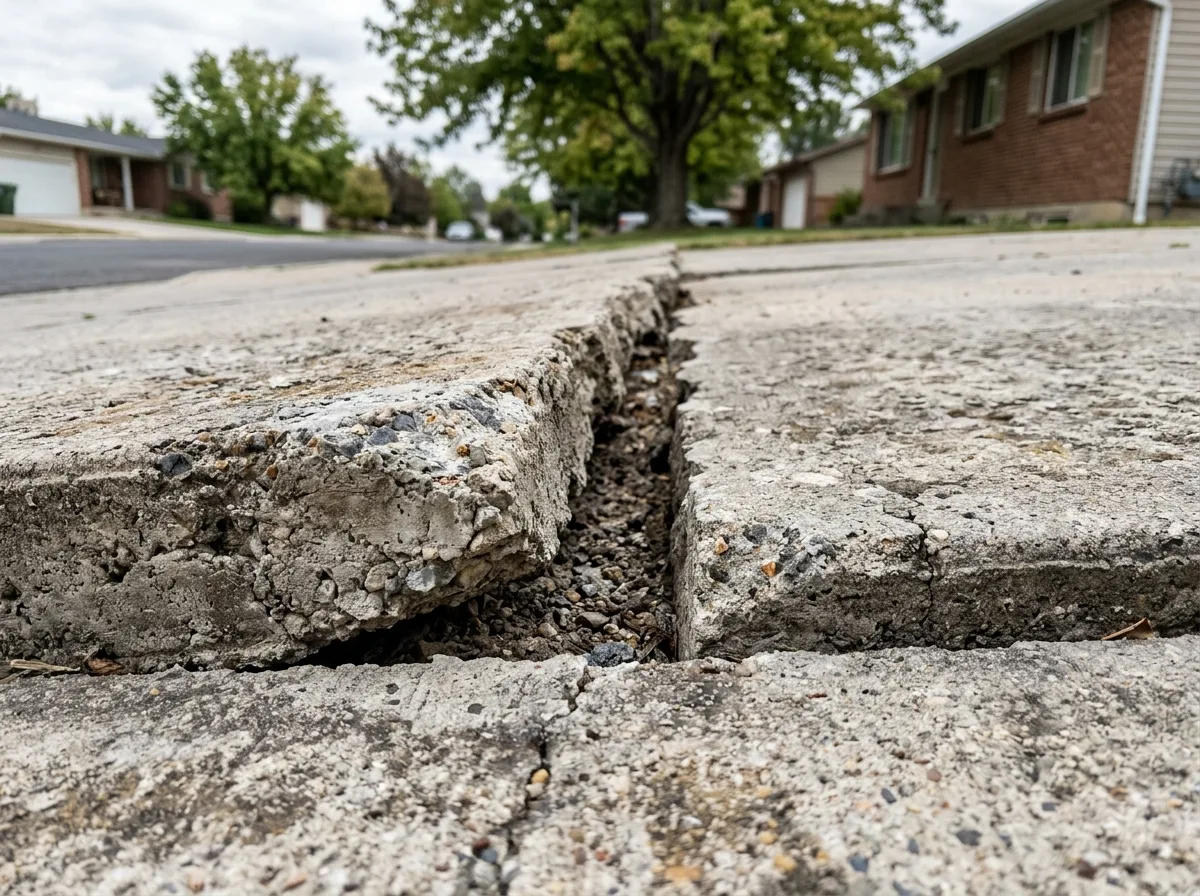
Concrete is strong when it is squeezed and weak when it is pulled or bent. A driveway sits on ground that moves. Much of the Salt Lake Valley floor is expansive clay that swells when wet and shrinks as it dries, while Sandy's east-side lots toward Granite and Bell Canyon often sit on cobble and slope, where drainage and settling are the bigger risks. When the ground under a slab rises or settles unevenly, the concrete bends and something gives.
Winter adds its own stress. Water gets into small cracks and into the surface, freezes overnight, expands by roughly nine percent, and pries the gap a little wider. A sunny afternoon thaws it and the next night freezes it again. Sandy also sees heavier snow than much of the valley floor, so there is more meltwater to find those cracks, and de-icing salt keeps the surface wetter and adds more freeze-thaw cycles in a single day. That is why a hairline crack in the fall can look noticeably worse by spring.
Control joints, the straight grooves cut across a slab, are there to give that movement a planned place to go. A crack that runs inside a joint is the joint doing its job. A crack that wanders across the middle of a panel is the slab cracking somewhere it was not supposed to.
Cracks you can usually repair
These are the signs of a driveway that is still sound and mainly needs to be kept watertight:
- Hairline cracks narrower than a credit card is thick, especially ones that follow a control joint.
- Both sides of the crack sit level. You cannot catch a toe or a shovel on the edge.
- The crack is not growing from one season to the next. A pencil mark at each end makes this easy to check.
- Surface wear only: light flaking, stains or a dull, rough top layer over a slab that is otherwise flat and solid.
Filling cracks and resurfacing
For narrow, stable cracks, the fix is to clean them out and fill them with a flexible concrete crack sealant so water cannot get in and freeze. It will not make the crack disappear, because color-matching cured concrete is nearly impossible, but it stops winter from making it bigger. Following up with a good surface sealer helps the rest of the slab, and our guide to sealing a concrete driveway in Utah covers when and how often that is worth doing.
When the slab is flat and solid but the surface is worn, flaked or badly stained, resurfacing is the middle option. A new bonded top layer goes over the existing concrete, which is faster and lower cost than tearing it out, and it can be finished as broom, smooth or stamped. Resurfacing only works on a sound base, though. Put it over a slab that is still moving and the old cracks come straight back through.
Signs it is time to replace the driveway
Replacement is the honest answer when the problem is underneath the concrete rather than on top of it. Watch for these:
- One side of a crack sits higher than the other. That is a trip hazard and a sign the base has moved.
- Sunken or tilted panels, especially near the garage or the street, or a slab that now drains water toward the house.
- Spider-web cracking across a large area, which usually means the base under it has failed.
- Cracks that keep widening every year even after being filled.
- Deep scaling and spalling where chunks, not just flakes, are coming loose across much of the surface.
- Age. A well-installed concrete driveway in Utah often lasts around 25 to 30 years. Past that, repairs tend to buy less time.
Should you repair or replace before the freeze-thaw season?
Fall is the time to look closely, because the coming months decide how much worse things get. If the cracks are narrow and stable, filling them before the first hard freezes keeps water out and slows the damage. Keep salt use light on a cracked slab and clear snow promptly so meltwater does not sit in the cracks. Watch the driveway apron too, where the street plow piles slush and tires drip meltwater.
If the driveway clearly needs replacing, the timing takes more thought. Concrete cures best in moderate, steady temperatures, so late spring and early fall are the easiest windows here. A winter pour is possible with precautions such as heated water in the mix and insulated blankets while it cures, but a good contractor will wait out a cold snap rather than pour into one. For many homeowners, the smart move is to get the slab assessed and quoted, protect it through the cold months, and book the replacement for spring.
What a replacement should include
If you are replacing, the goal is a driveway that does not end up in the same place in a few years. Ask any contractor how they will handle the ground first, because a new slab poured over the same poorly compacted base will crack the same way.
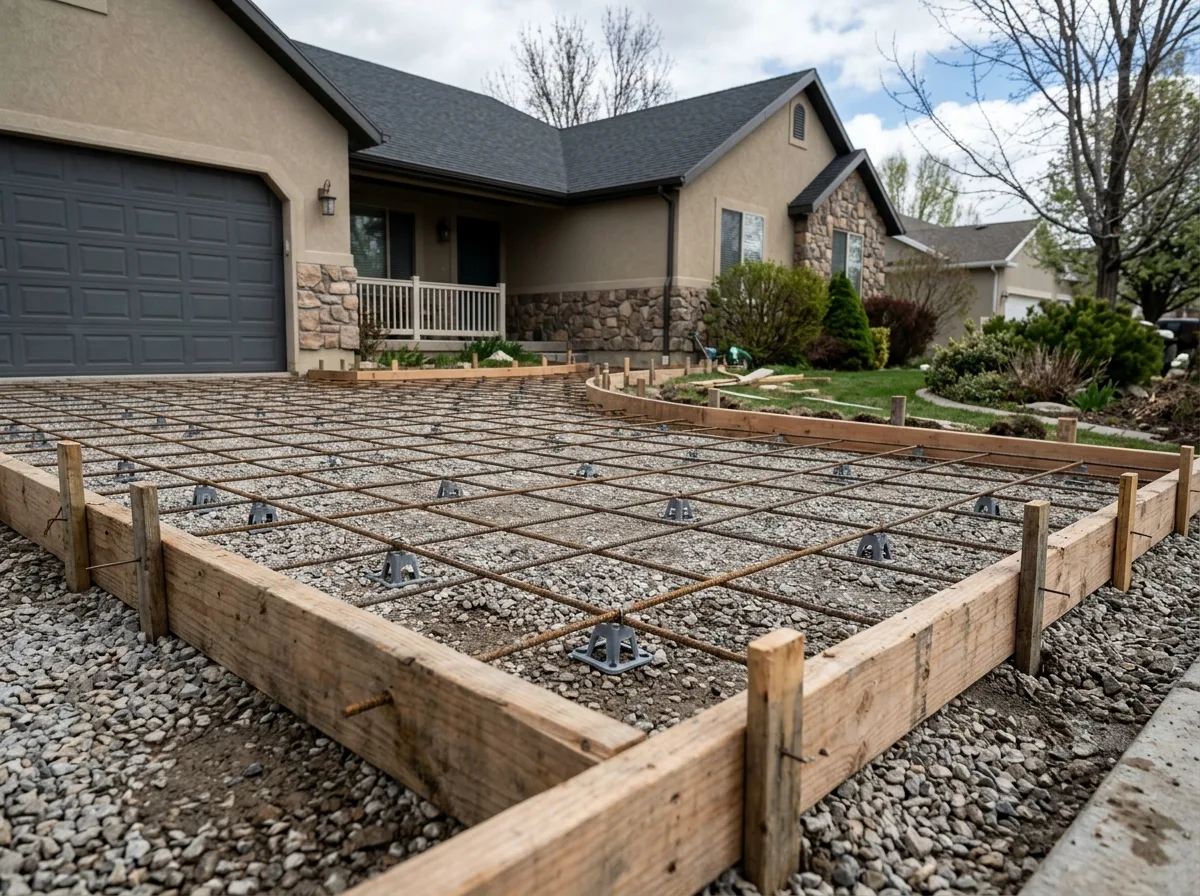
On our concrete patios and driveways we start with excavation and grading, compact the base material, and put rebar in every slab. Driveways are poured 4 to 6 inches thick depending on what parks on them, with control joints placed so the slab cracks where we choose, and we pull any permits the job needs. It is also a good moment to consider the alternative, and our comparison of concrete and paver driveways in Utah walks through how each one ages here.
Get an honest answer on your driveway
The only way to know for sure whether a driveway needs filling, resurfacing or replacing is to have someone stand on it and look. We are based in Sandy and work across Salt Lake, Utah and Davis counties, and if your slab is sound we will tell you so rather than sell you a new one. If it does need replacing, you get a detailed written quote, a lifetime materials warranty and a 2-year installation warranty, and most projects are started within two weeks. Bring your best written estimate and we will beat it by $100 or more, or send you a $50 Amazon gift card.
Call (385) 402-8427 for a free quote on your driveway.
Frequently asked questions
Can a cracked concrete driveway be repaired?
Usually, if the cracks are narrow, both sides sit level and they are not growing. Clean them out and fill them with a flexible crack sealant so water cannot get in and freeze. Wide, sunken or spreading cracks point to a base problem, and those usually mean replacement.
Is it worth resurfacing a concrete driveway?
It can be, when the slab underneath is flat and solid and only the surface is worn, flaked or stained. Resurfacing is faster and lower cost than a tear-out. It is not worth doing over a slab that is still shifting, because the cracks come back through the new layer.
How long does a concrete driveway last in Utah?
A well-installed concrete driveway often lasts around 25 to 30 years along the Wasatch Front. A compacted base, rebar, correct thickness, good control joints and regular sealing all help it reach the long end of that range.
Can you replace a concrete driveway in winter in Utah?
It is possible with precautions such as heated water in the mix and insulated blankets while the concrete cures, but late spring and early fall are the easiest windows. Many homeowners fill cracks before winter and schedule the replacement for spring.
Should I fill driveway cracks before the freeze-thaw season?
Yes. Water that gets into a crack freezes, expands and widens it, and Utah sees many freeze-thaw cycles each winter. Filling narrow cracks in the fall keeps water out and slows the damage until the weather allows a repair or replacement.


