
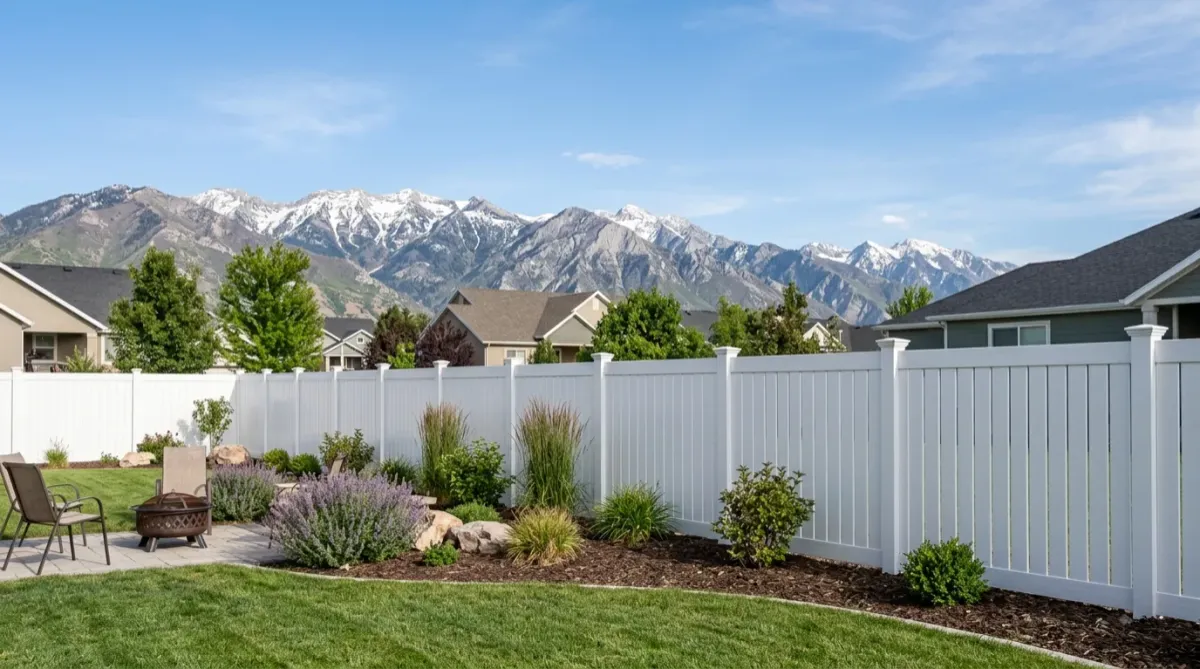
How Much Does a Vinyl Fence Cost in Utah? (2026 Guide)
Vinyl is the fence most Utah homeowners end up with, and the reasons are easy to list: it does not rot, it never needs staining, and it is still white after four winters. What actually decides the project is the price, and that is where straight answers dry up. Most per-foot numbers online are national averages written for milder climates than ours.
Here is what a vinyl fence really costs across Sandy, Draper, and the rest of Salt Lake, Utah, and Davis counties in 2026, and how to tell a panel that lasts thirty years from one that is chalky in five.
What a vinyl fence costs in Utah
As general market context (not a quote), most Utah homeowners spend roughly $35 to $60 per linear foot for professionally installed vinyl fencing. A typical quarter-acre backyard run of 150 to 200 feet lands most homeowners between the mid four figures and the low five figures installed, gates included.
That band is wide because five things stack on top of each other:
Terrain is the one homeowners consistently underestimate. Digging the rocky, clay-heavy soil common across Sandy and up on the benches takes noticeably longer per post than clean valley ground, and that time is priced into every honest bid.
- Height. A 6-foot privacy fence uses far more vinyl per foot than a 4-foot picket, and taller posts have to be set deeper to stay plumb.
- Style. Solid privacy panels cost more per foot than semi-privacy or picket, because there is simply more material in them.
- Gates. A single walk gate adds a modest flat cost. A double drive gate costs several times that in hardware, framing, and labor.
- Terrain. Rocky soil, tree roots, and slope all add hours. A flat lot with clean digging is the cheapest fence you will ever buy.
- Tear-out. Hauling an old fence away is its own line item, and old chain link set in concrete is slower to pull than leaning wood.
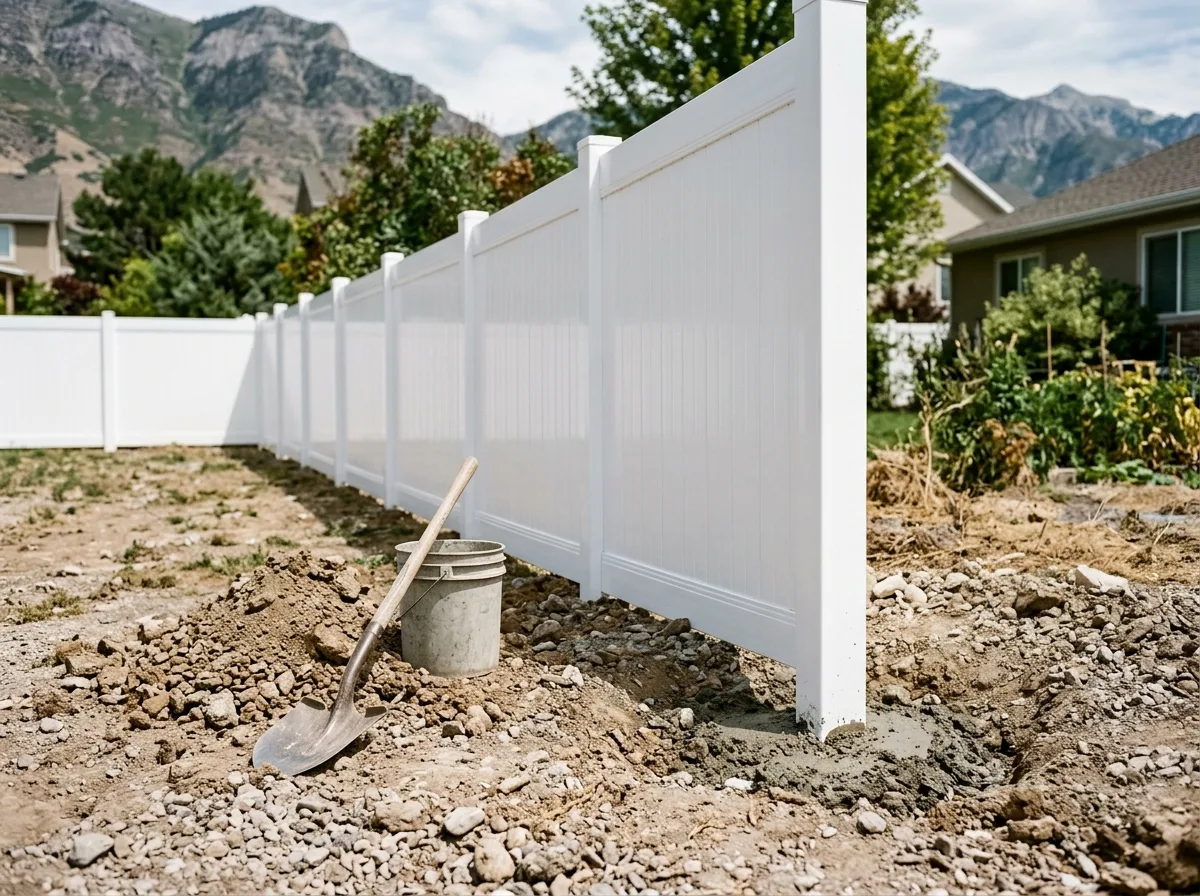
Privacy, semi-privacy, or picket: what the style costs
Vinyl comes in more shapes than most homeowners expect, and the style moves the per-foot cost about as much as the height does. The three that cover almost every residential job:
- Solid privacy. Tongue-and-groove panels with no gaps, usually 6 feet. The most material per foot, and the most common backyard choice here.
- Semi-privacy. Spaced pickets or a lattice top. Less material, and it lets wind through instead of catching it.
- Picket. Three to four feet and open. The cheapest vinyl per foot, and the likeliest to clear an HOA's front-yard rules.
Why cheap vinyl fails fast in Utah
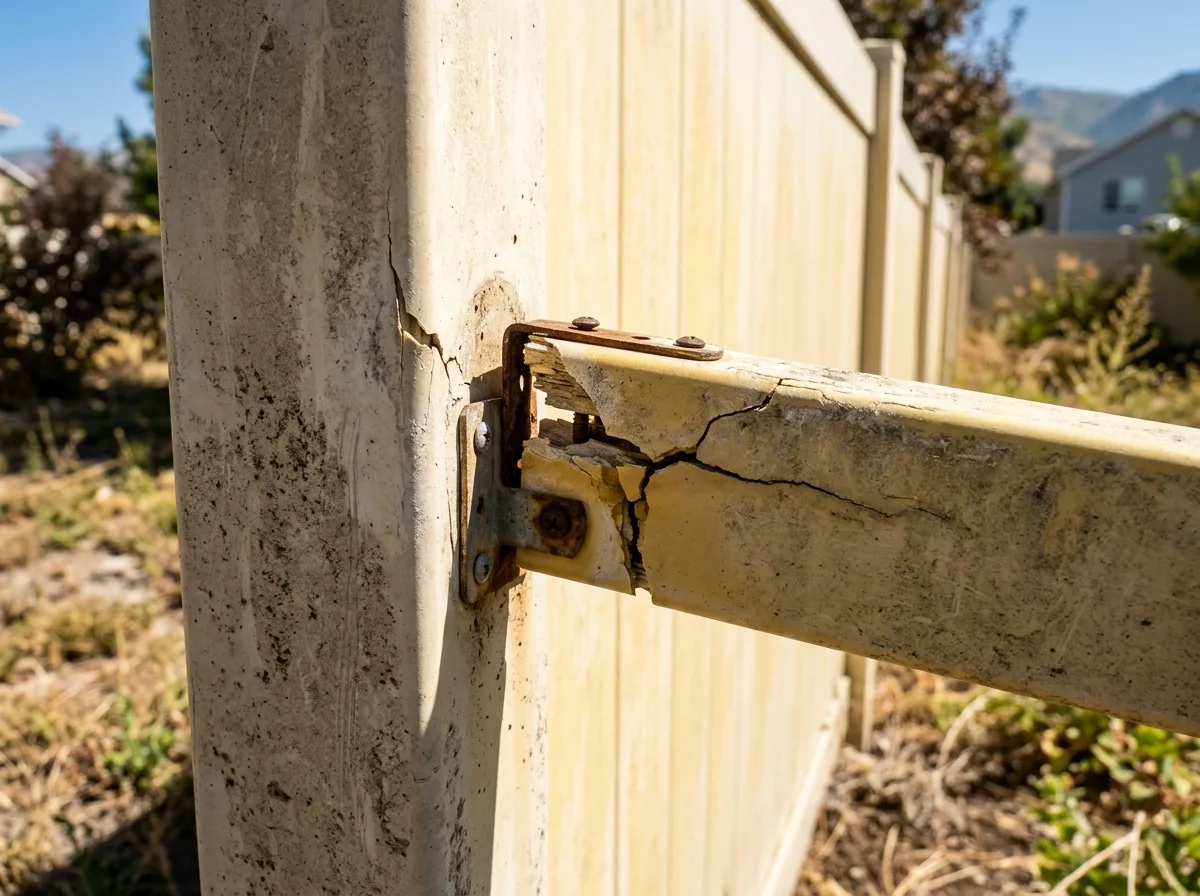
The biggest thing separating a $35-a-foot fence from a $60-a-foot fence is not the installer's margin. It is the vinyl. Two panels can look identical stacked in the driveway and behave completely differently after four Utah winters, and none of the differences are visible from the street.
Three things decide it:
So a quote that lands dramatically under everyone else's is worth a question rather than a signature. Ask the panel's wall thickness, and whether it carries a lifetime materials warranty.
- Wall thickness. Thin extrusions flex, bow in summer heat, and crack when something hits them in January. Vinyl grows more brittle as it gets colder, and along the Wasatch Front it spends months genuinely cold.
- UV inhibitors. Sandy sits above 4,400 feet and the benches climb from there, so our sun is harsher than the national average a spec sheet assumes. Titanium dioxide in the formula is what keeps a panel white; too little and it goes chalky and yellow.
- Impact modifiers. These let a panel take thrown ice off a snowblower or a stray basketball without shattering. Budget panels cut this first, because it never shows on day one.
Vinyl against wood and chain link: where the money goes
Vinyl is not the cheapest fence on day one, and pretending otherwise helps nobody. Wood typically installs for less per foot, chain link for considerably less again. What the extra buys is the twenty years after: no staining, no sealing, no cupped boards to replace.
That trade is worth doing with real numbers rather than instinct, and our comparison of vinyl and wood fencing for Sandy yards sets the lifespans and upkeep costs side by side. Wood wins the first invoice; vinyl usually wins the decade.
Permits, HOAs, and where the fence can actually go
Most Wasatch Front cities allow up to 6 feet in rear and side yards and something lower in front, with sight-triangle rules on corner lots, though the specifics vary by city and are worth confirming before anyone orders panels. Our breakdown of fence permit rules in Salt Lake County covers the height limits and setbacks. HOAs are often stricter about color and style than the city is about height.
Settle the property line before anyone digs, too. A fence set eighteen inches inside your line is a permanent gift to the neighbor; eighteen inches the other way is a conversation nobody enjoys.
How Installify installs a vinyl fence that lasts
Panels are half the fence. Posts are what fail first in Utah, and usually for a dull reason: they were tamped into dirt instead of set in concrete. We set every post in mixed concrete, which holds a vinyl line plumb through freeze-thaw rather than leaning by the third spring. We pull the required permits, work inside your HOA's rules, and schedule most projects within two weeks, all backed by our lifetime materials warranty and 2-year installation warranty.
And if vinyl turns out not to be right for your yard, we also install wood, iron, chain link, aluminum, and composite fencing, so you can put real numbers next to each other.
Get a Real Number for Your Vinyl Fence
Per-foot ranges are useful for planning and useless for budgeting, because your number comes down to your footage, your gates, and your ground. Call (385) 402-8427 or get a free quote, and we will beat your best written estimate by $100 or more, guaranteed, or you get a $50 Amazon gift card.
Frequently asked questions
How much does a vinyl fence cost per foot in Utah?
As general market context, professionally installed vinyl fencing typically runs $35 to $60 per linear foot in Utah. Height, style, gates, terrain, and tear-out move a specific yard inside that range.
How much does 150 feet of vinyl fence cost?
At roughly $35 to $60 per linear foot, 150 feet lands most Utah homeowners in the $5,250 to $9,000 range installed, before gates and tear-out.
Is vinyl fencing cheaper than wood?
Not on day one. A wood privacy fence usually installs for less per foot. Vinyl closes that gap over twenty years, because it never needs staining, sealing, or board replacement.
Does vinyl fencing turn yellow?
Good vinyl does not. Chalking and yellowing come from too little UV inhibitor in the formula, and our thin high-altitude air finds that shortcut quickly.
How long does a vinyl fence last in Utah?
A quality vinyl fence set on posts in concrete typically lasts 25 to 30-plus years here with almost no maintenance. What shortens it is nearly always a thin panel or a post tamped into dirt.


