
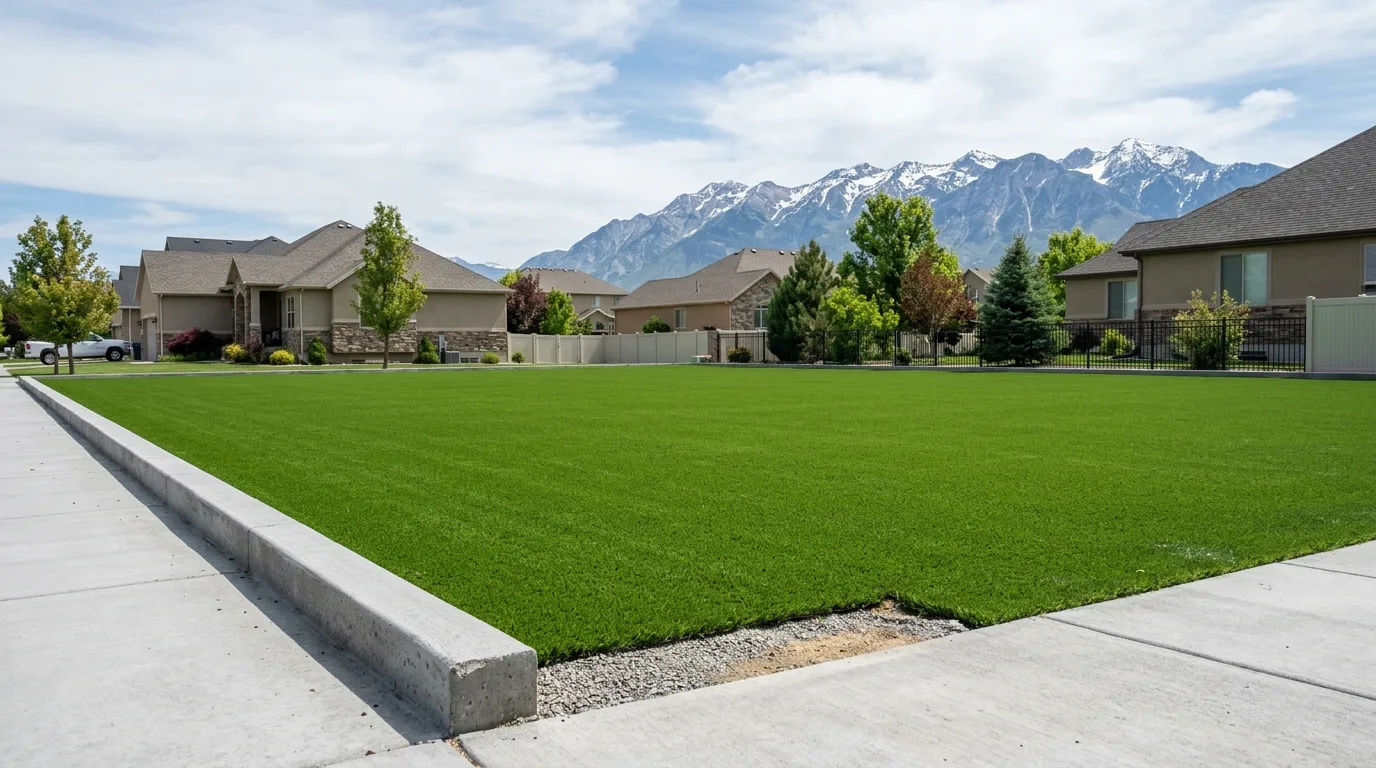
What Goes Under Artificial Turf? The Base That Makes It Last in Utah
What goes under artificial turf
Most people shopping for artificial turf compare blade colors, pile height and price per square foot. Those matter, but the turf itself is only the top inch or two of the job. What goes under artificial turf decides whether a yard stays flat, drains after a storm and still looks good in ten years, or ends up with ripples, soft spots and puddles by its second spring.
This guide walks through each layer of a typical residential install, from the dirt up, explains why each one is there, and lists the questions to ask any installer so you know what you are actually paying for. It is written for Utah yards, where clay soil, freeze-thaw winters and hot summers all put a base to the test.
Why you can't lay turf straight on soil
It is the first thing people ask: can you just roll artificial grass out over the dirt? You can, and it will look fine for a few weeks. Then the soil does what soil does. It settles unevenly, it holds water, and in winter it freezes and heaves. Every dip and bump shows through the turf, and water that cannot drain sits under the backing.
Along the Wasatch Front, from Sandy out to newer subdivisions on the valley edges, a lot of yards sit on heavy clay that drains slowly and moves as it wets and dries. That is the main reason a professional install removes soil and replaces it with a stable, free-draining base instead of building on top of what is there.
Layer 1: Excavation and grading
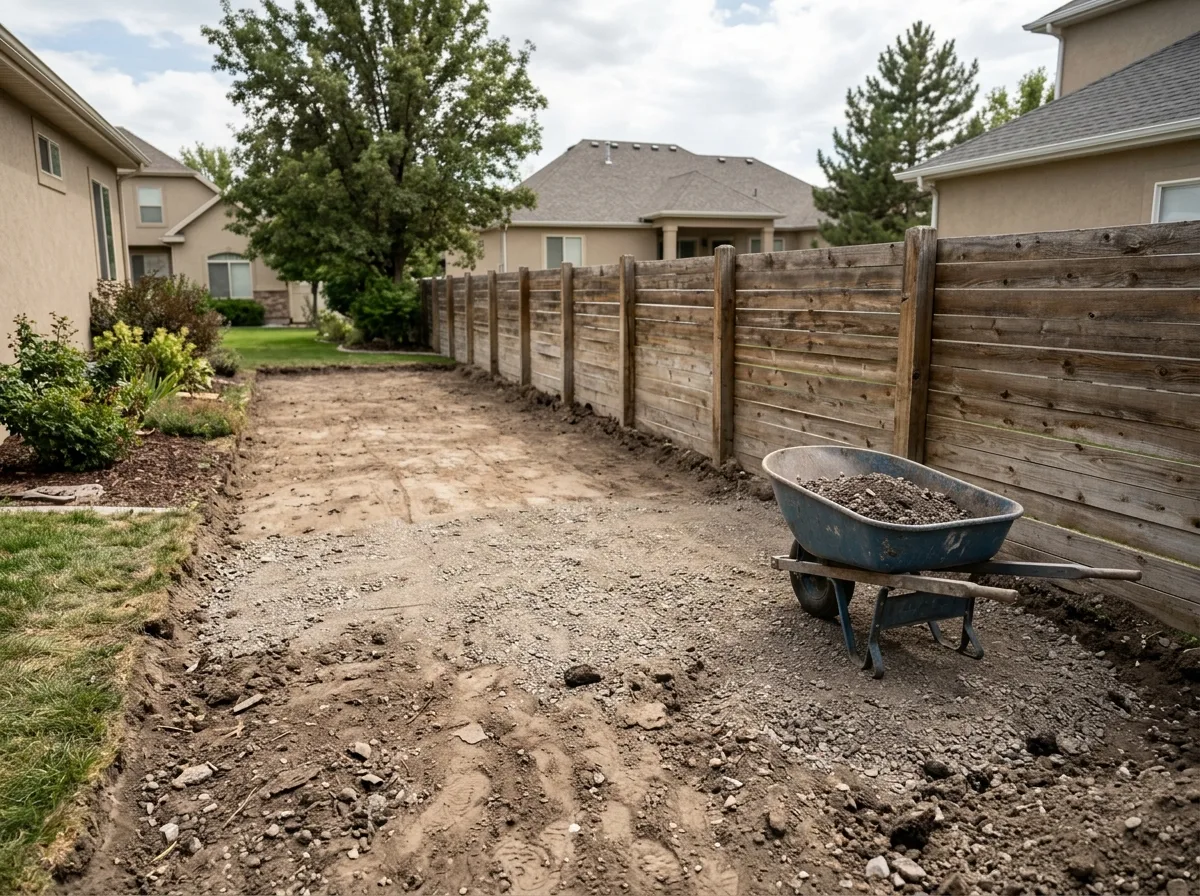
The job starts by taking out the existing grass, roots and several inches of soil, so the finished turf sits level with patios and walkways rather than perched above them. Sprinkler lines in the area are typically capped or rerouted at this stage.
The ground underneath is then shaped so it falls gently away from the house and toward wherever water should go. This slope is small enough that you will not notice it standing on the lawn, but it is what keeps snowmelt from collecting against your foundation. On sloped or uneven lots the grading takes more planning, which is part of why two quotes for the same square footage can differ.
Layer 2: Weed barrier
Many installers lay a geotextile fabric over the graded soil. It keeps weeds from working up from below and stops the soil and the gravel base from mixing over time, which helps the base stay firm. Ask whether your installer uses one and where it goes. Some put it under the gravel, some on top, and the reasoning should make sense for your soil.
Layer 3: Compacted gravel base
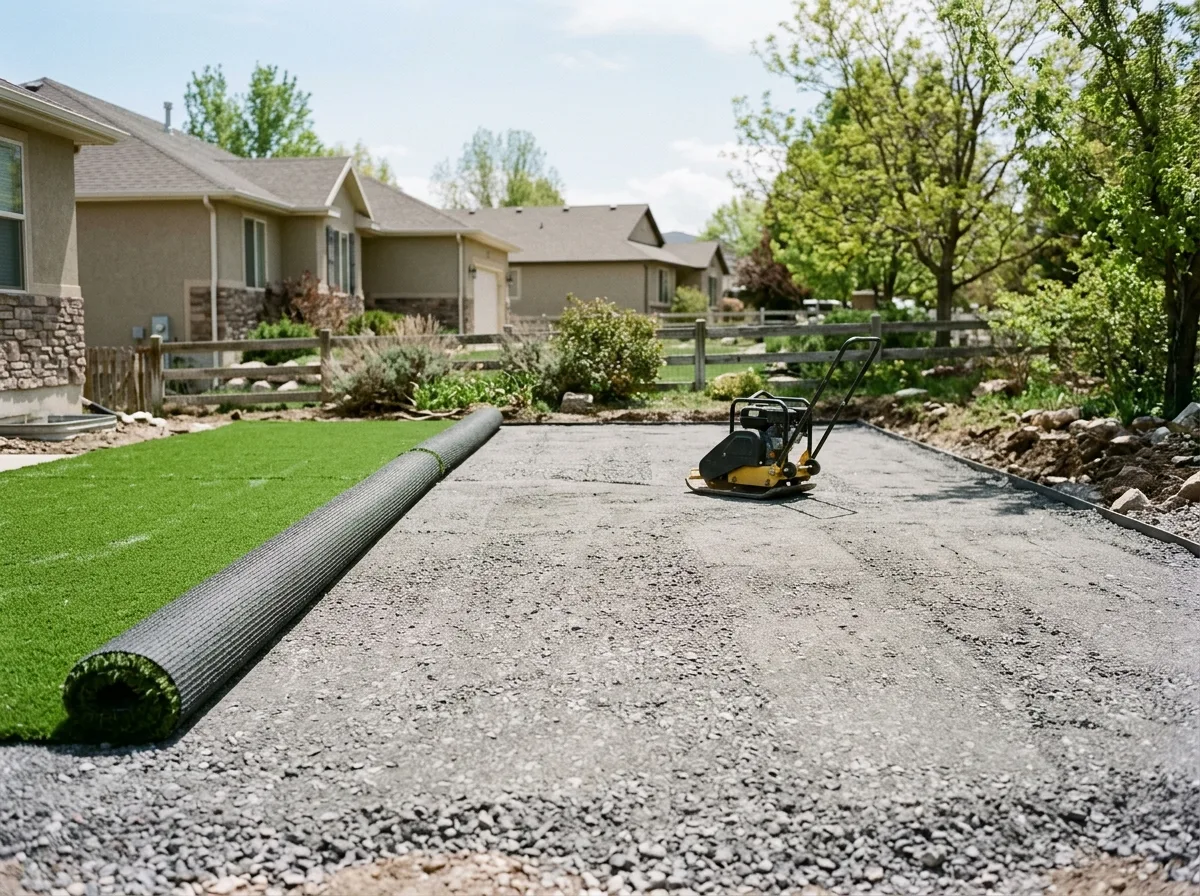
This is the layer that does the real work. A few inches of crushed rock, often a road-base style gravel with angular pieces that lock together, is spread across the area, wetted and compacted with a plate compactor, usually in more than one pass. Some crews finish with a thin layer of finer material, such as decomposed granite, to give the surface a smooth, even top.
Done right, the base is firm enough to walk on without leaving footprints, flat enough that a long straightedge shows no gaps, and open enough that water drains straight through it. On our artificial turf installations the base prep, meaning excavation, grading, compacted gravel and drainage, is included in the job rather than treated as an extra.
For yards with gophers or voles, some homeowners add a layer of galvanized wire mesh at this stage. It is easier to put in now than after the turf is down.
Layer 4: Edging and the turf itself
Turf needs something solid to hold its edges. Along concrete, the edge is usually trimmed tight and secured. Along planting beds, installers typically use a bender board or similar edging so the turf has a firm line to fasten to and the gravel stays where it belongs.
The turf is then rolled out, with every piece laid so the blades lean the same way. Where two pieces meet, they are joined with seaming tape and adhesive underneath, and the whole surface is fastened down with landscape nails or staples around the edges and through the field. Poor seams are the most common thing people notice on a cheap install, so look closely at seams when you view an installer's past work.
Layer 5: Infill
Last, infill is brushed down between the blades. It weighs the turf down, helps the blades stand up and protects the backing from sun. Silica sand is common. Coated sands and other specialty infills are used where heat, odor or pets are a concern.
If you have dogs, the infill and the drainage under it matter more than anything else, because urine has to pass through and rinse away instead of sitting in the base. Our guide to artificial turf for dogs covers what to look for.
What about turf over concrete?
Turf can go over an existing concrete patio or slab, but the base is different. There is no gravel. Instead a foam or rubber pad usually goes down first for cushion, and the concrete has to shed water, either by its existing slope or by drainage holes, so water does not pool under the backing. Cracked or heaved concrete will show through, so it may need repair first.
Questions to ask any installer
A good quote spells out the base, not just the turf. Before you sign, ask:
- How deep will you excavate, and what happens to the old sod and soil?
- What gravel goes in, how thick, and how is it compacted?
- Do you use a weed barrier, and where?
- How will the yard drain, and which way is it sloped?
- What edging and fastening do you use, and how are seams joined?
- Which infill do you recommend for my yard, and why?
Turf base prep in Sandy and across the valley
Base work is also where most of the cost difference between quotes hides. Our breakdown of what artificial turf costs in Utah shows how prep, product and yard size add up, so you can compare bids line by line.
Installify is based in Sandy and installs turf across Salt Lake, Utah and Davis counties, working around trees, pools, pavers and existing landscaping. Every install carries a lifetime materials warranty and 2-year installation coverage, and we will beat your best written estimate by $100 or more, or send you a $50 Amazon gift card. Call (385) 402-8427 for a free quote and we will look at your yard and tell you exactly what its base needs.
Frequently asked questions
How deep should the base be under artificial turf?
It depends on the soil and how the yard will be used, but residential installs typically remove several inches of soil and replace it with a few inches of compacted crushed rock. Clay soils, pet areas and heavy-traffic spots may call for more. Your installer should tell you the depth in writing.
Can you put artificial turf directly on dirt?
You can, but it rarely lasts. Soil settles, holds water and heaves when it freezes, so the turf develops dips, bumps and soggy spots. A compacted gravel base keeps it flat and lets water drain.
Do you need a weed barrier under artificial turf?
It is not always required, but many installers use one to keep weeds from coming up from below and to keep soil from mixing into the gravel base. Weeds can still blow in and sprout in the infill on top, which a quick pull takes care of.
Does artificial turf drain when it rains or snow melts?
Yes, when it is installed over a free-draining gravel base. Turf backing is made to let water through, and the base carries it away. Turf over soil or a flat slab with nowhere for water to go is where puddles come from.
How long does an artificial turf installation take?
Most residential yards take a few days, with much of that time spent on excavation and the base. Larger yards, slopes and tight access add time. Your installer should give you a schedule with the quote.


