
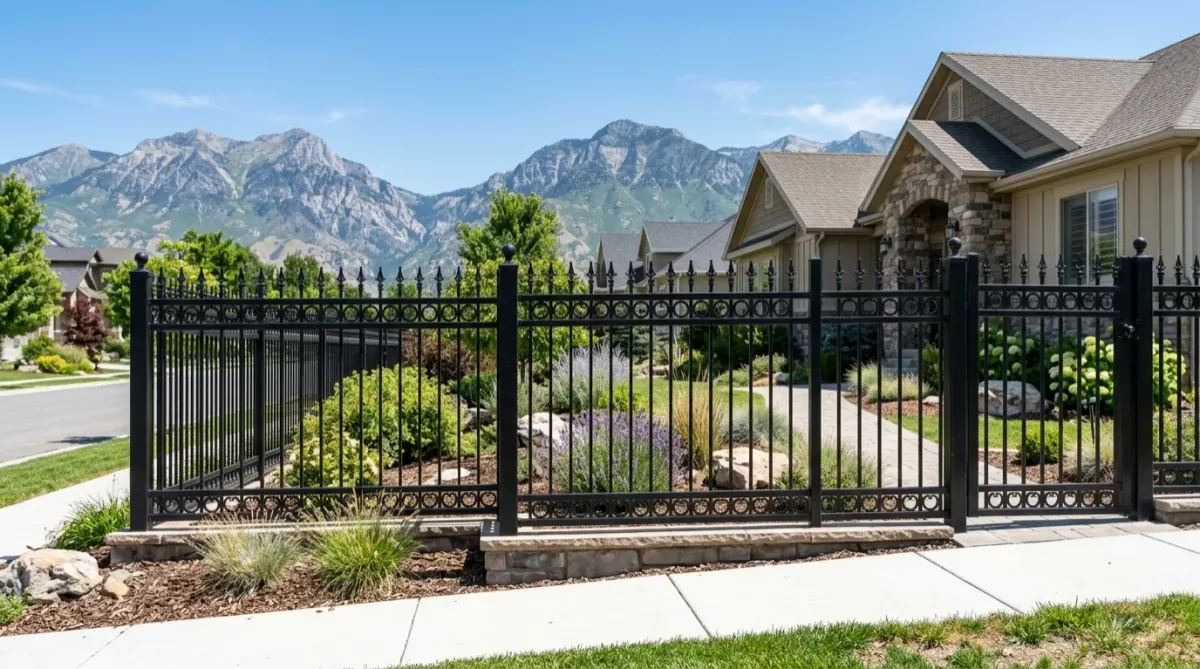
Wrought Iron Fence Cost in Utah (2026 Guide)
An iron fence is the fence homeowners point at when they want a yard that looks finished, not just fenced. Ornamental iron reads as elegant and secure at the same time, which is exactly why it shows up around pools, front yards, and anywhere curb appeal actually matters. But before you commit, the real question is what it costs, and today "wrought iron" almost never means what it used to.
Here is what an iron-style fence actually costs across Sandy, Draper, and the rest of Salt Lake, Utah, and Davis counties, what "wrought iron" really means on a 2026 quote, and how it stacks up against vinyl and wood before you decide.
What a wrought iron fence costs in Utah
As general market context (not a quote), most Utah homeowners spend roughly $30 to $55 per linear foot for powder-coated ornamental steel or aluminum "iron-style" fencing, and $55 to $90 or more per linear foot for fabricated, genuine wrought iron. A typical 150-foot front-yard run lands most homeowners in the mid-thousands to lower five figures installed, gates included.
The swing inside that range comes down to a handful of factors, and they stack:
- Material, true forged wrought iron costs far more than powder-coated steel or aluminum built to look like it, because the fabrication is slower and heavier.
- Height and panel style, scrollwork, finials, and taller panels add welding time and material that a plain picket-style panel does not.
- Gates, a single walk gate adds a modest flat cost; a wide driveway gate, especially a motorized one, costs meaningfully more in hardware and framing.
- Terrain, Utah's rocky, clay-heavy soil takes longer to dig and set posts in than straightforward sandy soil, which shows up in labor.
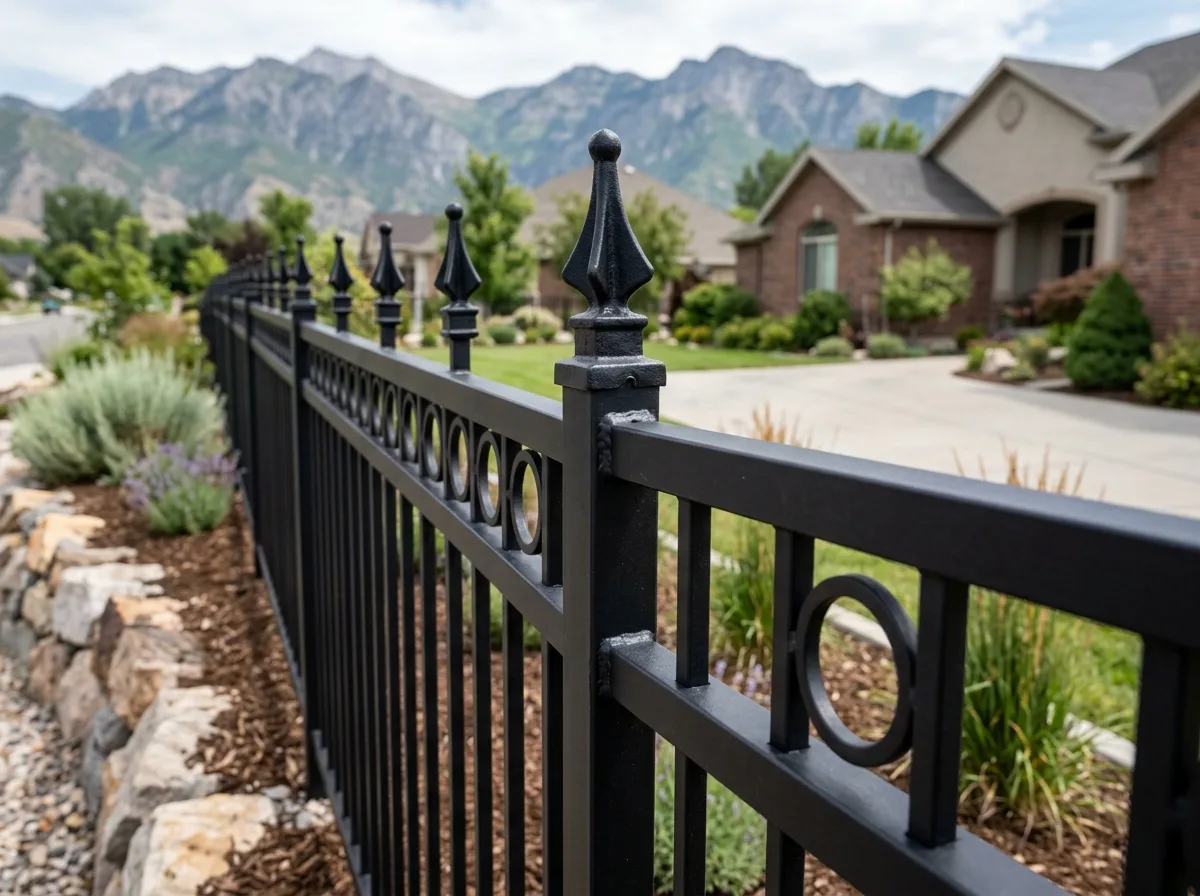
Wrought iron, steel, or aluminum: what's actually on your quote
Genuine wrought iron, hand-forged and hammered by a blacksmith, is rare and expensive today; almost nobody installs it residentially anymore. What most companies sell as "wrought iron fencing" is powder-coated steel or aluminum built in the same ornamental style: vertical pickets, decorative finials, and a black or bronze finish.
The difference matters for your wallet and your maintenance. Steel is heavier and stronger but can rust at a scratch or weld point if the powder coat is compromised. Aluminum costs a bit less, never rusts, and is lighter to install; the tradeoff is it dents more easily than steel and isn't the right pick for a security-focused install. Either one gets you the iron look without genuine wrought iron's price tag.
Wrought iron vs. vinyl and wood: where the money goes
Iron-style fencing costs more per foot than vinyl or wood, but it buys something they don't: you can still see through it. That makes it the pick for a front yard or a pool enclosure where you want a boundary and curb appeal, not privacy. If blocking the view from the street is the goal, vinyl or wood earns its lower price tag back fast.
Where iron holds its own long-term is upkeep. Powder-coated steel and aluminum don't rot, warp, or need restaining the way wood does, and a quality powder coat shrugs off Utah's UV and freeze-thaw about as well as vinyl does.
Where iron fencing earns its keep
Iron-style fencing earns its keep in a few specific spots more than as a whole-yard privacy fence, and these are the jobs we get called for most often:
- Front yards and curb appeal, an open, ornamental fence signals a finished property across Sandy, South Jordan, and the rest of the Wasatch Front without hiding the landscaping behind it.
- Pool enclosures, see-through panels meet most Utah pool-code sightline requirements while still creating a real physical barrier.
- HOA-restricted lots, many Utah HOAs approve ornamental iron-style fencing in front yards where they would reject a solid privacy fence.
- Security without a wall, tall, pointed pickets deter climbing without blocking sightlines the way a solid fence does.
Permits and HOAs for an iron fence
Most cities along the Wasatch Front treat iron-style fencing the same as any other fence for permitting purposes: generally up to 6 feet in rear and side yards, lower in front yards, with sight-triangle rules on corner lots, but confirm the specifics with your city before you build. See our breakdown of fence permit rules in Salt Lake County for the details. HOAs are usually the easier hurdle here: most that restrict solid privacy fencing in front yards specifically allow open, ornamental styles like iron.
How Installify installs an iron fence that lasts
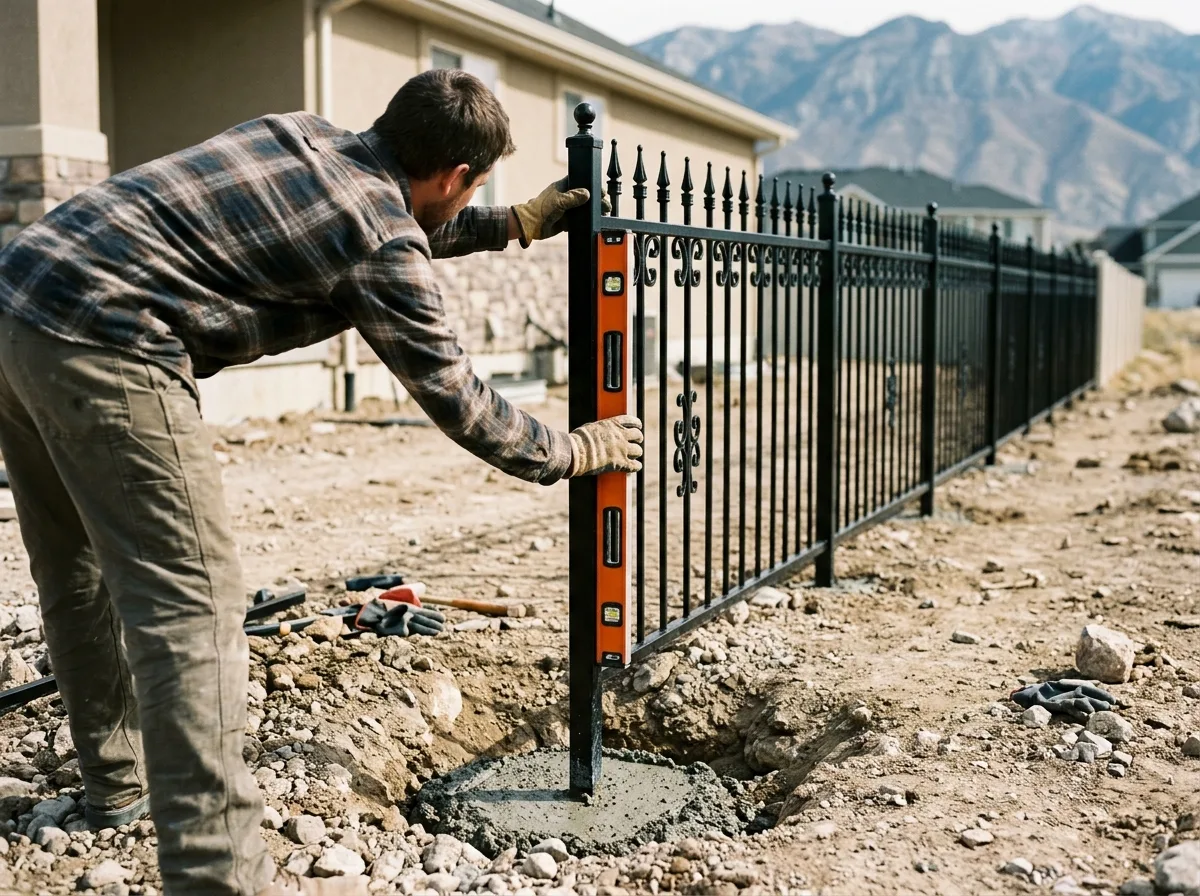
Panel quality is only half the job; the posts are what actually fail first in Utah's rocky, clay-heavy soil. We set every post in mixed concrete rather than tamping it into dirt, which keeps an iron fence line straight and plumb through frost heave instead of leaning within a few winters. We pull the required permits, work within your HOA's rules, and get most projects scheduled within two weeks. Every install is backed by our lifetime materials warranty and 2-year installation warranty. If iron isn't the final answer for your yard, we also install vinyl, wood, and the rest of our fencing options so you can compare real numbers side by side.
Get a Real Number for Your Iron Fence
An iron-style fence is a smart pick for the right yard, but the only way to know your real cost is a walk-through. Call (385) 402-8427 or get a free quote and we'll beat your best written estimate by $100 or more, guaranteed, or you get a $50 Amazon gift card.
Frequently asked questions
How much does a wrought iron fence cost in Utah?
As general market context, powder-coated steel or aluminum iron-style fencing typically runs $30 to $55 per linear foot installed in Utah, while genuine forged wrought iron can run $55 to $90 or more per foot given how labor-intensive real forging is.
Is an iron fence cheaper than wood?
No, most wood privacy fencing installs for less per foot than ornamental iron-style fencing. Iron earns the higher price with a look and a maintenance profile wood doesn't have, while wood earns its lower price with real privacy.
How much does 200 feet of iron fencing cost?
At roughly $30 to $55 per linear foot for powder-coated steel or aluminum, 200 feet lands most homeowners in the $6,000 to $11,000 range installed, before gates. Genuine forged wrought iron would run meaningfully higher.
Is a wrought iron fence worth it?
For a front yard, pool enclosure, or HOA lot where a solid privacy fence isn't allowed, yes, it's one of the few styles that adds real curb appeal while still meeting most sightline and security needs.
Does iron fencing rust in Utah?
Aluminum won't rust at all. Powder-coated steel resists rust well until the coating is scratched or chipped down to bare metal, which is when road salt and Utah's freeze-thaw cycles can start corrosion at that spot.
Do Utah cities require a permit for an iron fence?
Most cities regulate iron-style fencing the same as other fence types, generally allowing up to 6 feet in rear and side yards with lower limits and sight-triangle rules in front yards. We pull the required permits as part of every job.


