
The Disadvantages of an Epoxy Garage Floor in Utah (and How to Avoid Them)
Epoxy is a great garage floor. It is not a perfect one.
If you are pricing an epoxy garage floor in Sandy or anywhere along the Wasatch Front, you have probably read plenty about why it is worth it. Fewer people talk about the disadvantages of an epoxy garage floor, and those are worth knowing before you spend the money.
The honest version: most of the problems people blame on epoxy are really problems with how it was put down. A few are true limits of the material. This guide separates the two, so you know what to watch for and what to ask any installer before you sign.
Peeling and lifting: the big one
The complaint you see most is a floor that starts peeling a year or two in, usually right where the car tires sit. That is almost always a bond problem, not a product problem. Epoxy has to grip the concrete, and smooth, sealed or dirty concrete gives it nothing to hold onto.
Box-store kits tell you to acid etch the floor and roll the coating on. That often does not open the surface enough. Warm tires then soften the coating, it sticks to the rubber, and the floor lifts in patches. This is called hot tire pickup, and it is the reason so many DIY floors look worse after the first summer.
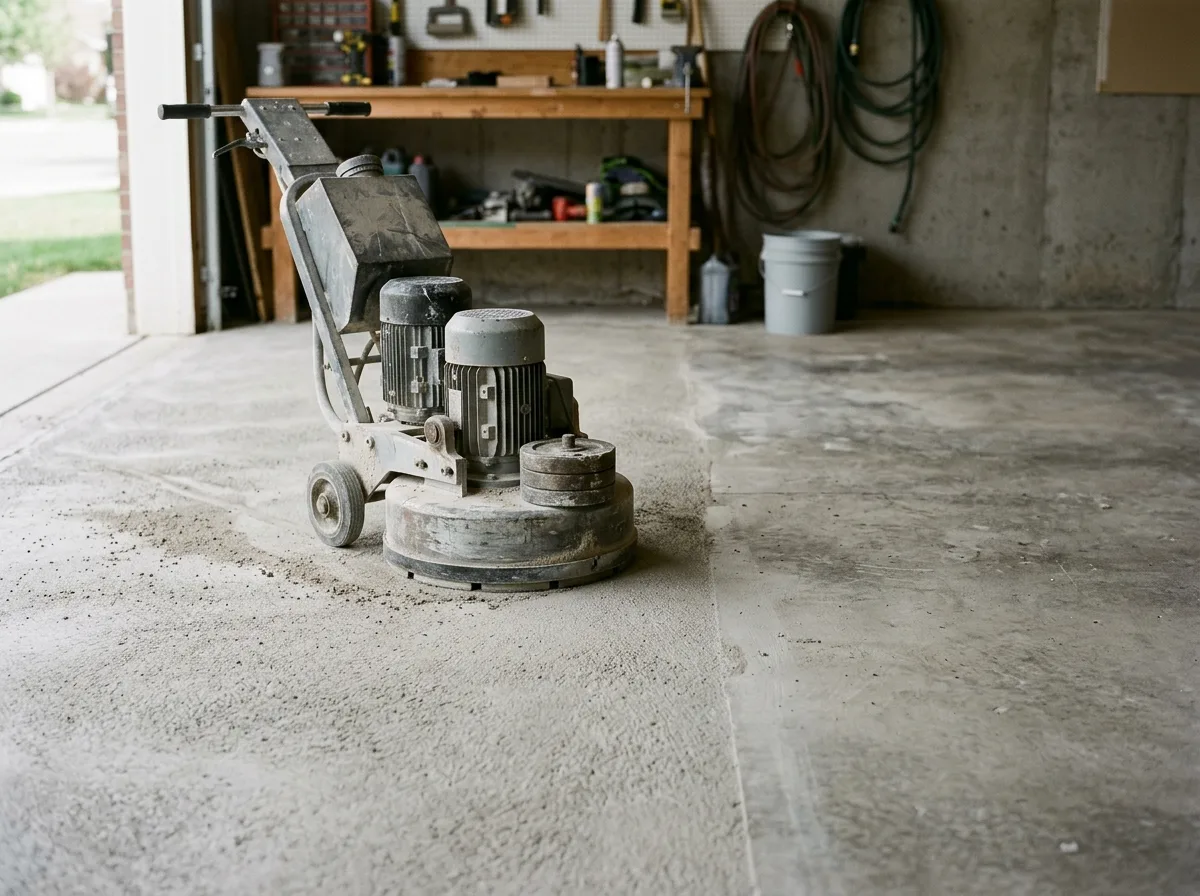
The fix is prep. A professional crew diamond grinds the slab so the coating can soak in and lock on, then fills cracks before anything goes down. That step is a big part of why a pro install costs more than a kit, and it is the step most worth paying for.
It can be slippery when wet or snowy
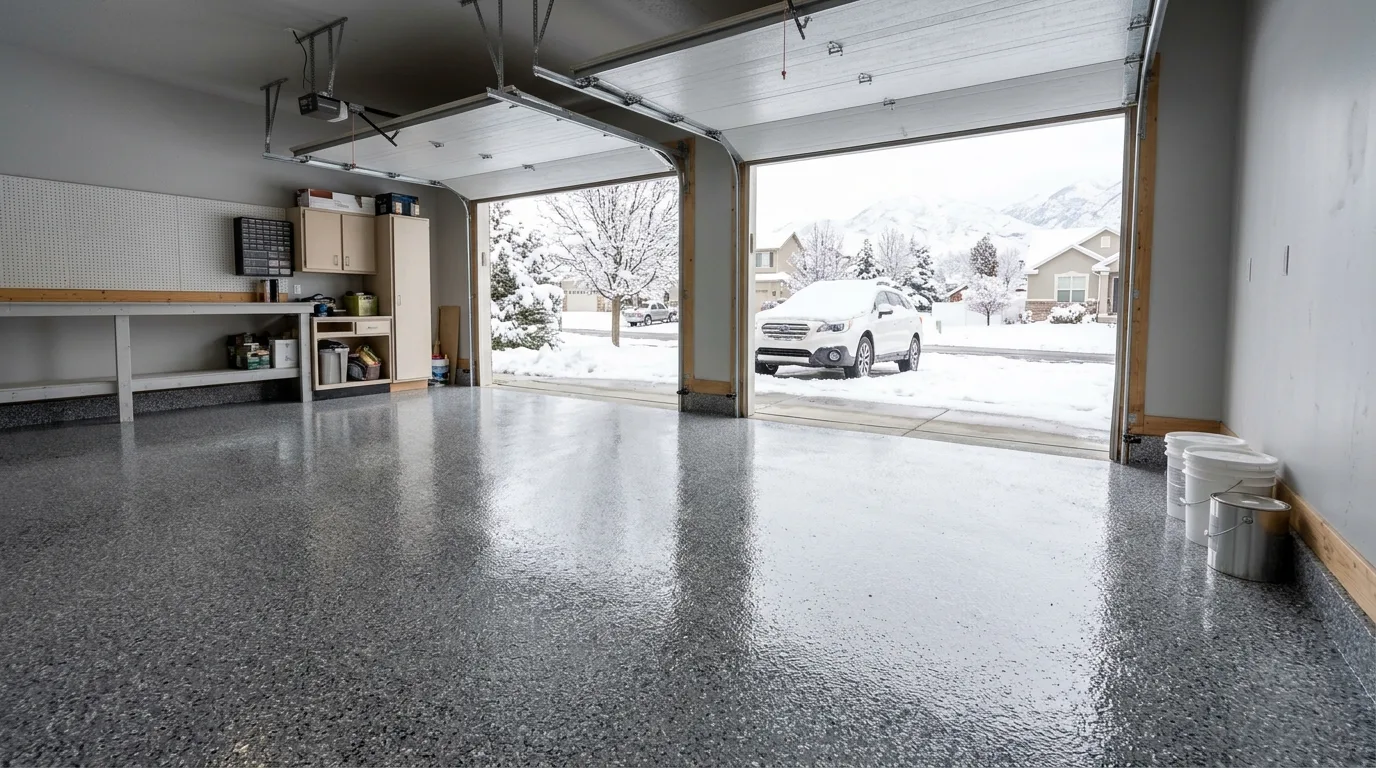
A plain, glossy epoxy floor is smooth. Add melting snow dripping off a car in January and it can get slick. That matters in a Utah garage that sees slush most of the winter, and even more on the east bench and foothill streets in Sandy, which get heavier snow than the valley floor.
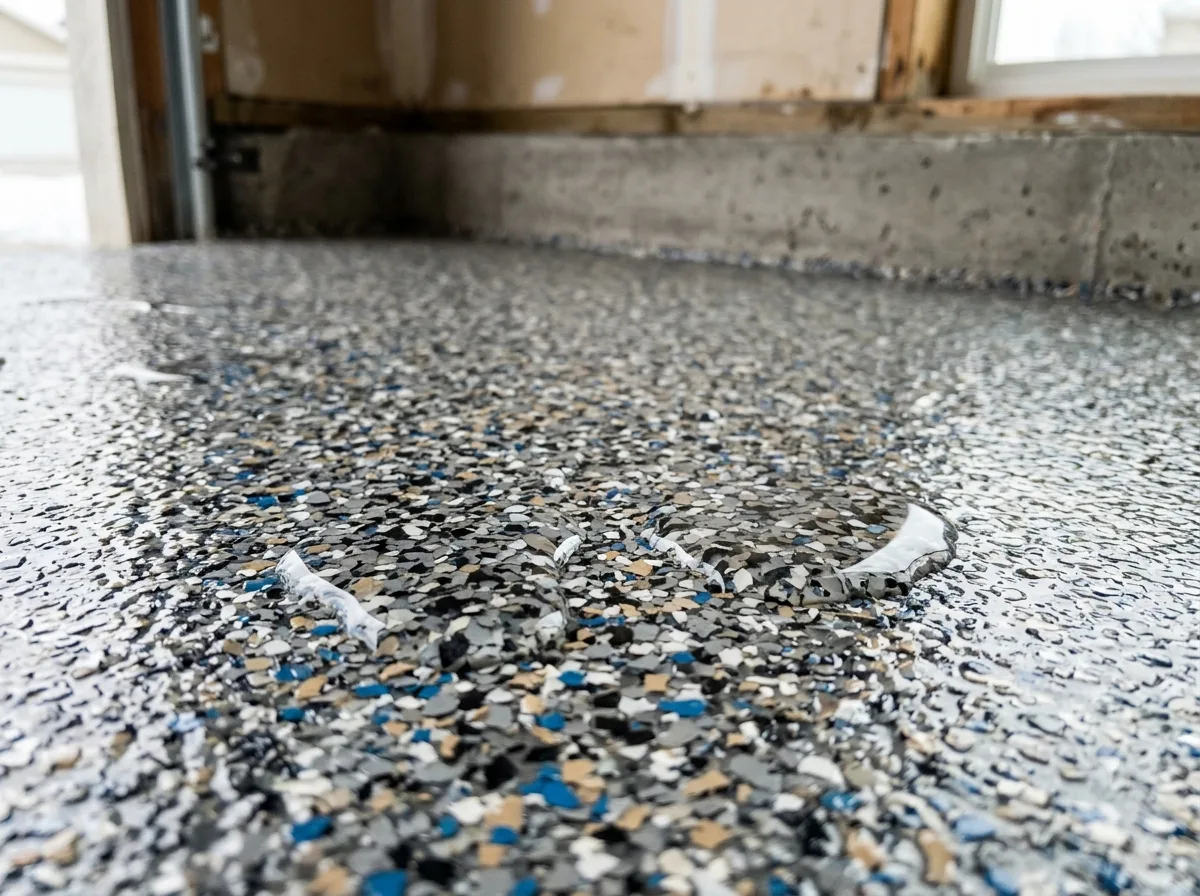
This one is easy to manage. Flake blends break up the surface and add grip, and a textured additive can be mixed into the topcoat for more. If you have kids, older parents or a steep driveway feeding straight into the garage, ask for a flake finish rather than a solid high-gloss color.
Sun and UV can yellow some epoxies
Many epoxies amber, or turn slightly yellow, with long exposure to direct sunlight. In a garage that faces west and sits open on summer afternoons, Utah's high-altitude sun can speed that up.
The usual answer is the topcoat. A clear topcoat over the epoxy takes the UV, the scuffs and the abrasion, so the color underneath holds up. Ask what topcoat goes over the base coat and whether it is rated for sun exposure, especially near the door.
Moisture and cold make installation trickier
Concrete holds water, and moisture coming up through a slab can push a coating off from underneath. Cold slabs are their own problem, because epoxy needs the right temperature to cure properly. Both matter here: Salt Lake, Utah and Davis county garages swing from summer heat to below freezing, and road salt and ice melt tracked in on tires sit on the floor for months.
A good installer checks the slab before coating and plans around the temperature. We cover the cold-weather side in detail in our post on whether you can epoxy a garage floor in winter, including what a heated garage changes.
You lose the garage for a few days
Epoxy is not instant. The floor has to be emptied, ground, repaired, coated and left to cure before you can walk on it, and longer before you park on it. Plan on moving the cars, bikes and storage shelves out for the job.
A professional coating usually goes down in a day or two, but cure time before parking depends on the product and the temperature. Ask for that number up front so you can plan.
It costs more up front than paint or a sealer
Garage floor paint and a simple concrete sealer are cheaper on day one. They also wear through fast under tires, road salt and ice melt. A properly installed epoxy system with a topcoat costs more, and lasts far longer.
If price is the main question, our guide to epoxy garage floor cost in Utah walks through what drives the number and whether it is worth it for your garage.
What is better than epoxy for a garage floor?
People ask this a lot, and the honest answer is that it depends what you are comparing. Paint, sealers and roll-out mats are cheaper but do not last. Interlocking tiles avoid cure time but trap water and grit underneath. For most Utah homeowners who want a durable, easy-to-clean floor, a well-prepped resin coating with a clear topcoat is still the best value.
So the better question is usually not epoxy or something else. It is how the floor is prepped, what goes on top, and who is doing the work.
Questions to ask before you hire
Most of the disadvantages above come down to a handful of choices the installer makes. Ask these and compare the answers:
- Do you diamond grind the floor, or only acid etch it?
- How do you repair cracks and pitting before coating?
- Is the product commercial-grade, or the same kit I can buy at a store?
- What clear topcoat goes on top, and how does it handle sun near the door?
- Can I get a flake finish for more grip when the floor is wet?
- What is the warranty, and what does it cover?
How Installify handles these problems
Every epoxy garage floor we install starts with diamond grinding and crack repair, uses a commercial-grade product rather than a DIY kit, and finishes with a clear topcoat. You can pick from solid colors, flake blends and metallic finishes, and the work is backed by lifetime materials and 2-year installation coverage.
Already have a written estimate from someone else? Bring it to us. We will beat your best written estimate by $100 or more, or we send you a $50 Amazon gift card.
Want a straight answer on your own garage? Call (385) 402-8427 for a free quote.
Frequently asked questions
Why do epoxy garage floors peel?
Almost always because the coating never bonded well. Concrete that was only acid etched, or still had oil or sealer on it, gives epoxy little to grip, and warm tires can then pull it up. Diamond grinding and proper cleaning before coating prevent most peeling.
Is an epoxy garage floor slippery?
A smooth high-gloss finish can be slick when wet. A flake blend or a textured additive in the topcoat adds grip, which is worth it in a Utah garage that sees snowmelt all winter.
Does epoxy turn yellow?
Many epoxies amber with long direct sun exposure. A clear topcoat over the base coat protects the color, so ask what topcoat your installer uses.
Is epoxy worth it despite the disadvantages?
For most homeowners, yes, as long as it is installed properly. The common problems are prevented by good prep and the right topcoat, and the result is a floor that stands up to road salt and ice melt far better than bare concrete.


