
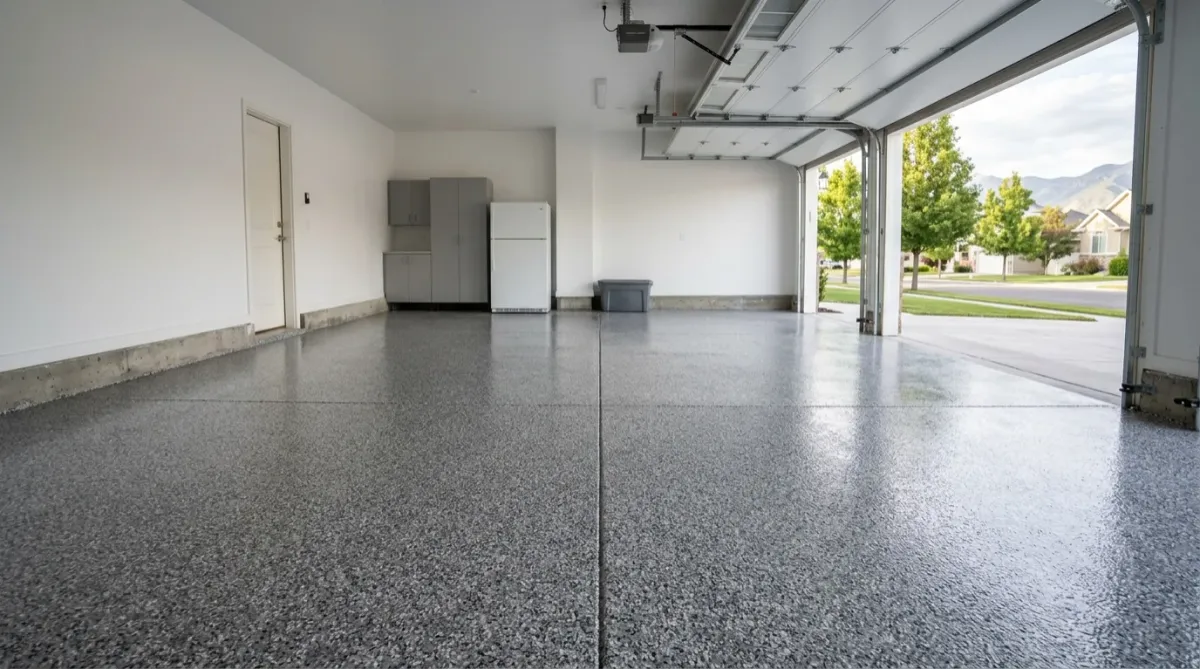
How to Choose a Garage Floor Coating Company in Sandy, Utah
Choosing a garage floor coating company in Sandy
Search for garage floor coating in Sandy, Utah and the first page is mostly how-to videos, DIY kits and national "best coating" roundups. They will tell you which product has the flashiest flakes. They will not tell you which local installer's floor will still be bonded to your slab after five winters of road salt, snowmelt and freeze-thaw.
Almost every coated floor looks great the week it goes down. The difference between a good installer and a bad one shows up a year or two later, as hot tire marks, peeling at the edges and sheets lifting where the car parks. This guide gives homeowners in Sandy the questions to ask before signing, and what a good answer sounds like.
Check the license and insurance first
Utah licenses contractors through the Division of Professional Licensing (DOPL), and anyone can look up a contractor's license on DOPL's public search in a few minutes. Do it before you sign, and ask for proof of current liability insurance too.
Garage coating attracts a lot of part-time crews because the equipment is cheap to rent. A crew that is not licensed or insured may quote lower, but if something goes wrong in your garage the risk lands on you. An installer who hesitates to show either document has already answered the question.
Ask how they prepare the concrete
This is the question that matters most. A coating is only as strong as its bond to the slab, and the bond is made in the prep. Ask whether the floor will be diamond ground or acid etched. Diamond grinding opens the surface of the concrete so the resin can key into it. Acid etching is quicker and cheaper, but it leaves residue that has to be rinsed and dried, and it gives a far less even profile.
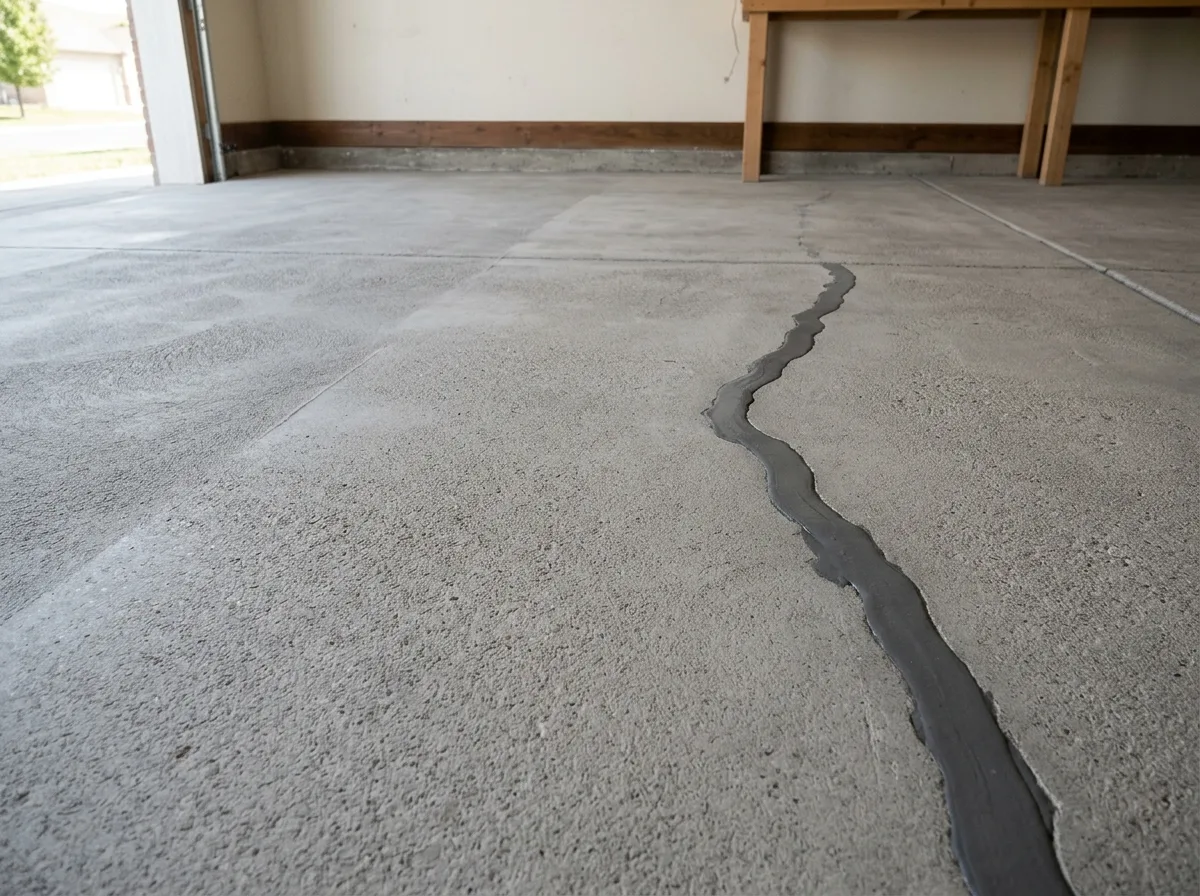
Ask what happens to cracks, chips and pitting before anything is coated. On our epoxy garage floors, existing damage is filled and leveled first, because a coating rolled over a damaged slab shows every flaw and fails at the weak spots.
Ask about road salt as well. A garage floor in Sandy has taken years of brine and magnesium chloride off car tires, and salt left in the pores is one of the things that stops a coating sticking. Older homes in Sandy and Draper often have garage slabs that have been dusting or spalling for years, so ask how the installer gets the surface clean and sound before anything is coated.
Ask whether they test for moisture
Concrete sitting on the ground pushes moisture vapor up through the slab, and along the Wasatch Front that is common. Coat over a slab that is pushing vapor and the coating can blister and peel no matter how good the product is. Ask whether the installer tests for moisture before they commit to a date, and what they do if the test comes back high.
The right answer is a plan, not a shrug. A contractor who says "we never have problems with that" without looking at your slab is guessing.
Ask which coating system they use
"Epoxy" covers everything from a one-coat box-store kit to a multi-layer professional system, so ask exactly what is going down. Ask how many coats, whether there is a base coat, whether flakes are broadcast into it, and what the topcoat is.
The two names you will hear most are epoxy and polyaspartic. Epoxy builds a hard, thick base layer and costs less up front. Polyaspartic cures much faster and resists UV yellowing and road salt better. Many Utah garages get both: an epoxy base for build and bond with a polyaspartic topcoat for wear. A good installer will tell you which one fits your garage and why, rather than selling the one product they always use.
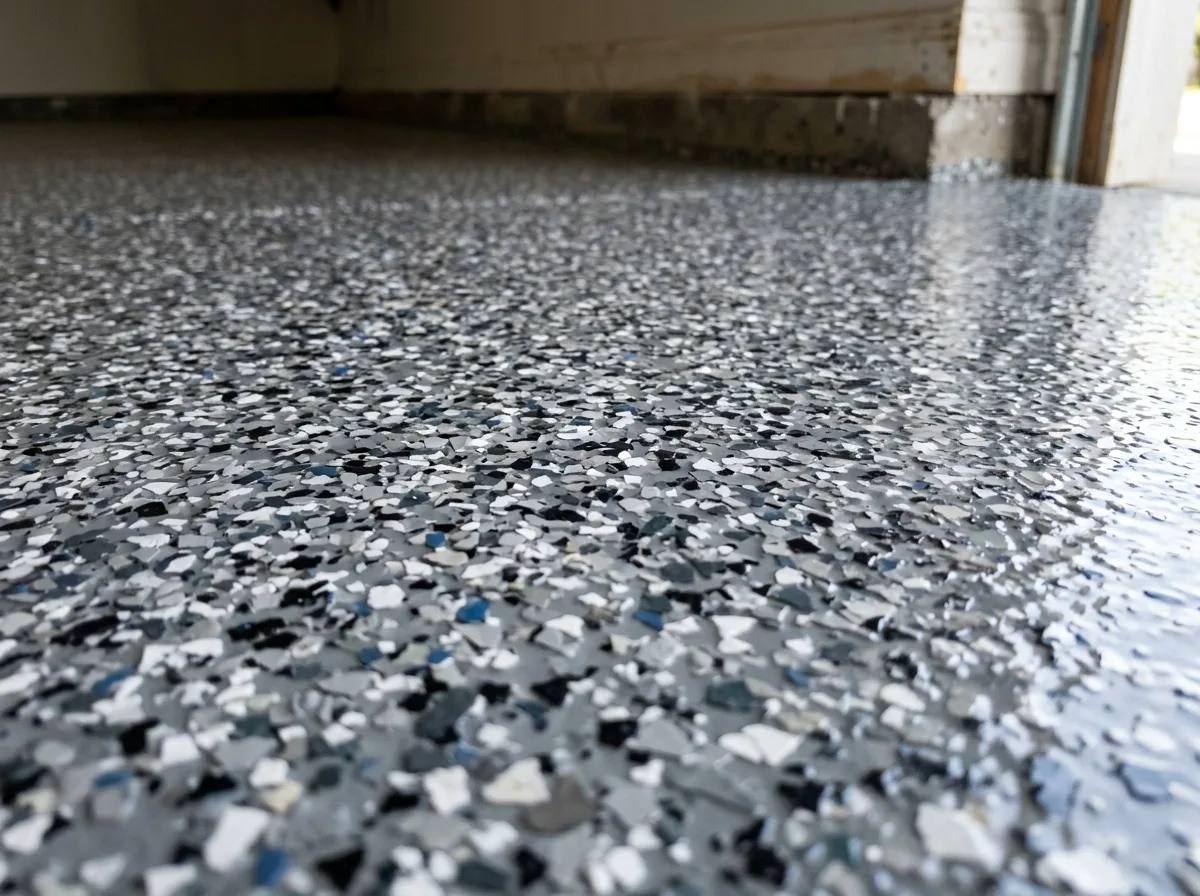
Ask what finishes they offer too. We install solid colors, flake blends and metallic finishes, each sealed with a clear topcoat for durability and shine. Ask whether the topcoat can take a grit additive, because a high-gloss floor gets slick with the slush that comes off your tires here.
Ask when they will coat and when you can park
Coatings care about the temperature of the slab, not the air. Most standard epoxy wants the concrete itself around 55 to 60 degrees, and a cold slab in an unheated garage can sit well below that even on a mild afternoon. Ask how the installer measures it and what they do if it is too cold. Our article on whether you can epoxy a garage floor in winter in Utah covers what a careful installer does and refuses to do.
Then ask how long the garage will be out of use. A standard epoxy system generally needs about a day before you walk on it and five to seven days before a car goes back on it. Polyaspartic is much faster. Parking too early causes hot tire pickup, where warm tires lift a coating that has not fully hardened.
Ask about the start date as well. Some installers are booked months out; we start most jobs in 2 weeks or less.
Read the written quote line by line
A good quote spells out the square footage, the prep method, crack repair, the coating system and number of coats, flakes, topcoat and the return-to-service time. A single number with "epoxy floor" written next to it makes two bids impossible to compare, and it is where corners get cut later.
Price depends mostly on the slab, not the paint: grinding, crack repair and moisture work add cost, and a flake system or polyaspartic topcoat sits at the higher end. Our guide to what an epoxy garage floor costs in Utah breaks the ranges down by garage size, and a written quote for your own garage is the only number that counts.
Ask about the warranty, in writing
Ask what is covered, for how long and in writing. Materials and installation are different things, and a warranty that covers only the product leaves you on your own if the floor peels because of the prep. Every Installify floor carries a lifetime materials warranty and a 2-year installation warranty.
Red flags worth walking away from
Any one of these is reason enough to get another bid:
- No license number, or reluctance to show insurance.
- Acid etching only, or no clear answer about how the floor is prepared.
- No moisture test and no plan if the slab is damp.
- A one-coat system priced like a full professional floor.
- A promise that you can park on it the next morning with a standard epoxy.
- Pressure to sign today.
Get a garage floor coating quote in Sandy
Installify is based in Sandy and coats garage floors across Salt Lake, Utah and Davis counties. We are licensed and insured, and our Best Price Guarantee means we will beat your best written estimate by $100 or more, or send you a $50 Amazon gift card. Call (385) 402-8427 or ask for a free quote and we will look at your slab and give you an exact price.
Frequently asked questions
How do I check a garage floor coating contractor's license in Utah?
Utah licenses contractors through the Division of Professional Licensing (DOPL). Its public license search lets you look up any contractor by name or license number before you sign.
Is diamond grinding better than acid etching for a garage floor?
Yes. Diamond grinding opens the concrete surface evenly so the coating can bond to it. Acid etching leaves residue that must be rinsed and dried and gives a less consistent surface, which is a common reason coatings peel.
Which is better for a Utah garage, epoxy or polyaspartic?
Epoxy builds a hard base layer and costs less up front. Polyaspartic cures faster and resists UV yellowing and road salt better. Many Utah garages use an epoxy base coat with a polyaspartic topcoat to get both.
How long before I can park on a new garage floor coating?
A standard epoxy system generally needs about a day before foot traffic and five to seven days before a vehicle. Polyaspartic systems are much faster. A cold garage adds to both.
What warranty should a garage floor coating come with?
Get it in writing, and make sure it covers both the materials and the installation. Installify floors carry a lifetime materials warranty and a 2-year installation warranty.


